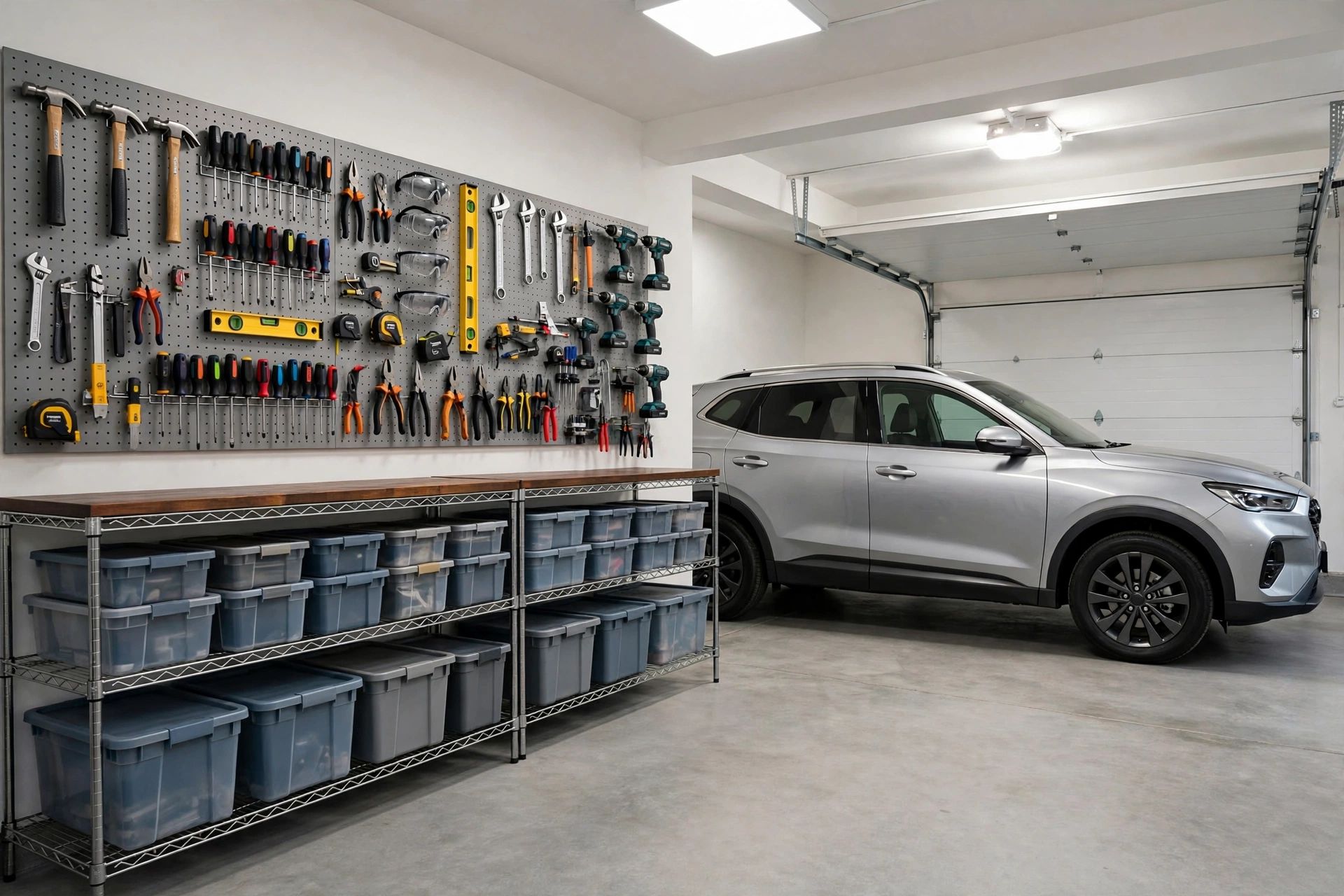
The garage is where good intentions go to rust. It’s the biggest storage space in most homes and the least organized — boxes from three moves ago, tools you can’t find, and a car that hasn’t fit inside since 2019. But a garage doesn’t need a renovation. It needs zones, vertical storage, and the willingness to let go of the “might need it someday” pile.
These are the garage organization ideas that reclaim the space: the purge categories that make decisions fast, zone planning, wall and ceiling storage, and the maintenance habits that keep it from sliding back.
New to decluttering? The room-by-room guide covers the mindset — this is the garage application.

The garage purge (by category)
Garages resist the room-by-room approach because everything is mixed together. Sort into categories first, then decide:
- Tools and hardware: keep what you use; donate duplicates. Three hammers is two too many.
- Sports and outdoor gear: if nobody used it this season, it goes. Aspirational kayaks count double.
- Paint and chemicals: dried-out paint, ancient pesticides, mystery solvents — hazardous waste disposal, not the trash. Most cities take them free.
- The “someday” boxes: unopened since the last move? Open, decide in 30 seconds per item, donate the rest.
- Cardboard: break down every empty box. Empty boxes are not storage — they’re clutter with walls.

Zone the garage
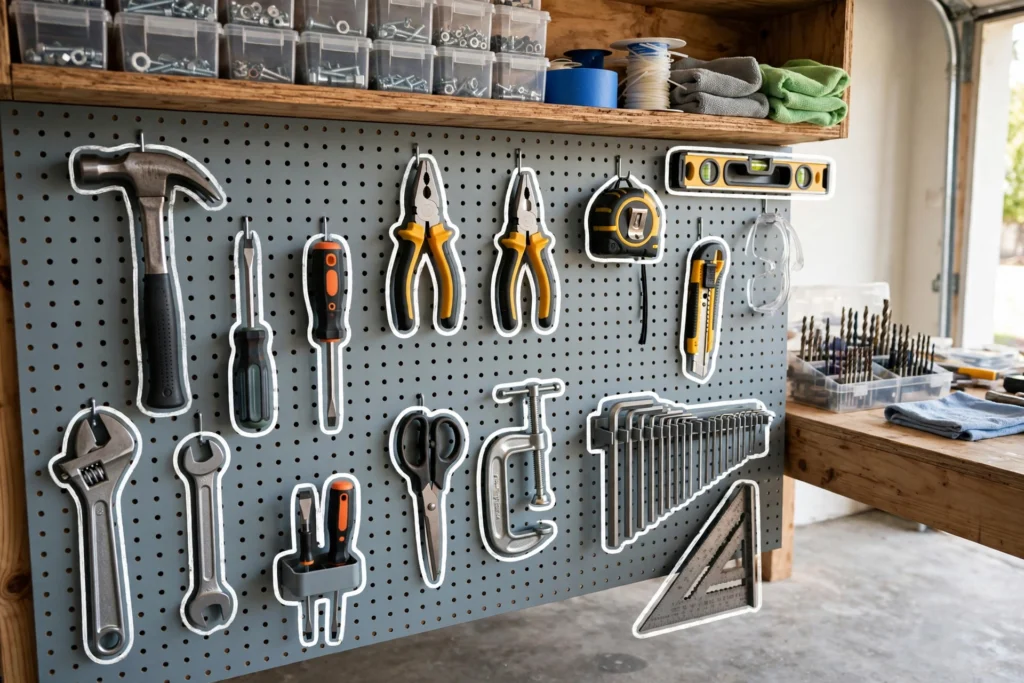
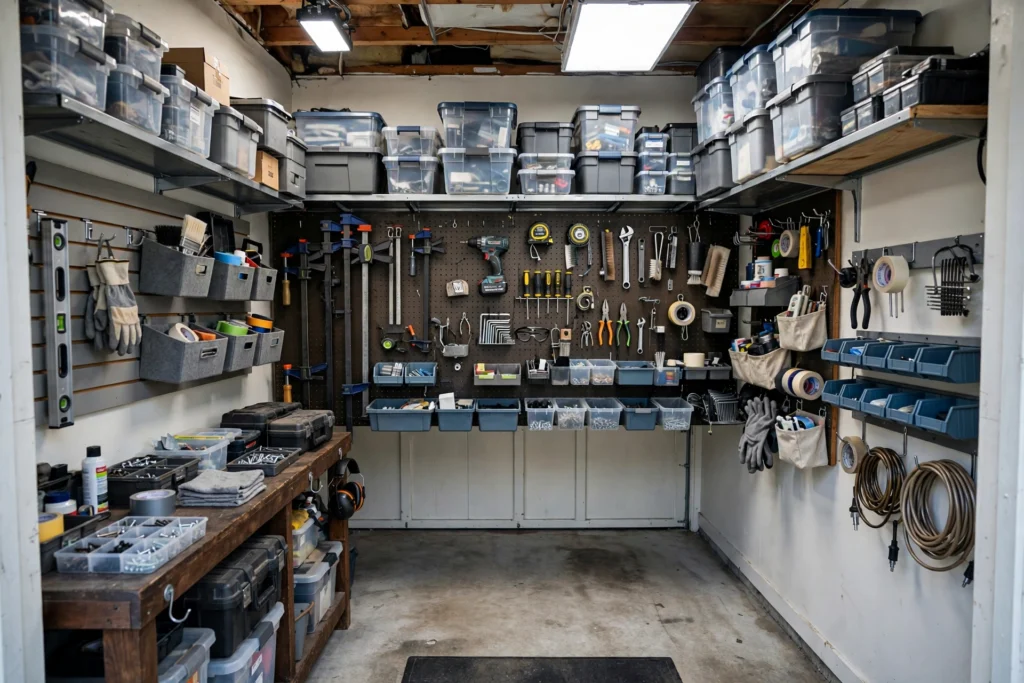
- Tools zone: pegboard or wall panels near the workbench. Every tool visible and outlined — you’ll know instantly what’s missing.
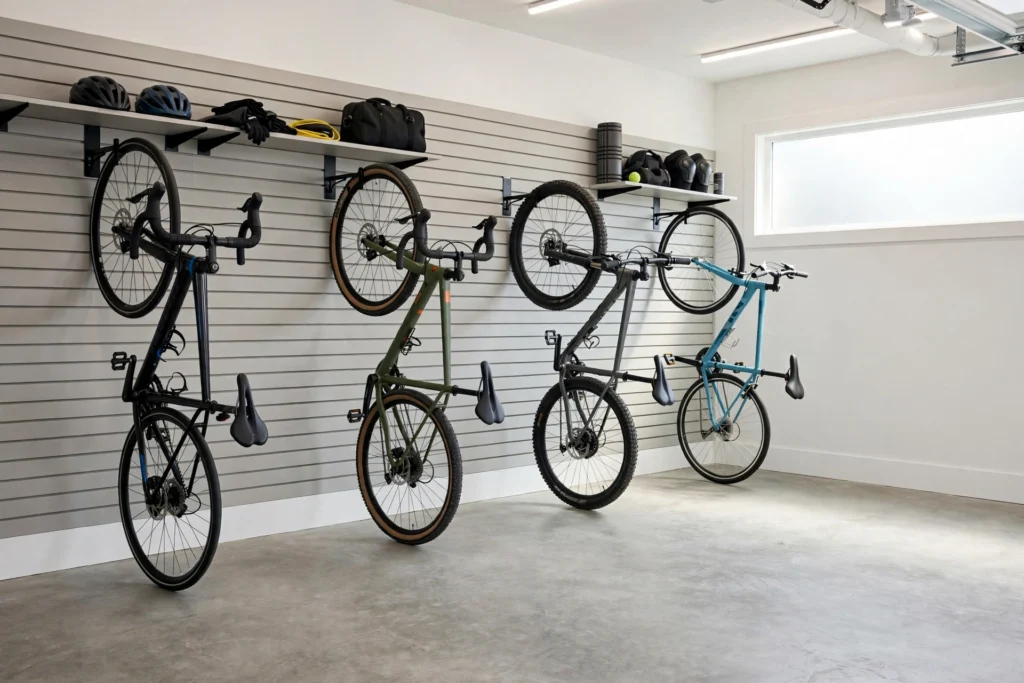
- Sports zone: ball racks, bike hooks, one bin per sport. Gear lives together or it migrates everywhere.
- Garden zone: long-handled tools on wall racks, soil and pots on a shelf. Near the garage door you use for the yard.
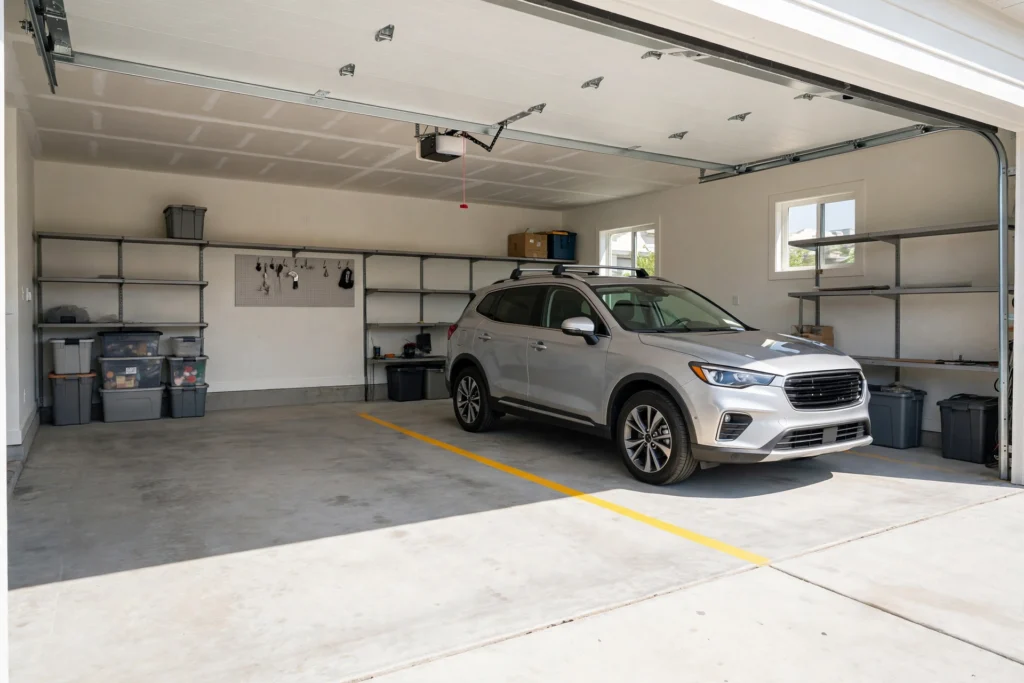
- Car zone: mark it with floor paint or tape. Nothing — not one box — crosses the line. The car fits or the system failed.
- Donate zone: one permanent bin or corner. Full? It goes to donation that week. This is the budget-friendly engine of the whole system.
Go vertical (walls and ceiling)
- Pegboard and slat walls for tools — cheap, flexible, and everything stays visible.
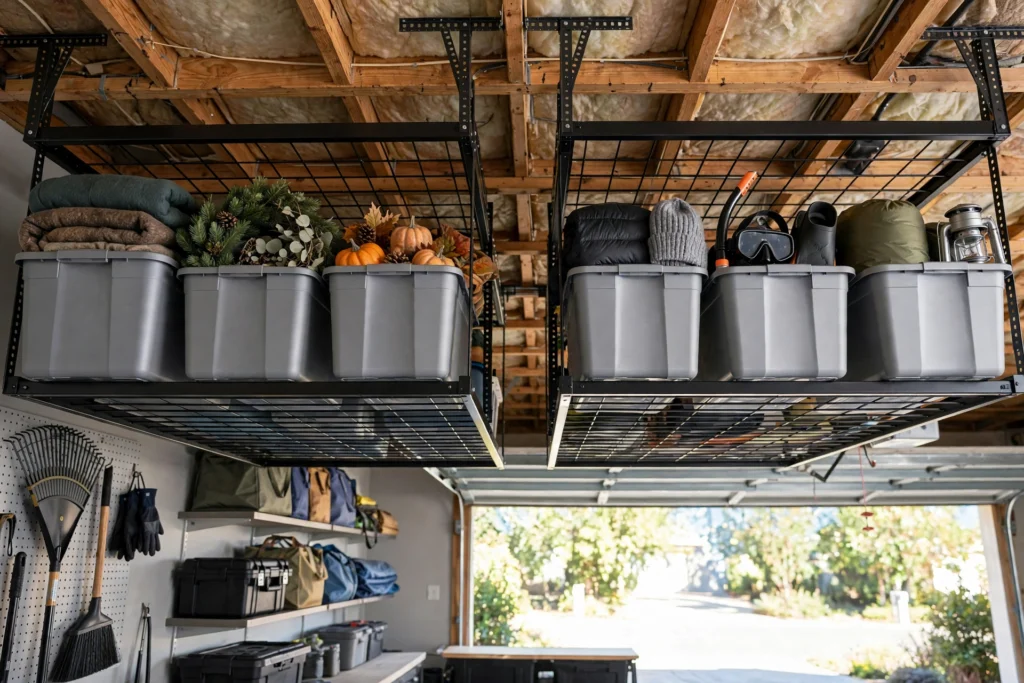
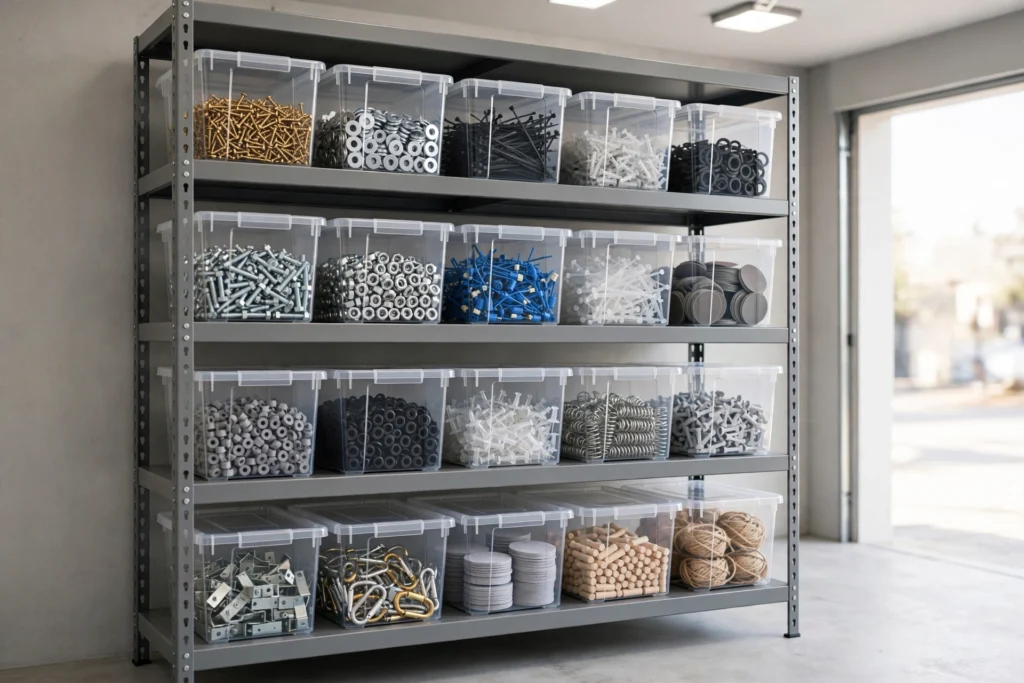
- Heavy-duty shelving for bins: clear bins, labeled, one category per bin. If you can’t see it, you’ll buy it again.
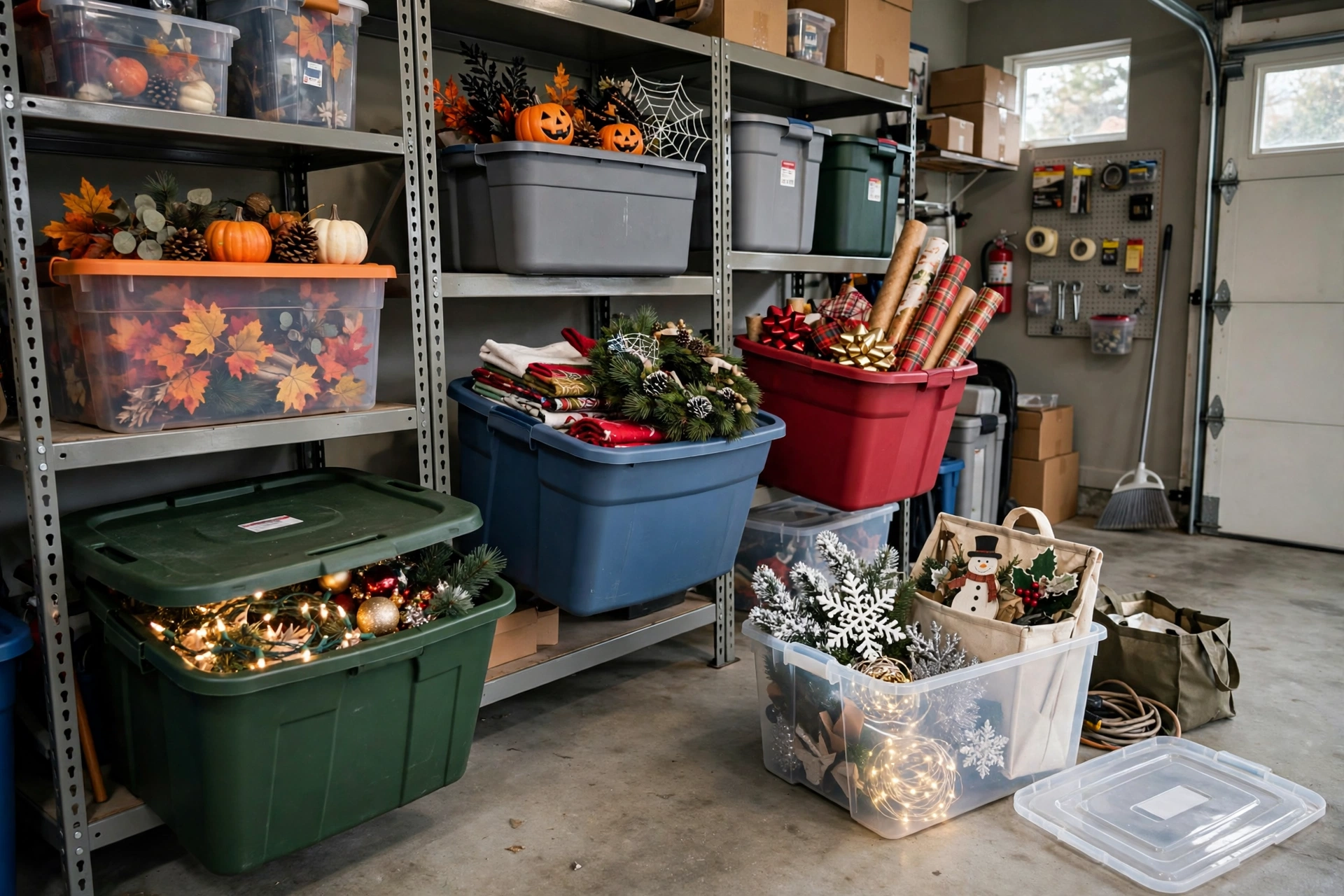
- Ceiling racks for the rarely touched: holiday decor, camping gear, luggage. Dead space becomes storage.
- Bike hooks and wall mounts — bikes eat floor space like nothing else. Hang them.
- Magnetic strips for small metal tools, drill bits, and hardware. The drawer of tangled bits becomes a display.
Bins, labels, and the hardware wall
- One bin type, one label system. Uniform bins stack; label every one with contents, not aspirations (“camping,” not “misc”).
- Small-parts organizers for screws, nails, and fasteners — the baby-food-jar wall, but intentional.
- A project shelf: one shelf for active projects. When it’s full, no new project starts until one finishes.
- Hazardous items up high and locked if kids are around — chemicals on a high shelf, never at kid height.
Small garage ideas
- Fold-down workbench: a work surface that disappears when the car needs the space.
- Narrow rolling carts for the gaps between shelves and walls — dead inches become tool storage.
- Overhead only: in a single-car garage, the ceiling may be your only expansion room. Use it first.
- Share the load: seasonal gear can live in other storage spots — the garage doesn’t have to hold everything.
The seasonal reset (twice a year)
- Pull everything out of one zone at a time (never the whole garage at once).
- Toss the broken, donate the unused, return the migrated.
- Sweep the zone before anything goes back.
- Check the car line — has anything crept over it?
- Restock the donate bin’s resolve: schedule the drop-off.
Spring and fall. Two weekends a year keeps the garage permanently functional.
Mistakes that keep garages chaotic
Storing without sorting. Buying bins before purging just organizes the clutter. Purge first, always.
The floor as a shelf. Anything on the floor becomes permanent. If it doesn’t have a wall, shelf, or hook home, it doesn’t stay.
Keeping every “useful” scrap. The wood offcuts, the half-empty paint cans, the broken “I’ll fix it” appliances. Useful someday is clutter today.
No car line. Without a marked car zone, storage slowly colonizes the parking space until the car lives in the driveway.
Frequently asked questions
How do I start organizing my garage?
Sort everything into categories first (tools, sports, garden, paint/chemicals, “someday” boxes), purge each category, then assign zones: tools, sports, garden, car, and donate. Only then buy storage.
What’s the cheapest way to organize a garage?
Purge first (free), then pegboard for tools, uniform clear bins with labels, and wall hooks for bikes and long-handled tools. Vertical storage is the highest-impact cheap upgrade.
How do I keep my garage organized?
Zone it, keep the floor clear, maintain the car line, run the donate zone weekly, and do the twice-yearly seasonal reset (spring and fall, one zone at a time).
How do I organize a small garage?
Go up: ceiling racks for rarely used items, wall-mounted everything, a fold-down workbench, and narrow rolling carts for dead gaps. Keep only what fits the zones.

Final thoughts
An organized garage isn’t a showroom — it’s a working space where the car fits, the tools are findable, and nothing lives on the floor. Purge by category, zone it, go vertical, and defend the car line. Two resets a year, and the biggest room in the house finally pulls its weight.