
Small apartments don’t have a space problem — they have an everything-needs-a-job problem. When every square foot has to earn its keep, organization stops being decorative and starts being structural. The good news: small apartments are the fastest homes to get under control, because there’s simply less house to manage.
These are the organization ideas that make small apartments work: multi-purpose furniture, vertical storage, room-by-room strategies, and the rules that keep a compact space from filling back up.
New to decluttering? Start with our room-by-room guide, then apply these small-space strategies on top.
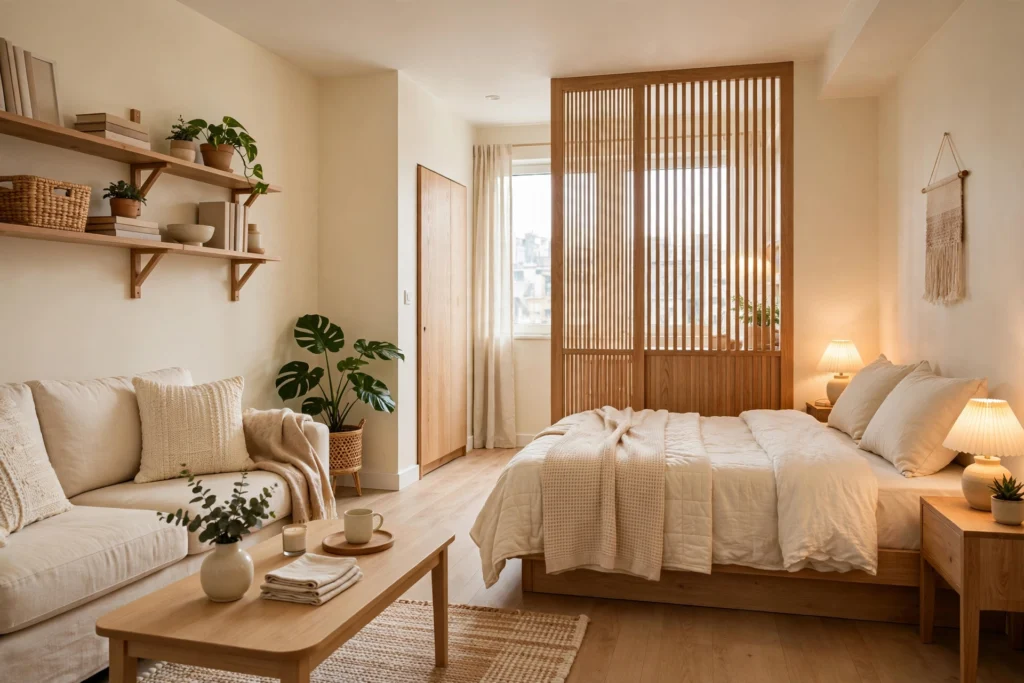
The small-apartment mindset shift
In a big house, organization means spreading out. In a small apartment, it means stacking functions: the coffee table holds storage, the bed hides a dresser, the wall behind the door is a pantry extension. Every item and every surface should do at least two jobs — one job is a luxury small spaces can’t afford.
The second shift: ruthless curation. A 500-square-foot apartment simply cannot hold the inventory of a 2,000-square-foot house, and pretending otherwise is how closets explode. Own less, and what you own works harder.
Living room: the hardest-working room
- Storage ottoman or coffee table with storage — blankets, remotes, and board games disappear inside furniture you’re already using.
- Wall-mounted everything — floating shelves, a wall-mounted TV, and sconces instead of floor lamps free up precious floor space.
- One in, one out — the living room is where clutter migrates. If something new arrives, something old leaves.
Small kitchen strategies
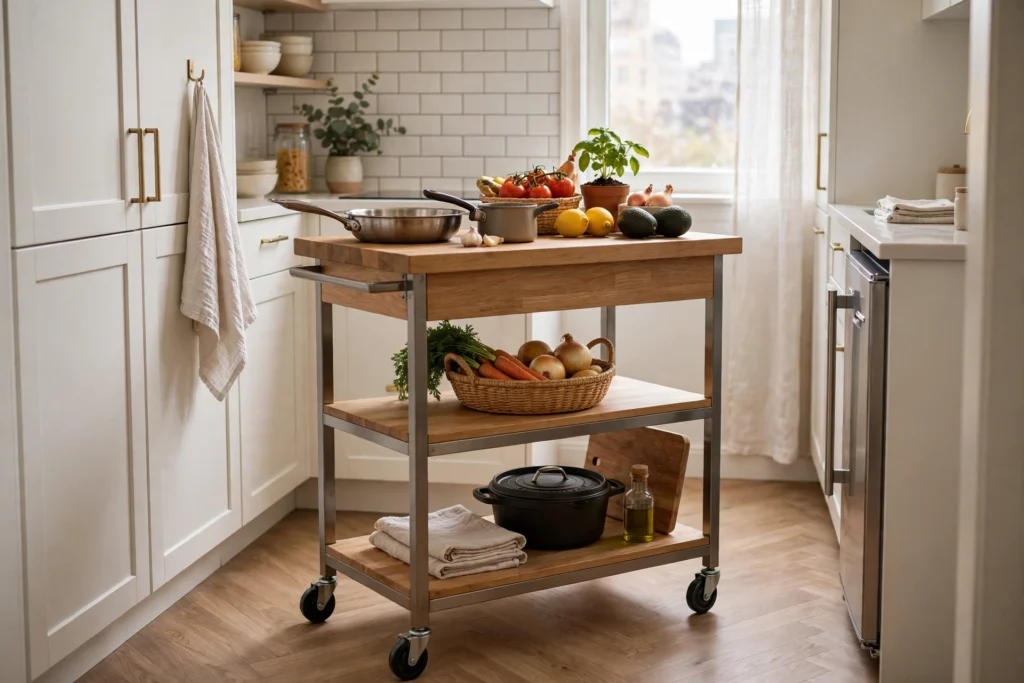
Apartment kitchens are usually the tightest room in the house. The full playbook is in our small kitchen organization guide, but the apartment essentials are: magnetic knife strip instead of a block, a rolling cart as a portable island, nesting cookware, and a strict one-appliance-on-the-counter rule.
Bedroom: sleep, storage, sanity
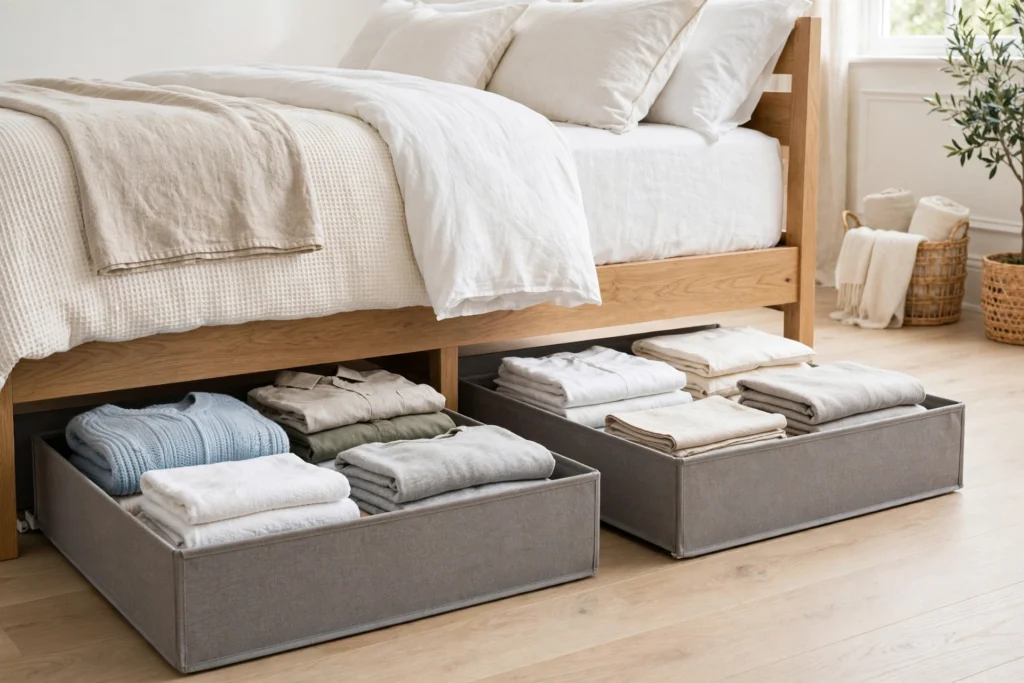
- Under-bed storage — the single biggest hidden reservoir in any apartment. Flat bins for off-season clothes, shoes, and linens.
- Vertical closet — double-hang rods, shelf dividers, and a door organizer multiply a tiny closet. Our closet decluttering system keeps it from refilling.
- Nightstand discipline — one drawer, daily items only. A cluttered nightstand makes the whole bedroom feel chaotic.

Bathroom and entry
Apartment bathrooms reward the same tricks as any tiny bathroom — our small bathroom guide covers the zones and vertical storage in detail. For the entry, which most apartments barely have: a wall-mounted hook rail, one slim shoe rack, and a small tray for keys and mail. Define the entry even if it’s just a wall — undefined entries become dumping grounds.
12 space-multiplying ideas

1. Go vertical in every room
Walls are free square footage. Tall bookcases, over-door organizers, and wall-mounted shelves add storage without touching the floor plan.

2. Choose furniture with hidden storage
Storage beds, ottomans, benches with lids, and coffee tables with drawers. In a small apartment, hollow furniture is wasted furniture.
3. Use the backs of doors
Every door is a storage wall waiting to happen: pantry goods, cleaning supplies, shoes, accessories.
4. Zone open-plan spaces
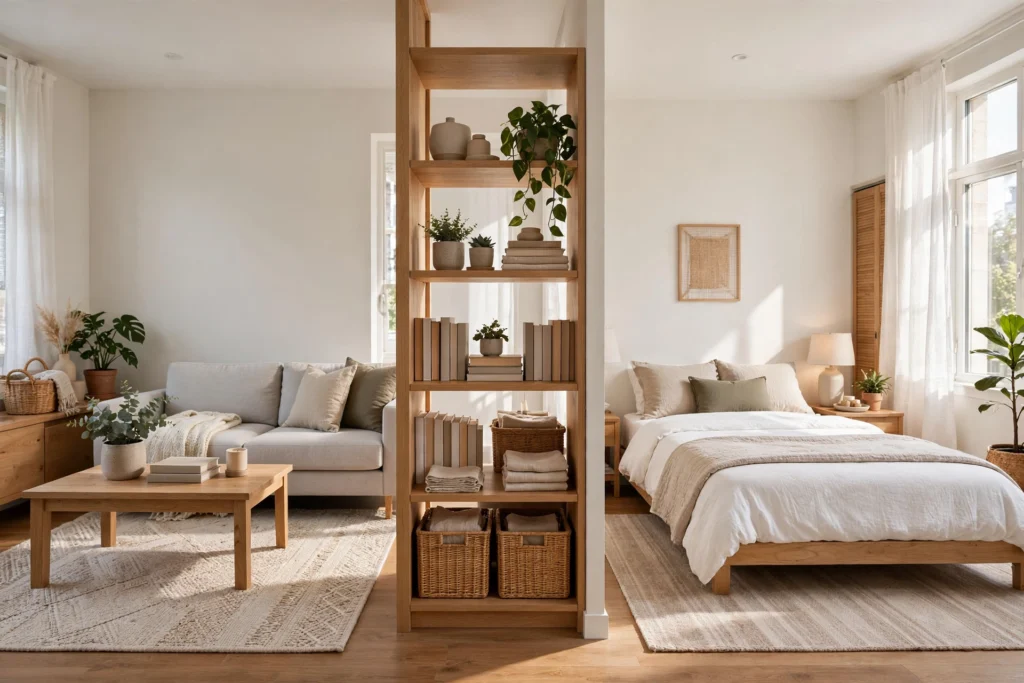
Rugs, bookshelves, and lighting define “rooms” in a studio without walls. Zoning makes a small space feel organized instead of jumbled.
5. Decant and consolidate
Bulk packaging eats cabinet space. Decant dry goods into stackable containers and consolidate half-empty bottles everywhere.
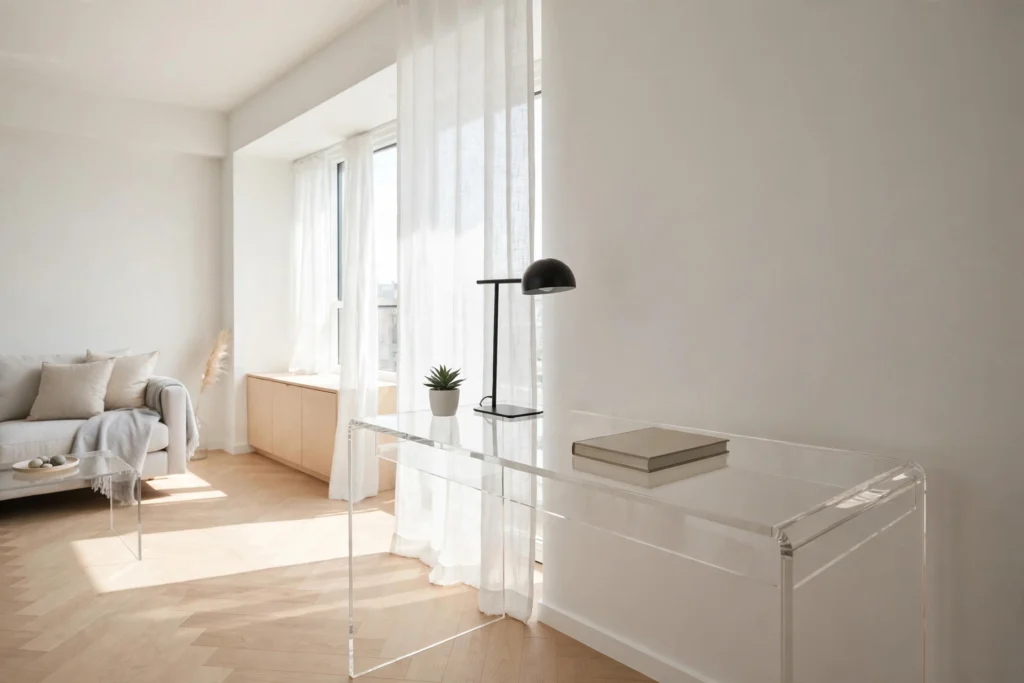
6. Keep surfaces 70% clear
The small-apartment golden rule: if every surface is full, the apartment feels cramped no matter how tidy it is. Clear surfaces read as spacious.
7. Nest and stack
Nesting bowls, stacking bins, collapsible colanders — anything that doesn’t nest is costing you double the space.
8. One laundry system
A single hamper with compartments (or two slim hampers) beats clothes draped over every chair. No chair-drobe.
9. Digitize the paper
Mail, manuals, and documents go digital. One small filing box holds the originals worth keeping; everything else is a photo.
10. Rotate seasonally
Off-season clothes, gear, and decor live in under-bed bins or the top of the closet — not in daily circulation stealing prime space.
11. Light and mirrors
Not storage, but perception: good lighting and a large mirror make a small apartment feel twice as big, which makes the organization visible.
12. The weekly reset
Small spaces show mess fast — which means they also show clean fast. A 20-minute weekly reset keeps the whole apartment at baseline.
Mistakes that shrink an apartment
Furniture that’s too big. An oversized sofa in a small living room makes the whole apartment feel cramped. Scale furniture to the room, not the aspiration.
Storing “someday” items. Small apartments have no room for someday. If it doesn’t serve your actual life now, it lives elsewhere or leaves.
Ignoring the entry. Without a defined drop zone, keys, shoes, and mail colonize every surface within ten feet of the door.
Frequently asked questions
How do I organize a very small apartment?
Stack functions (every surface does two jobs), go vertical, choose storage furniture, and curate ruthlessly. The 12 ideas above are ordered by impact — start at the top.
Where do I store things with no closet?
Under-bed bins, over-door organizers, a wardrobe or freestanding garment rack, and vertical shelving. No-closet apartments need furniture that is the closet.
How do I keep a small apartment from feeling cluttered?
The 70%-clear surface rule does most of the work, plus closed storage over open piles and a weekly reset. Visual calm is mostly about clear surfaces.
What furniture is best for small apartments?
Anything with hidden storage and a small footprint: storage beds, nesting tables, wall-mounted desks, and slim-profile seating. Measure twice — apartment-scale furniture is a category for a reason.
Final thoughts
Small apartments reward systems, not square footage. Stack functions, go vertical, keep surfaces mostly clear, and reset weekly. Do that, and a compact apartment stops feeling like a compromise and starts feeling like exactly enough.