
Organization has a reputation problem: people think it requires a shopping spree at the Container Store. It doesn’t. The most organized homes I’ve seen run on dollar-store bins, repurposed boxes, and systems that cost nothing at all — because organization is about decisions, not purchases.
These are the budget organizing ideas that actually work: what to buy cheap, what to repurpose, what to skip entirely, and the free systems that do the heavy lifting.
Start with less to organize: our room-by-room decluttering guide cuts the inventory before you spend a cent on storage.
The budget organizing principle
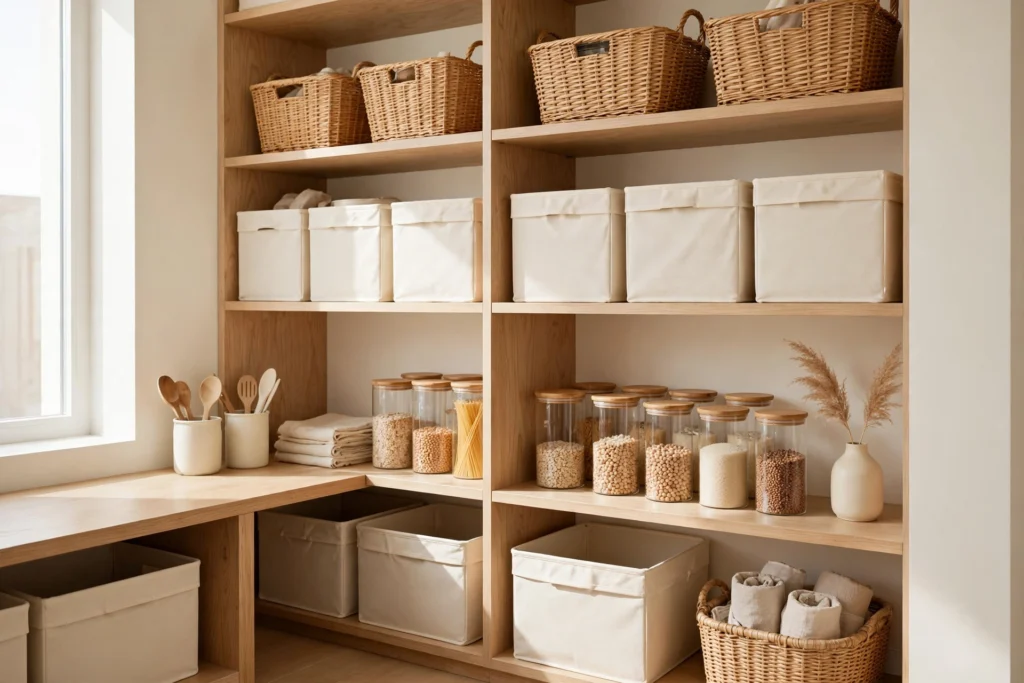
Here’s the uncomfortable truth: most organizing products solve a buying problem, not an organizing problem. The bin doesn’t create the system — the decision about what lives where does. A shoebox with a label does the same job as a $24 bamboo box, as long as the category decision behind it is sound.
So the budget rule is simple: decide first, buy last. Declutter, assign homes, and live with the system for two weeks. Only then buy the few containers that fill genuine gaps. You’ll spend a tenth of what the “organize everything in a weekend” approach costs.
15 budget organizing ideas
1. Repurpose before you buy
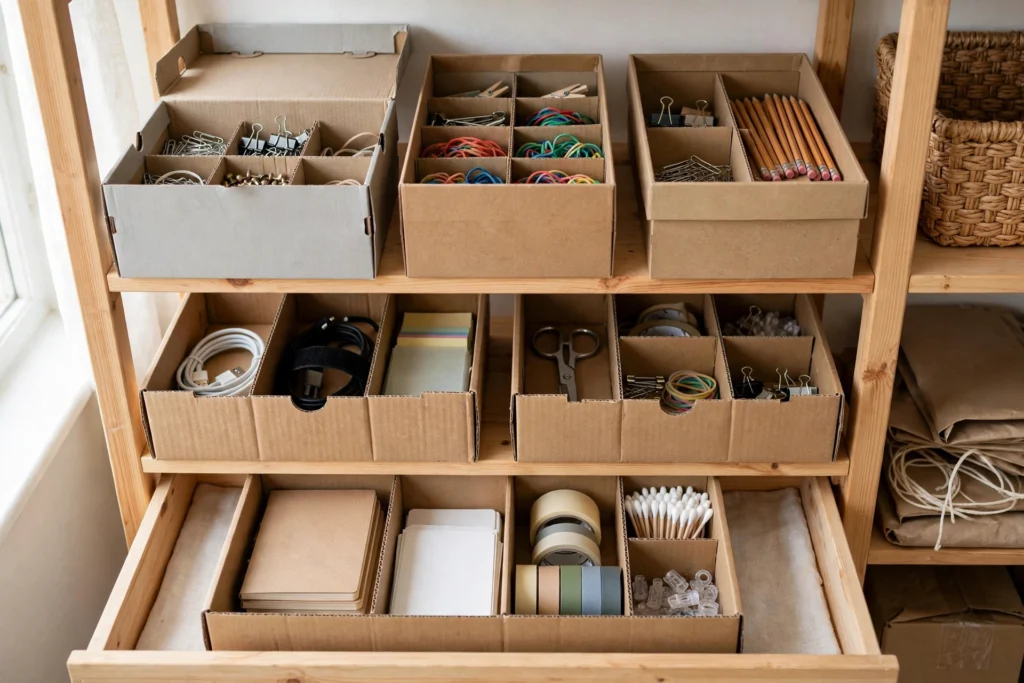
Shoeboxes, shipping boxes, mason jars, and baskets you already own become drawer dividers, pantry bins, and bathroom organizers. A box is a box — the label matters more than the logo.
2. The dollar store is your friend
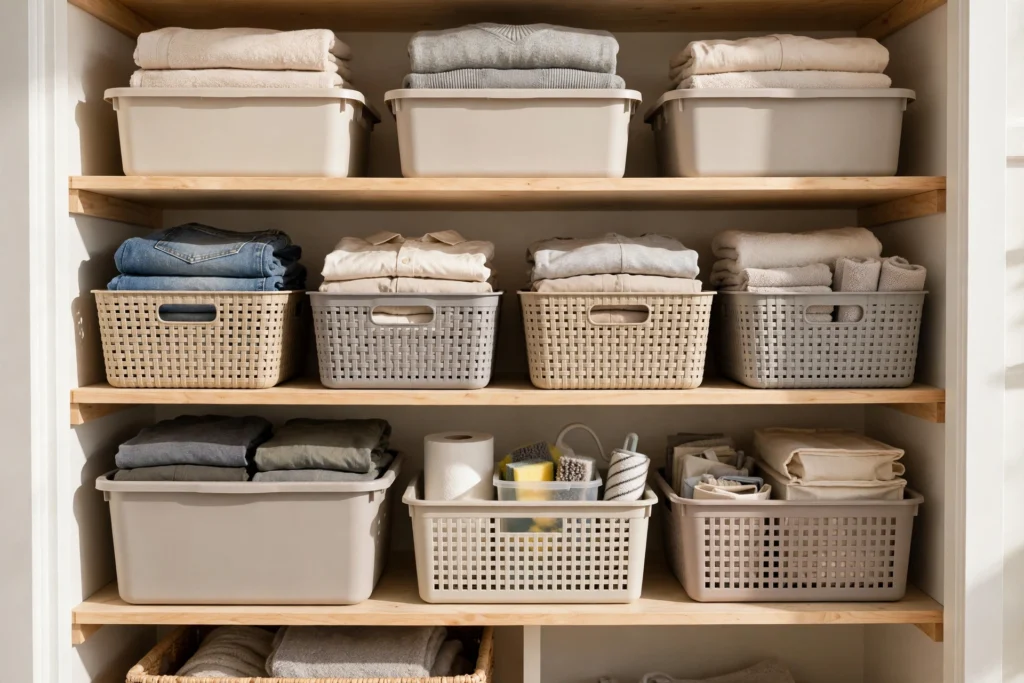
Bins, baskets, hooks, and cleaning caddies at dollar prices do 90% of what premium versions do. Spend the savings on the one or two items worth buying well (see #14).
3. Label everything
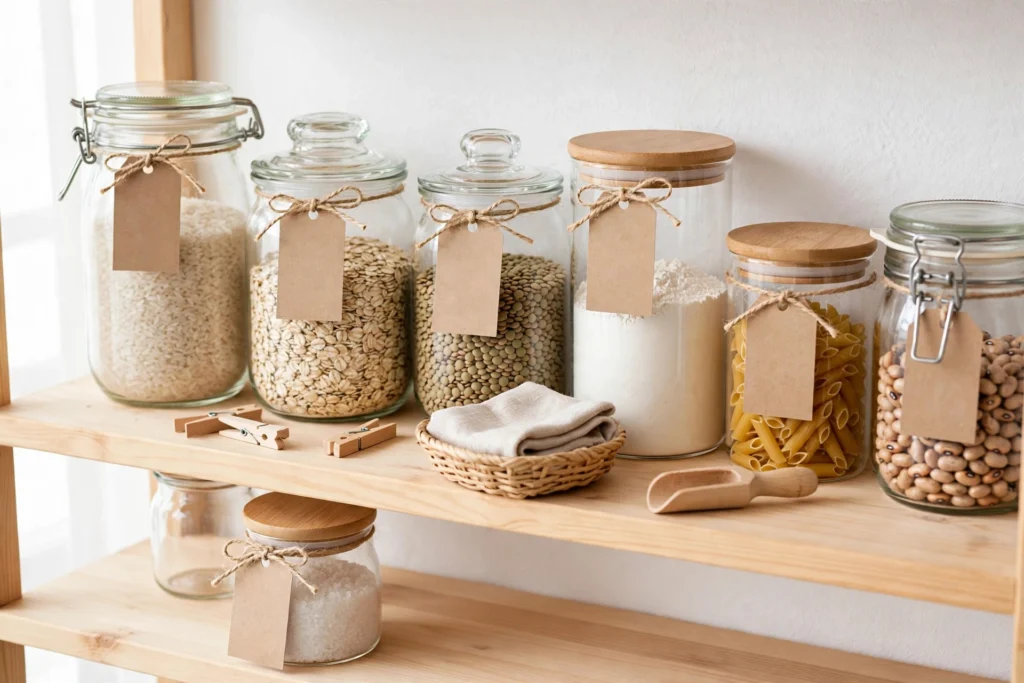
A $5 label maker — or masking tape and a marker — is the highest-ROI organizing purchase in existence. Labels turn a bin into a system and stop the “where does this go?” drift.
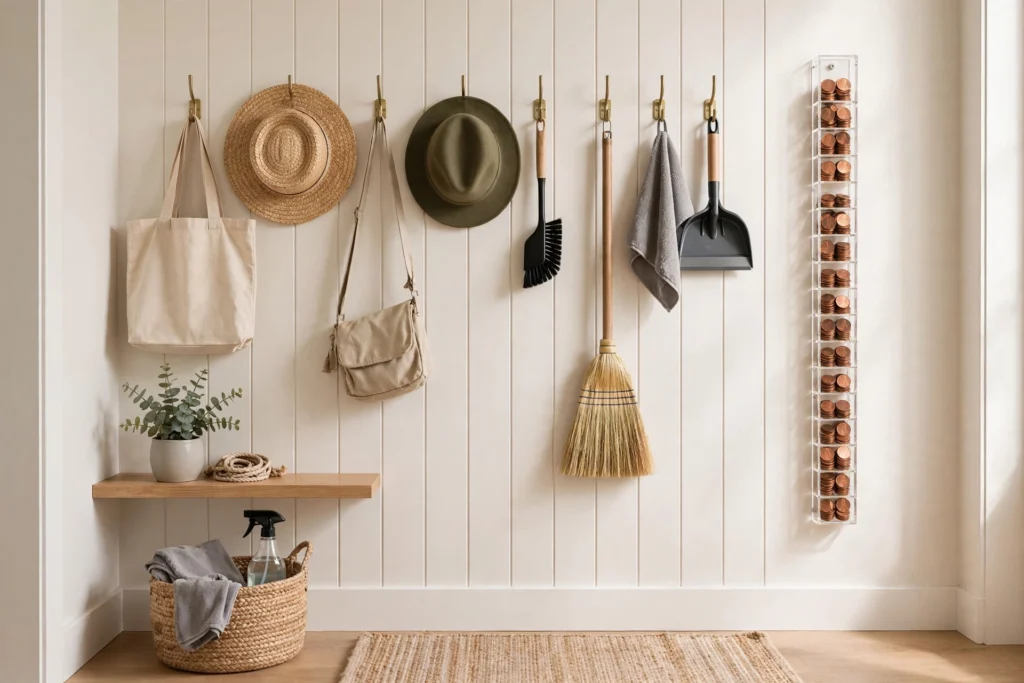
4. Use the vertical space you already own
Walls, door backs, and the insides of cabinet doors are free storage. Hooks and a screwdriver unlock square footage you’re already paying rent on.
5. Decant into uniform containers (cheaply)
Matching containers look calm and stack better — but they don’t need to be expensive. Dollar-store canisters or repurposed jars, uniform in size, beat a mismatched premium set.
6. One in, one out — the free system
The cheapest organizing tool is a rule, not a product. One in, one out keeps every category at a stable size forever, at zero cost.
7. Zone with what you have
Trays, placemats, or even a defined shelf edge create zones without buying zone markers. Our bathroom zone system works with a single tray you probably own.
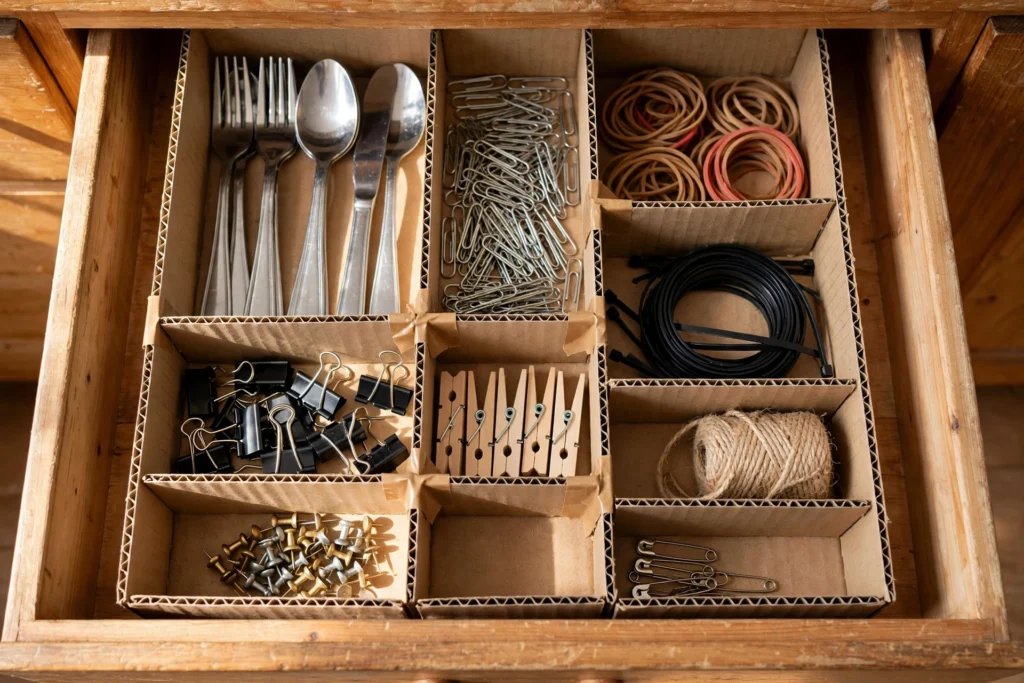
8. DIY drawer dividers
Cut-down cereal boxes, small gift boxes, or strips of cardboard become custom drawer dividers. Measure once, cut, done — free and perfectly sized.
9. Shop your own house first
Before buying anything, walk room to room collecting unused baskets, bins, jars, and containers. Most homes have a hidden organizing store in the garage or a spare closet.

10. Thrift the sturdy stuff
Baskets, wooden crates, glass jars, and solid bins are thrift-store staples at a fraction of retail. Sturdy and secondhand beats flimsy and new.
11. Corral with trays
One tray per surface — entry, bathroom counter, nightstand. Trays you already own turn scattered items into intentional groups.
12. Hang it up
Command hooks, over-door hooks, and simple nails get items off surfaces and into vertical space for pennies. If it can hang, it shouldn’t sit.
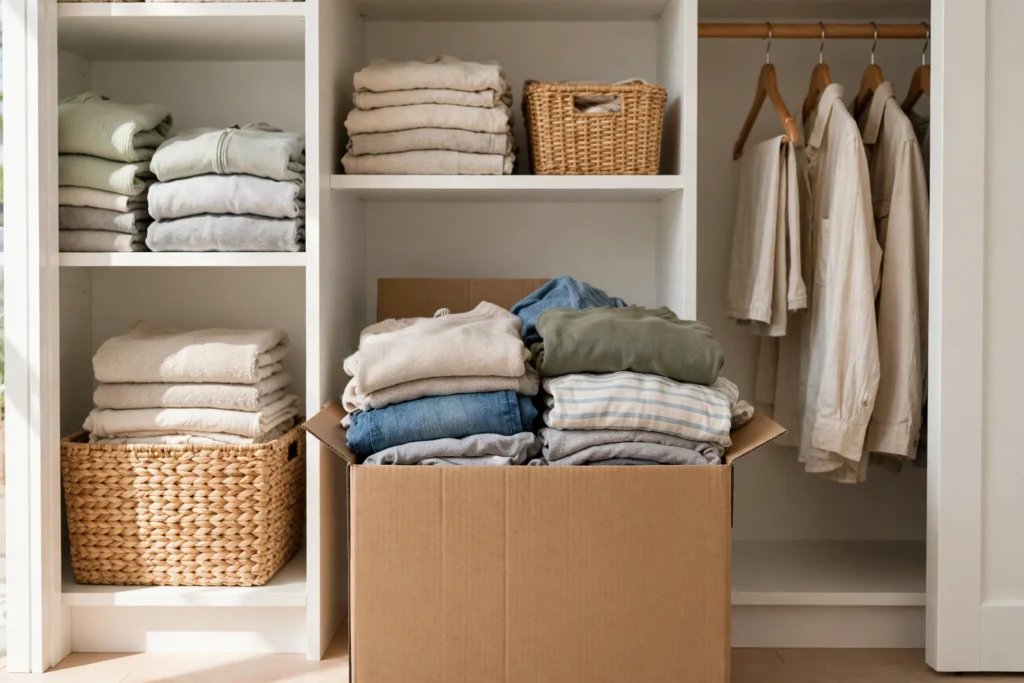
13. The donation box system
Keep one box or bag in a closet permanently. When you spot something you don’t need, it goes in immediately. Free, and it keeps clutter from re-accumulating.
14. Splurge selectively
Buy well exactly twice: the label maker (or labels) and the containers for the categories you touch daily — the ones where flimsy breaks and ugly annoys. Everything else goes cheap.
15. Maintain for free
The weekly reset and the two-minute nightly tidy cost nothing and protect every system on this list. Maintenance is the budget organizer’s superpower.
What not to buy
- Single-purpose gadgets — the avocado organizer, the single-spice carousel. Multi-use or nothing.
- Matching sets for hidden spaces — nobody sees inside the linen closet. Function over aesthetics where it doesn’t show.
- Anything before decluttering — buying containers for clutter just organizes the mess. Purge first.
- Trendy systems you won’t maintain — if the system needs more upkeep than the mess did, it’s not a system.
Room-by-room on a budget
- Pantry: repurposed jars + dollar-store bins + labels. Our pantry guide works at any budget.
- Closet: DIY dividers, double-hang rods (cheap), door hooks. See the closet system.
- Kitchen: one rolling cart, nesting cookware, a single tray per counter. Details in small kitchen ideas.
- Bathroom: over-door organizer, one tray, repurposed jars. Full playbook in small bathroom ideas.
Frequently asked questions
How can I organize my home with no money?
Start with the free systems: declutter, one in one out, repurpose boxes and jars you own, use vertical space with hooks, and label with tape and marker. Most organization is decisions, not purchases.
What are the cheapest organizing supplies?
Dollar-store bins and baskets, masking tape and a marker for labels, Command hooks, and repurposed shoeboxes and jars. A complete starter kit costs under $20.
Is it worth buying expensive organizing products?
Selectively: a label maker and sturdy containers for daily-touch categories are worth it. Everything else — hidden storage, single-use categories, trendy systems — goes cheap or repurposed.
Should I declutter or organize first?
Declutter first, always. Organizing clutter just gives the mess nicer containers. Our room-by-room guide walks through the purge before you spend anything.
Final thoughts
Budget organizing isn’t a compromise — it’s the smarter approach. Decide first, buy last, repurpose aggressively, label everything, and maintain for free. The organized home was never about the containers. It was always about the system.