
A small pantry punishes every bad habit. There’s nowhere for the “I’ll deal with it later” items to hide, so they pile up right where you can see them — which is exactly why a small pantry, organized well, is more satisfying than a big one. Every inch earns its keep.
This isn’t a gallery of pretty pantries. These are the specific systems and products that make a tight pantry actually work: what to put where, which organizers are worth the money, and the mistakes that turn a weekend project back into chaos within a month.
New to decluttering? Start with our room-by-room decluttering guide to clear the pantry before you organize it.
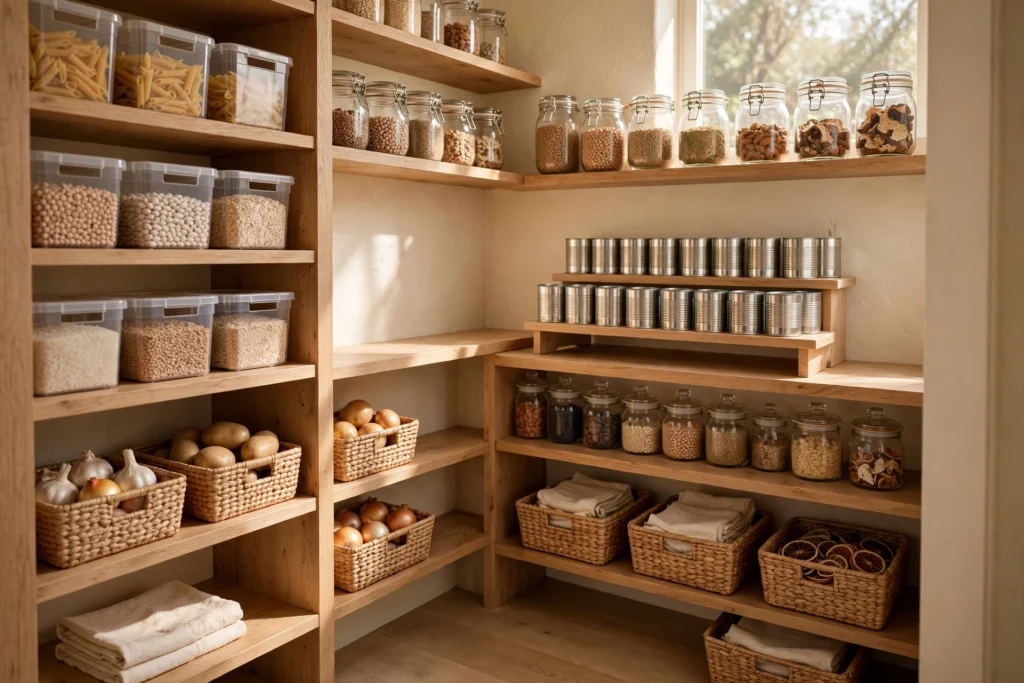
Step zero: empty it completely
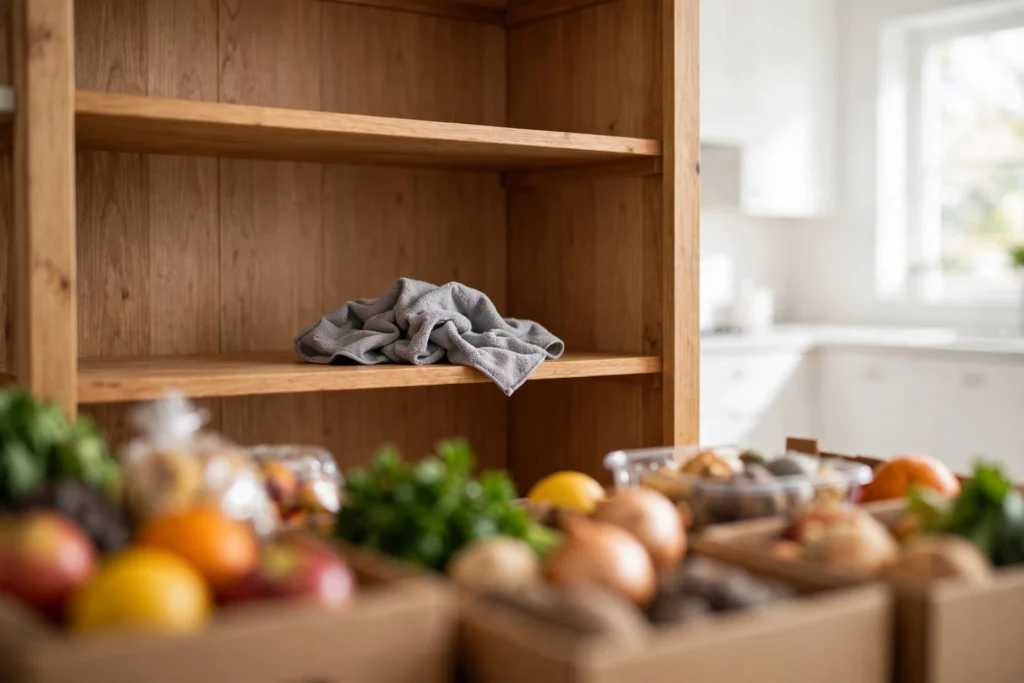
Every good pantry reset starts the same way: take everything out. Yes, everything. Pile it on the counter and table. This feels dramatic, and that’s the point — you can’t organize around clutter you can’t see.
As you empty each shelf, wipe it down and check dates. Be ruthless with the graveyard items: the specialty flour from 2023, the three half-used bags of the same rice, the cans with no labels. Toss what’s expired, donate sealed extras you won’t use, and only put back what your household actually eats.
While it’s empty, notice your pantry’s actual shape. Deep shelves? Narrow door? Awkward corners? The organizers you buy should solve your pantry’s problems, not the ones in someone else’s photos.
Build zones, not shelves
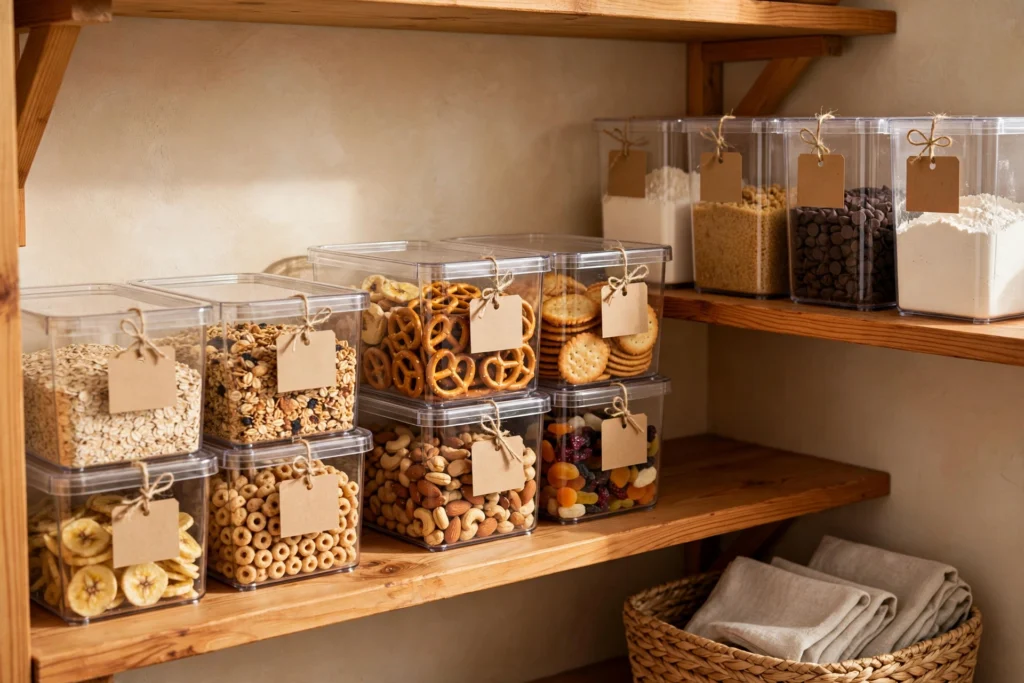
The single biggest upgrade for a small pantry is zoning: grouping items by how you use them instead of scattering them by shelf. Most households need four or five zones:
- Daily cooking — oils, spices, the grains and cans you reach for constantly. Eye level, front and center.
- Breakfast — cereal, oats, coffee, tea. One shelf or one bin, everything in one grab.
- Snacks — especially with kids. A dedicated bin per kid, or one family snack zone, stops the all-day rummaging.
- Baking — flour, sugar, chocolate chips, sprinkles. These can live higher or deeper since you don’t need them daily.
- Backstock — the extras. One shelf, one rule (more on that below).
Once zones exist, “put it away” becomes obvious to everyone in the house — which is what keeps the system alive past week two.
12 small pantry ideas that actually work
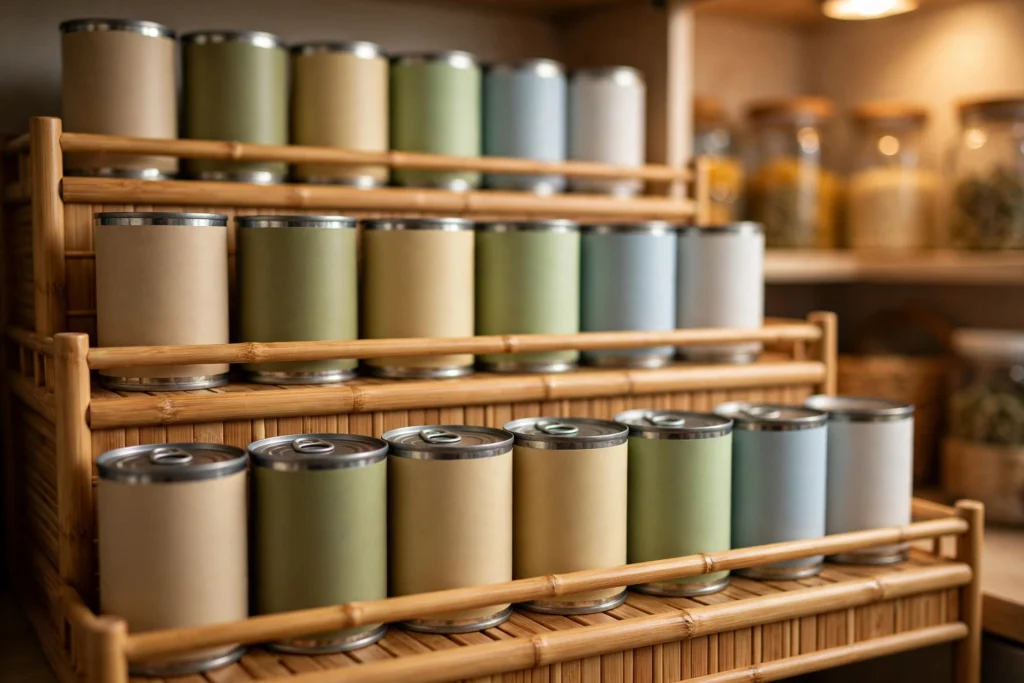
1. Put risers on every shelf
The back half of a pantry shelf is where food goes to die. A tiered shelf riser turns one shelf into stadium seating — cans in back sit higher, so you can see everything at a glance. This one change kills most of the “bought a duplicate” problem.
2. Decant into clear, stackable bins
Packets, pouches, and flimsy boxes fall over and slide everywhere. Clear stackable bins corral them into pull-out units. Clear matters: if you can’t see it, you won’t use it, and you’ll buy it twice. Label the front of each bin.

3. Add a turntable for the deep corners
Tall bottles and jars in a deep cabinet are the worst offenders. A lazy Susan lets you spin the whole group instead of knocking five bottles over reaching for the olive oil. One turntable per deep shelf is usually enough.

4. Use the back of the door
The inside of the pantry door is free real estate. An over-the-door rack holds spices, small bottles, and wraps without touching a single shelf. In a tiny pantry, vertical space is the only space you’ve got — think up, not out.
5. Get a can organizer that feeds forward
A gravity-fed can rack means the oldest can is always front and center: load from the top, grab from the bottom. No more discovering soup from 2022 hiding behind the new cans.
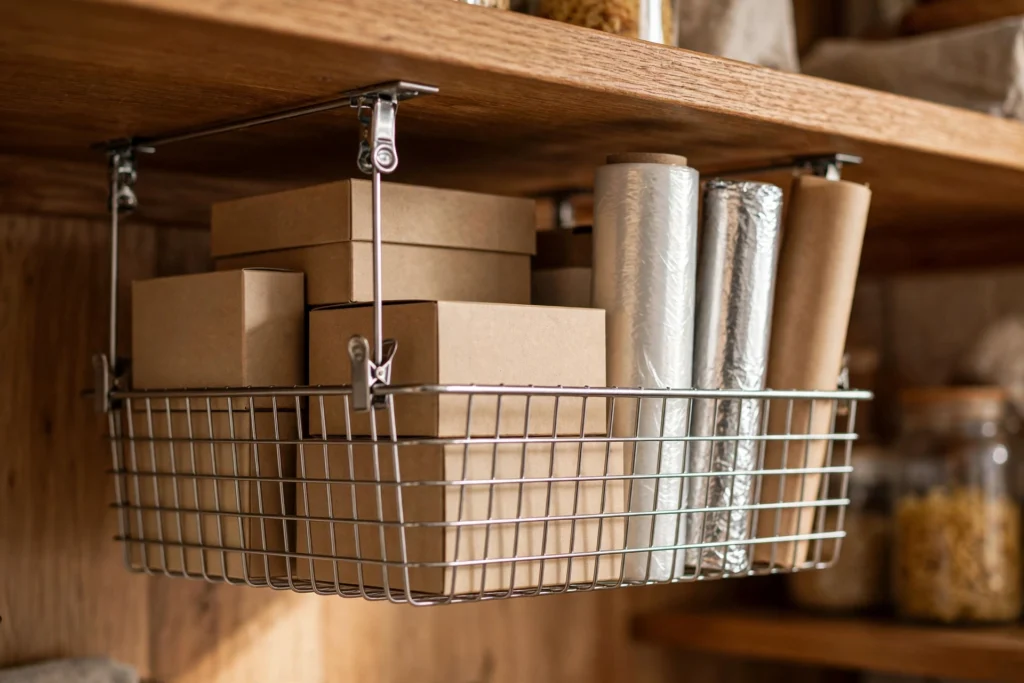
6. Clip baskets under existing shelves
Under-shelf baskets hook onto a shelf and hang into the dead air below, creating a whole extra row for wraps, tea, or snack bags. No tools, a few dollars, and they double your usable space on tall shelves.
7. Corral packets with small bins, not big ones
Seasoning packets, oatmeal sachets, and sauce mixes do best in small, narrow bins — one category per bin. A big bin of mixed packets is just a junk drawer with better lighting.
8. Label everything opaque
Clear bins let you see contents; anything opaque must be labeled or it becomes a mystery box within a week. A label maker is nice, but painter’s tape and a marker work just as well to start.
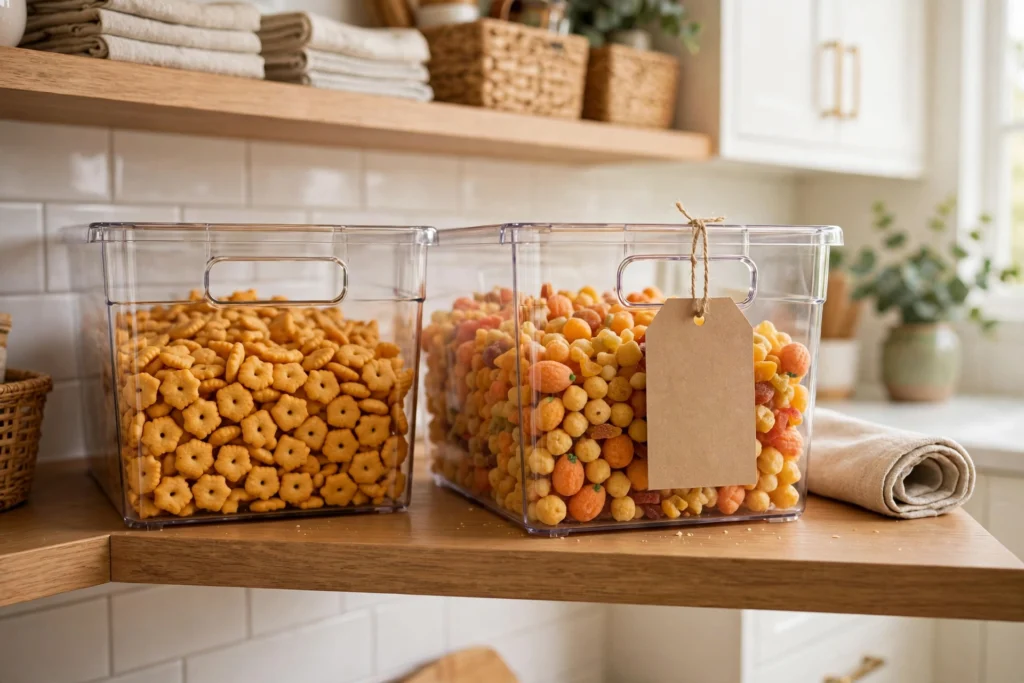
9. Give snacks a defined home
Loose snacks migrate everywhere. One clear bin labeled “snacks” — or individual bins per kid — contains the chaos and makes it obvious when it’s time to restock. This is the highest-impact five minutes in a family pantry.
10. Enforce the backstock rule
Backstock gets one shelf or one bin. When it’s full, you don’t buy more until there’s room. This single rule prevents the slow creep that turns an organized pantry back into a storage unit.
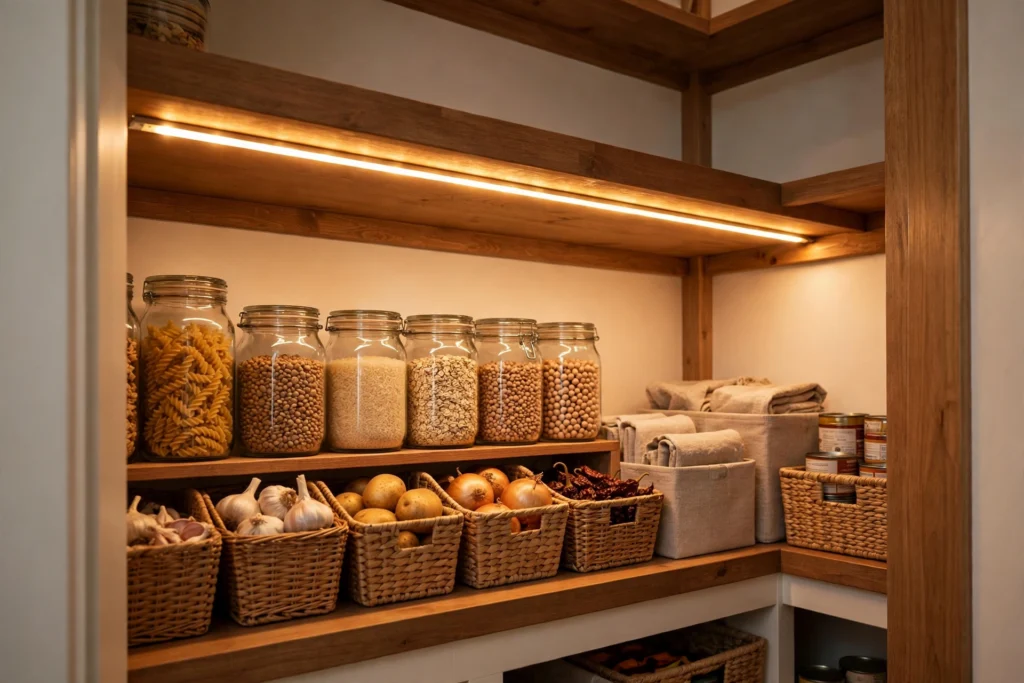
11. Add light where it’s dark
Deep pantries swallow light. A ten-dollar motion-sensor LED strip under the top shelf makes every label readable and makes the space feel twice as big. It’s the cheapest transformation on this list.
12. Keep a running grocery list inside the door
Tape a notepad or a small whiteboard inside the pantry door. When you take the last of something, write it down immediately. This closes the loop between “organized pantry” and “organized shopping” — and it ends the duplicate-buying problem for good.
Mistakes that wreck a small pantry
Buying matching containers before decluttering. Measure your actual inventory first. Half the “pantry organization” photos online are just clutter in matching jars.
One giant “miscellaneous” bin. It becomes the junk drawer of the pantry within days. Every bin needs a category.
Storing daily items up high. If you need a step stool for the olive oil, the system is fighting you. Daily items at eye level, occasional items up high, heavy items down low.
Ignoring the door. In a small pantry, the door is often 20% of your total storage. Leaving it bare is leaving space on the table.
Keeping it organized
A pantry stays organized with almost no effort if the system is right — but “almost” still needs a routine. Once a week, spend five minutes putting strays back in their zones and tossing anything that’s expired. Once a season, do a quick inventory before a big grocery run. That’s it. The zones do the heavy lifting; you just do the light maintenance.
Frequently asked questions
How do I organize a pantry with no shelves?
Use freestanding stackable shelf inserts — they create instant tiers inside a bare cabinet. Tension rods can also divide deep spaces vertically, and over-the-door racks work even without a proper pantry door (they hang on cabinet doors too).
Should I decant everything into matching containers?
No — decant only what solves a real problem: flimsy packaging that falls over, bulk bags that don’t reseal, or categories you buy in volume. Matching containers look great in photos, but a small pantry works fine with a mix of clear bins and original packaging, as long as everything is visible and labeled.
What’s the cheapest way to organize a small pantry?
Start with zero purchases: empty it, toss expired items, group by zone, and move daily items to eye level. Then buy only what solves a remaining problem — usually a shelf riser and a few clear bins, often under twenty dollars total.
How do I keep my pantry organized with kids?
Give kids their own reachable snack bin and a simple rule: snacks live in the bin, not on shelves. When everything has one obvious home, even small kids can put things back — which is the whole battle.
Final thoughts
A small pantry doesn’t need more space. It needs fewer mysteries: every item visible, every category zoned, every bin labeled. Start with the empty-and-purge, build your zones, then buy only the two or three organizers that solve what’s left. You’ll spend less, and the pantry will stay organized longer, than any full matching-container overhaul.
And don’t forget the darkest cabinet in the house — our under-sink organization guide sorts out the chaos around the pipes.
Next up: the rest of the kitchen. Our small kitchen organization guide tackles cabinets, counters, and drawers with the same systems-first approach.