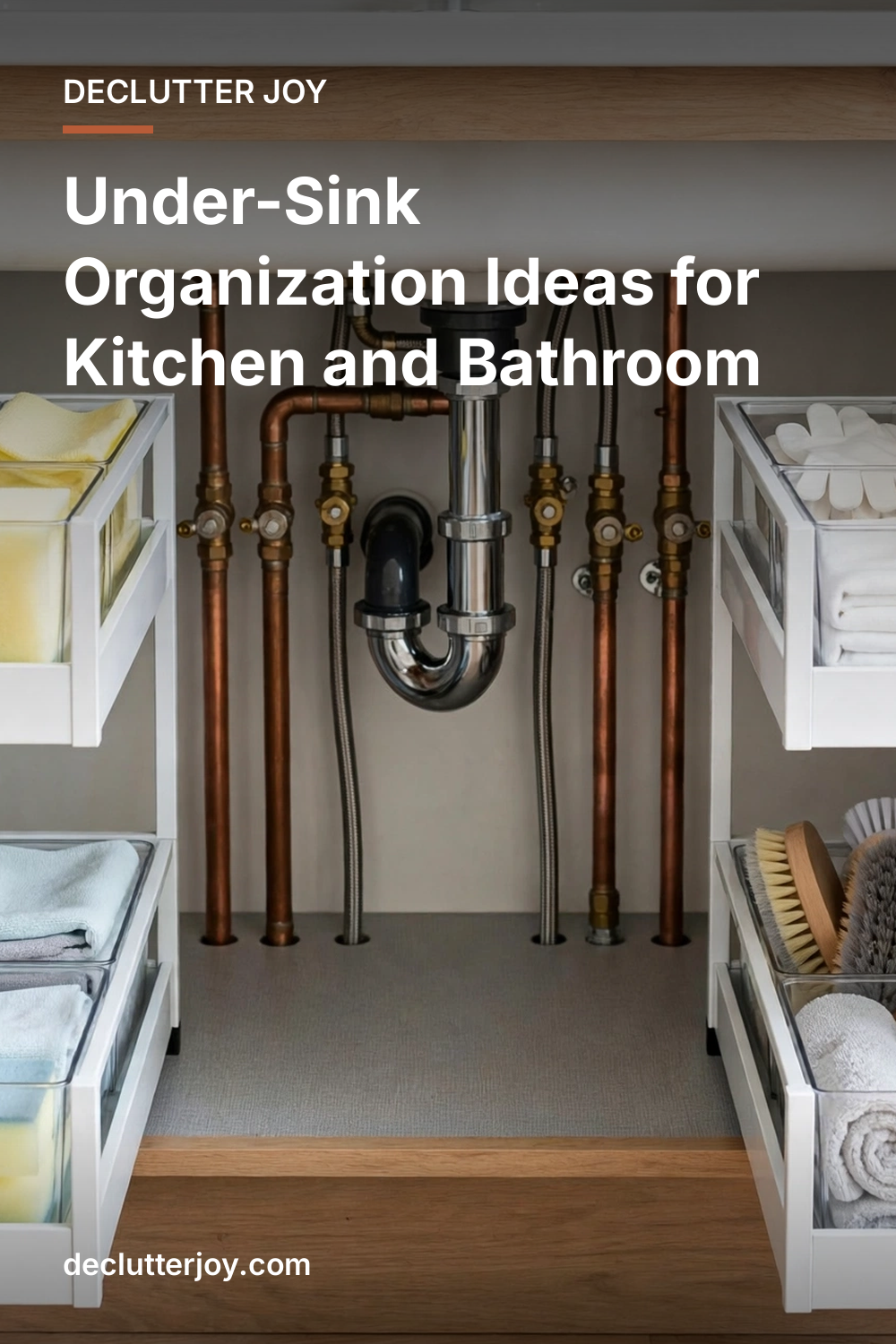
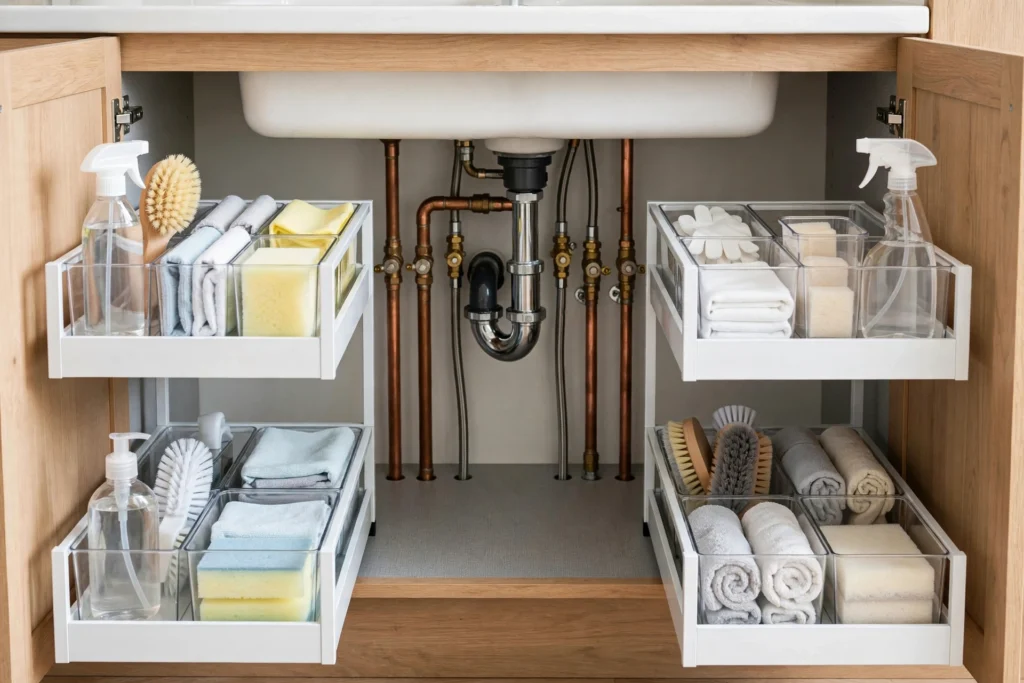
The cabinet under the sink is where organization goes to die. Pipes eat the middle, cleaning bottles multiply in the dark, and everything you actually need hides behind a wall of half-used sprays. It’s the smallest, darkest, most annoying cabinet in the house — and one of the most satisfying to fix.
Whether it’s your kitchen sink, bathroom sink, or both, the system is the same: clear it out, work around the plumbing, and give every category a pull-out home. Here’s how.
Organizing the whole kitchen? Pair this with our small kitchen organization guide and the room-by-room decluttering system.
Step 1: Empty and purge
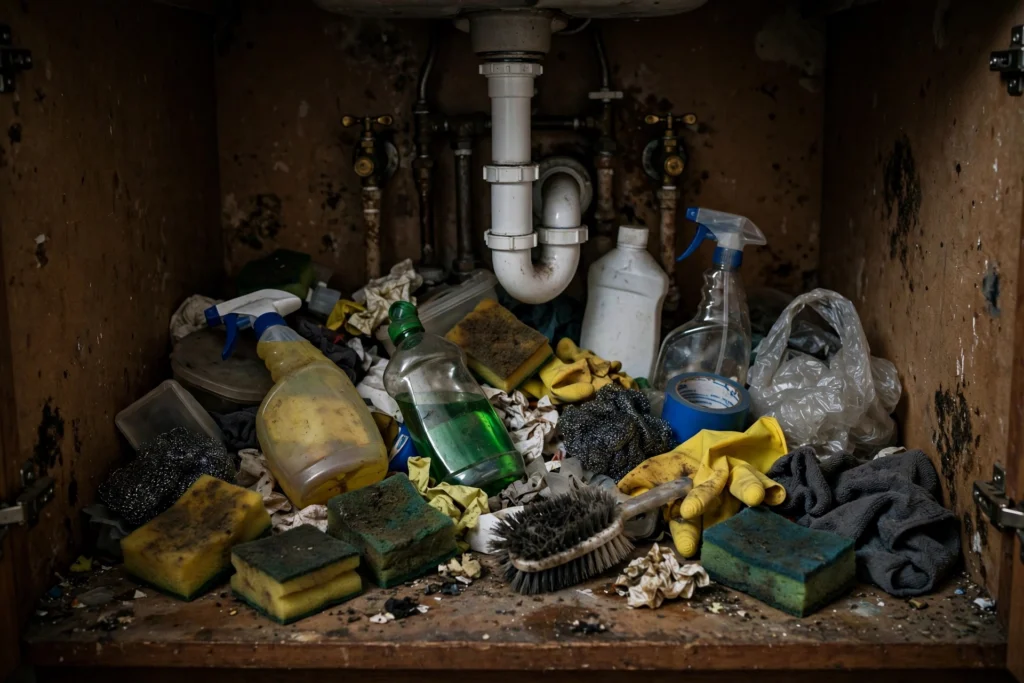
Pull everything out and lay it on the counter. You’ll typically find three things: duplicates, dried-up relics, and products for problems you no longer have. Be ruthless:
- Toss anything expired, dried out, leaking, or missing its sprayer.
- Combine the three half-bottles of the same cleaner into one.
- Relocate anything that doesn’t belong under a sink — tools, random hardware, the mystery bag.
- Donate unopened extras you won’t use to a shelter or food bank.
Most under-sink cabinets lose half their contents in this step alone. What’s left is the actual inventory — now it gets a system.
Step 2: Measure around the pipes
The plumbing is the boss of this cabinet. Before buying anything, measure the usable space: width and depth on each side of the pipes, and the clearance height under them. Write the numbers down. Under-sink organizers come in specific sizes because every cabinet’s pipe layout is different — measure twice, buy once.
While it’s empty, line the cabinet floor. A waterproof mat or a cut-to-fit shelf liner protects the wood from the inevitable drip and makes future cleanups a wipe instead of a project.
10 under-sink organization ideas
1. Use stackable pull-out drawers
The single best under-sink upgrade: two-tier sliding drawers that fit around the pipes. They turn the dark back of the cabinet into accessible storage — pull instead of crawl. Measure first, then buy the size that frames your plumbing.

2. Hang spray bottles on a tension rod
A short tension rod across the cabinet lets spray bottles hang by their triggers, lifting them off the floor entirely. Suddenly the bottom of the cabinet is free for bins — and you can see every bottle at a glance.
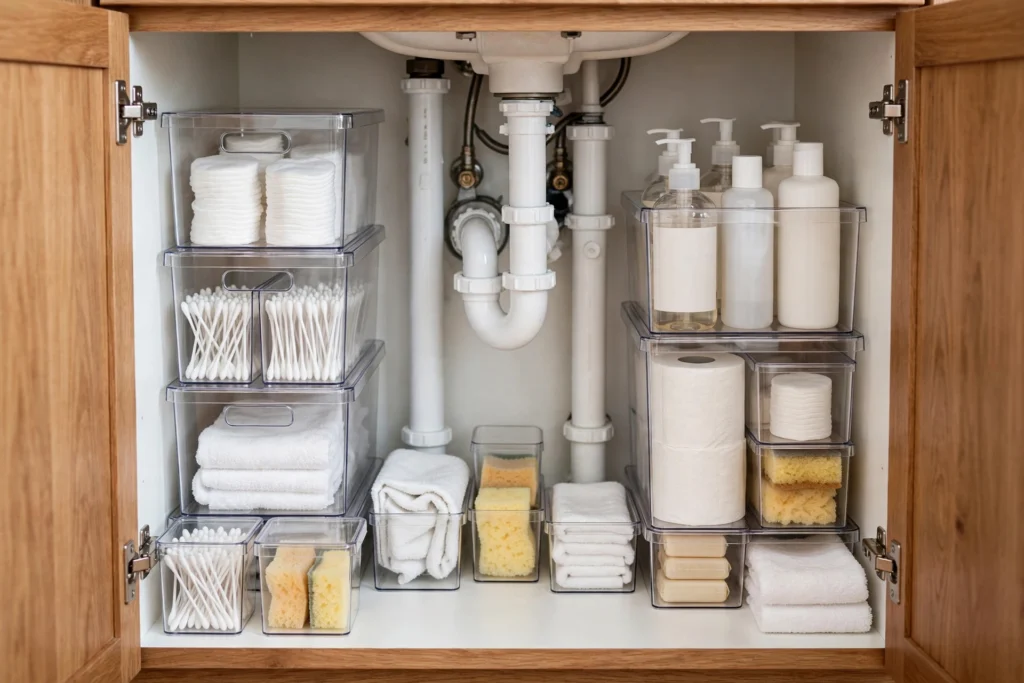
3. Corral with clear bins
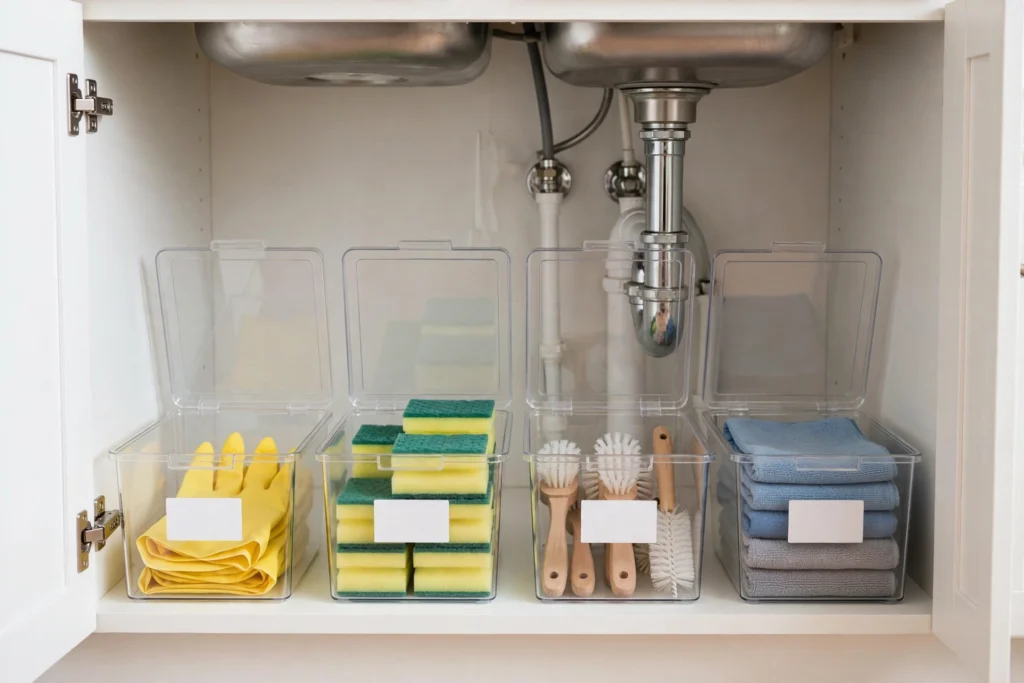
One bin per category: daily cleaners, specialty products, sponges and cloths, trash bags. Clear bins mean you can see what’s inside without pulling everything out; labels on the fronts keep the household honest.
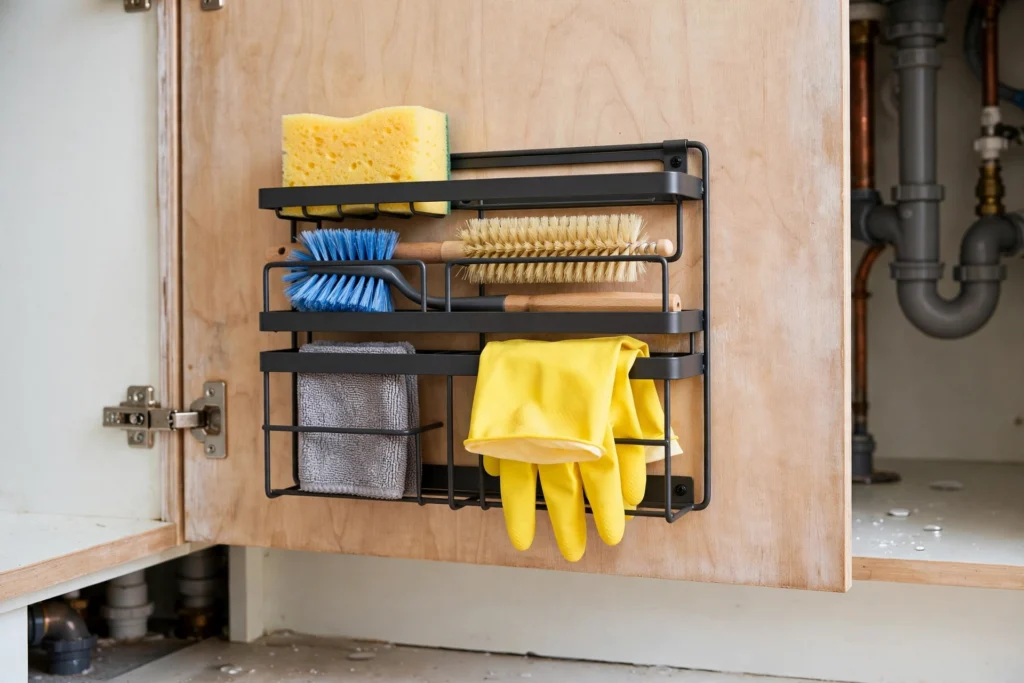
4. Mount the door
The inside of the cabinet door is prime real estate. Adhesive hooks or a slim door-mounted caddy hold sponges, brushes, gloves, and small bottles. In a cabinet this cramped, the door can add 20% more usable space.
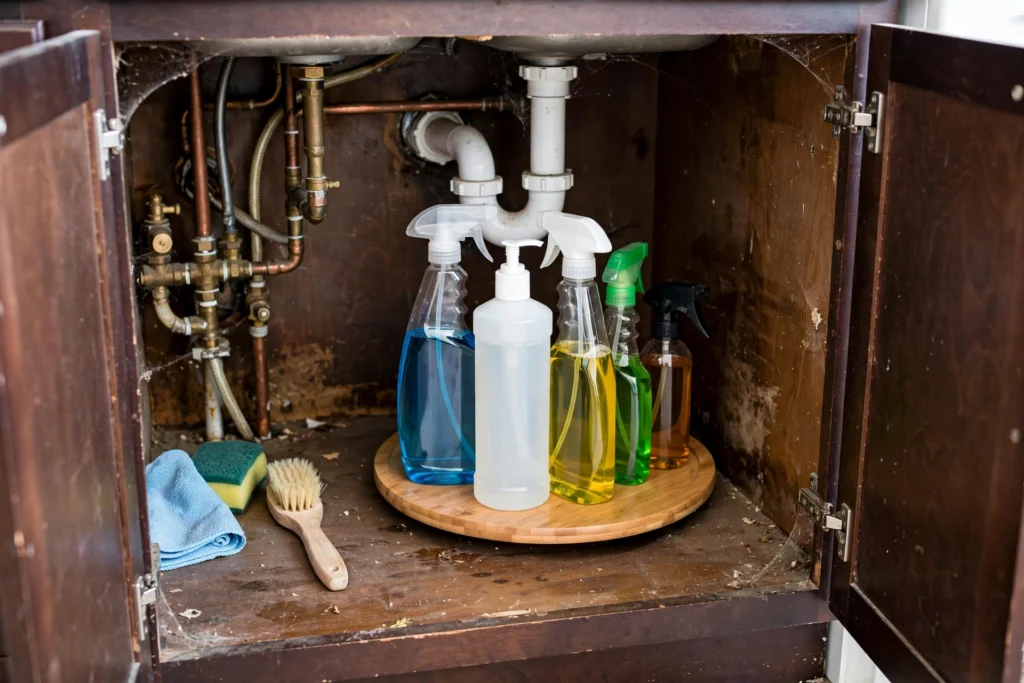
5. Add a turntable for the deep corners
A small lazy Susan in the back corner ends the “knock over five bottles reaching for one” problem. Spin, grab, done. It works in kitchen and bathroom cabinets alike.
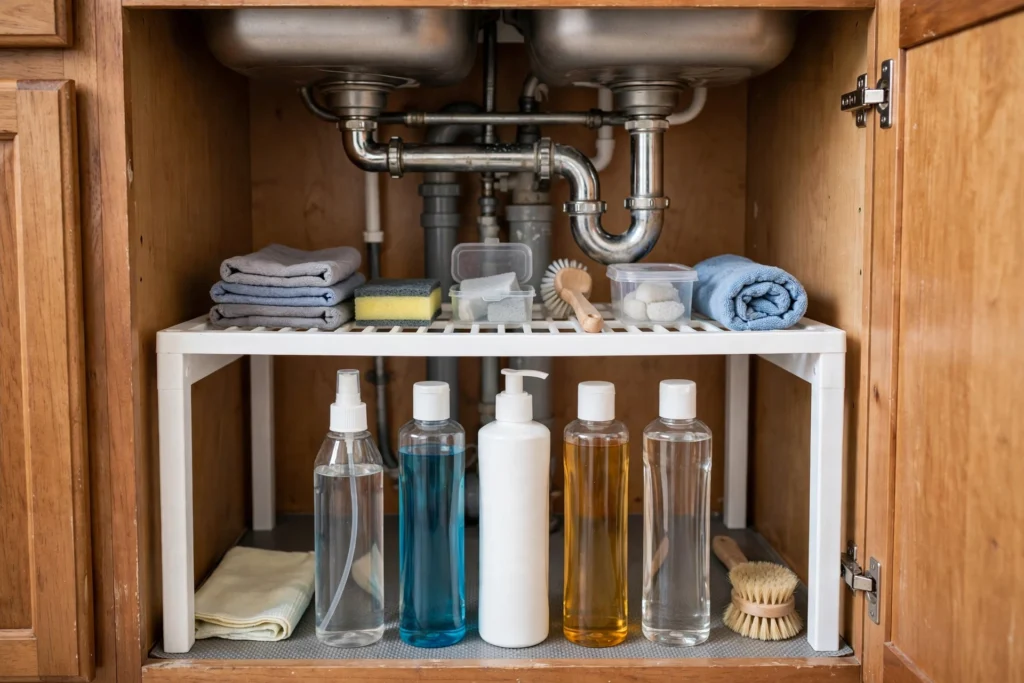
6. Go vertical with shelf risers
Short stackable shelves create a second level for small items — extra sponges, dishwasher pods, hand soap refills — above the taller bottles below. Dead air becomes a shelf.
7. Contain the trash bags
Trash bags unroll into chaos. Store the roll upright in a tall narrow bin, or hang a bag dispenser on the door. One contained roll beats a tangle every time.
8. Separate kitchen from bathroom logic
Kitchen under-sink: cleaning supplies, dish soap refills, trash bags, and the compost caddy. Bathroom under-sink: extra toiletries, cleaning products, first-aid overflow, and hair tools. Different inventories, same system — pull-outs, bins, door storage.
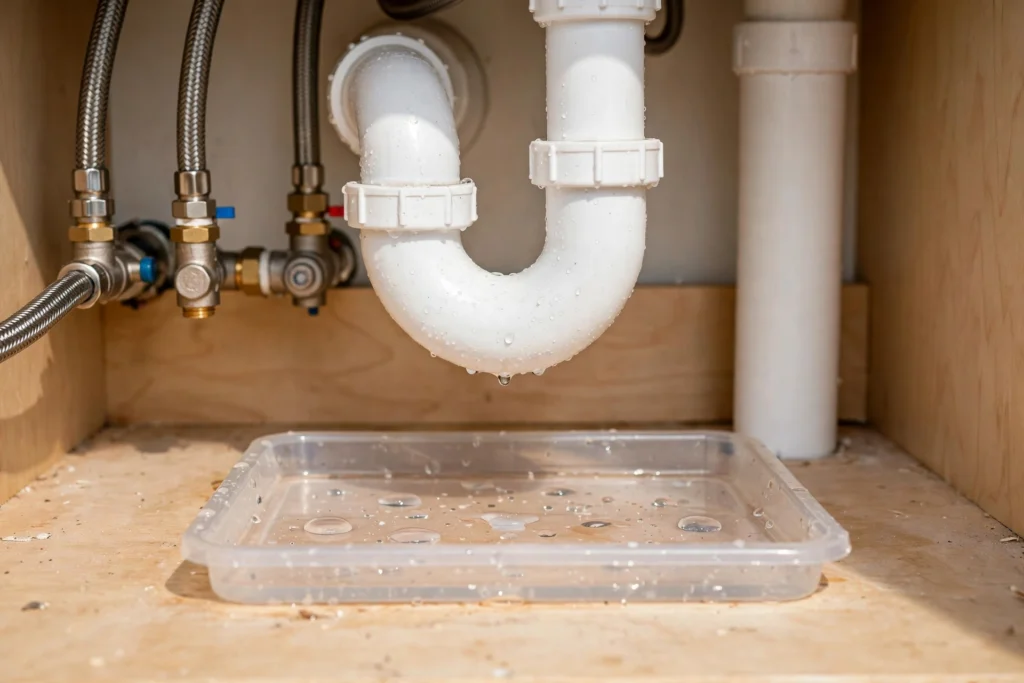
9. Keep a drip tray under the plumbing
A shallow plastic tray under the pipes catches slow leaks before they become cabinet damage. It’s a two-dollar insurance policy — check it when you do your seasonal review.
10. Leave breathing room
Don’t pack the cabinet to 100%. Leave one empty spot or one half-empty bin. That slack is what lets you put things back without shoving — and shoving is how organized cabinets become avalanches.
What belongs under the sink (and what doesn’t)
Belongs: cleaning supplies you use weekly, dish/laundry soap refills, sponges and cloths, trash bags, plunger and brush (bathroom), small step stool (kitchen, if it fits).
Doesn’t belong: anything damaged by moisture (paper goods, electronics, medications), harsh chemicals mixed with food-adjacent items, or the “I’ll fix it later” pile. Under-sink cabinets get damp — store accordingly.
Keeping it organized
The system maintains itself if you follow two habits: put things back in their bin (not “in the cabinet”), and do a five-minute purge every season — toss the dried-up, combine the duplicates, check the drip tray. That’s the whole maintenance plan.
Frequently asked questions
How do I organize under a sink with pipes in the middle?
Measure the space on each side of the pipes, then use organizers sized for it: stackable pull-out drawers that frame the plumbing, a tension rod above for spray bottles, and slim bins in the remaining gaps. The pipes aren’t the problem — unmeasured organizers are.
What’s the best organizer for under the kitchen sink?
A two-tier pull-out drawer sized to your cabinet is the highest-impact single purchase. Add a tension rod for spray bottles and clear bins for categories, and the cabinet is essentially solved.
How do I keep under-sink cabinets from smelling?
Empty and wipe the cabinet, toss anything leaking or expired, line the floor with a waterproof mat, and leave the doors open for a few hours to air out. An open box of baking soda absorbs lingering odors. If the smell persists, check for an actual plumbing leak.
Can I store the same things under the bathroom sink?
Mostly yes, with adjustments: bathroom cabinets hold toiletries and personal-care overflow instead of dish soap. Keep medications elsewhere — under-sink moisture and temperature swings aren’t good for them.
Final thoughts
The under-sink cabinet is small, dark, and plumbed — which is exactly why a system matters more here than anywhere else. Measure the pipes, pull out instead of crawl, bin by category, and leave breathing room. Ten minutes of maintenance a season keeps it solved for good.