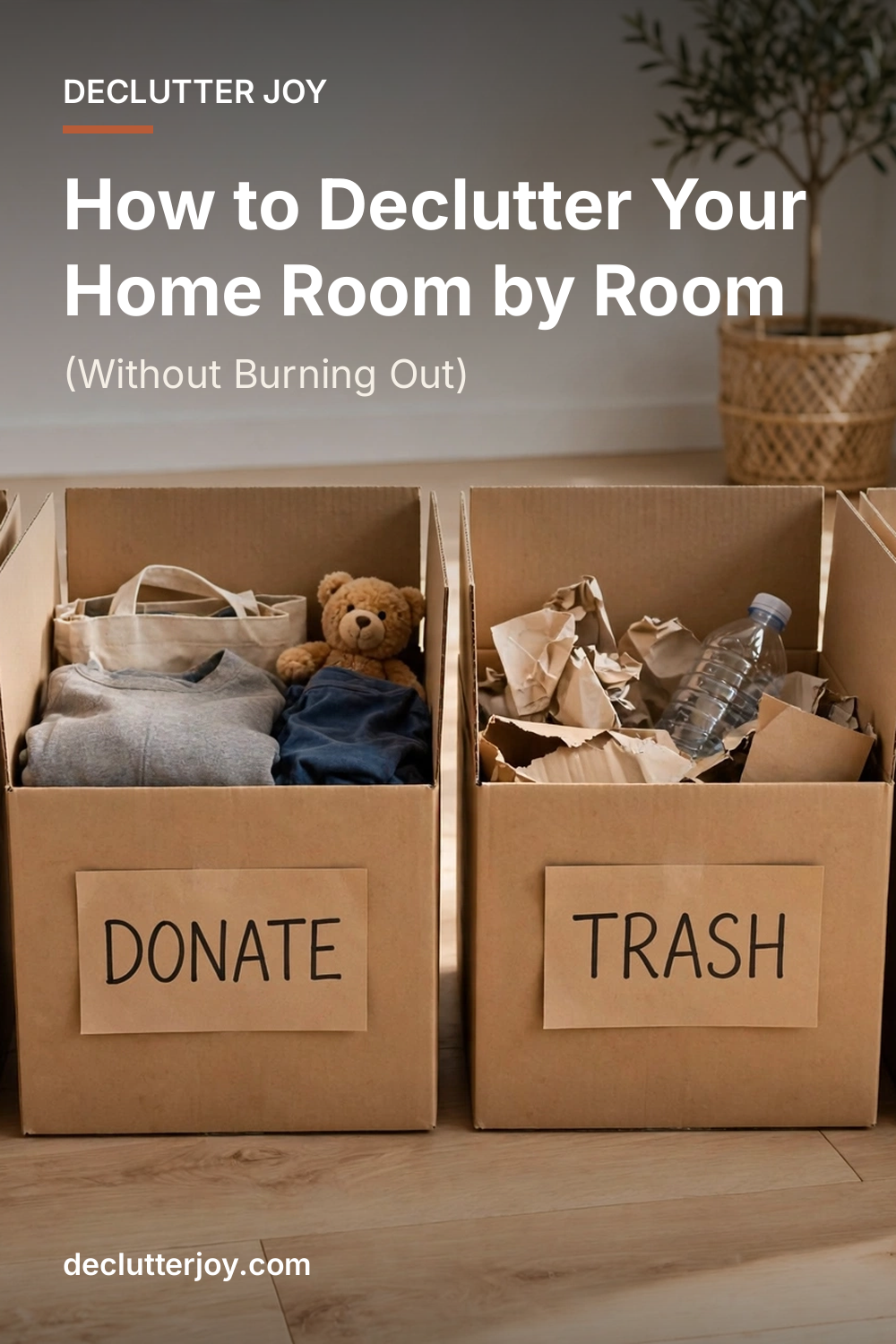
Here’s the uncomfortable truth about decluttering: most people don’t fail because they’re lazy. They fail because they start in the wrong place, try to do everything in one weekend, and quit by Sunday afternoon surrounded by half-sorted piles.
There’s a better way, and it’s almost boring in its simplicity. You go room by room, in a specific order, with a timer and four boxes. That’s the whole system. The rest of this guide is just the details that make it actually stick — what to tackle in each room, what order to do it in, and the handful of mistakes that derail nearly everyone.
Why the room-by-room method works when nothing else does
Clutter is overwhelming because your brain sees it as one giant problem: “the house is a mess.” A giant problem triggers avoidance. You scroll your phone instead.
Breaking the house into rooms — and rooms into zones — turns one impossible task into a series of 20-minute wins. Each finished drawer or shelf is proof the system works, and that momentum carries you into the next zone. Professional organizers use some version of this sequence for a reason: it manages your energy, not just your stuff.
The second reason it works: order matters. You start where decisions are easy (expired cans don’t spark joy debates) and build up to the hard stuff (sentimental items, the closet). By the time you reach the emotionally loaded areas, you’ve already made hundreds of small decisions. You’re warmed up.
Before you start: set up your sorting station
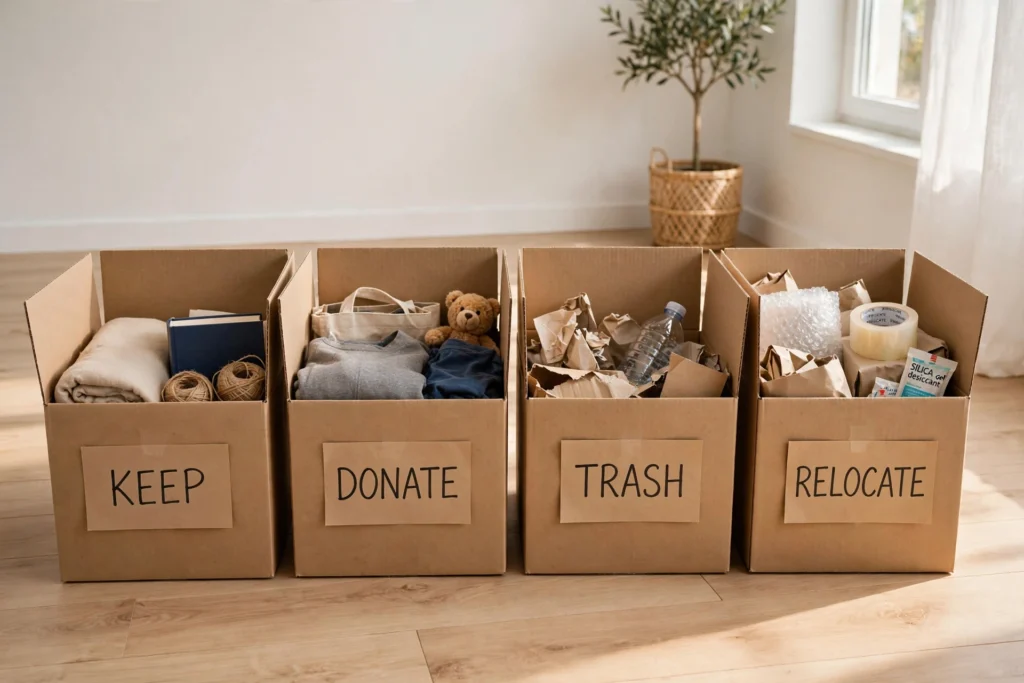
Don’t buy anything for this. Grab four boxes or bags and label them:
- Keep — stays in this room, just needs a proper home within it
- Relocate — belongs in a different room
- Donate / Sell — usable, but not by you anymore
- Toss / Recycle — broken, expired, stained, or genuinely worn out
Work one zone at a time — a drawer, a shelf, one section of closet. Everything in that zone goes into a box. No “maybe” pile. The maybe pile is just clutter with better lighting; if you haven’t used it in a year and it isn’t genuinely sentimental, it goes.
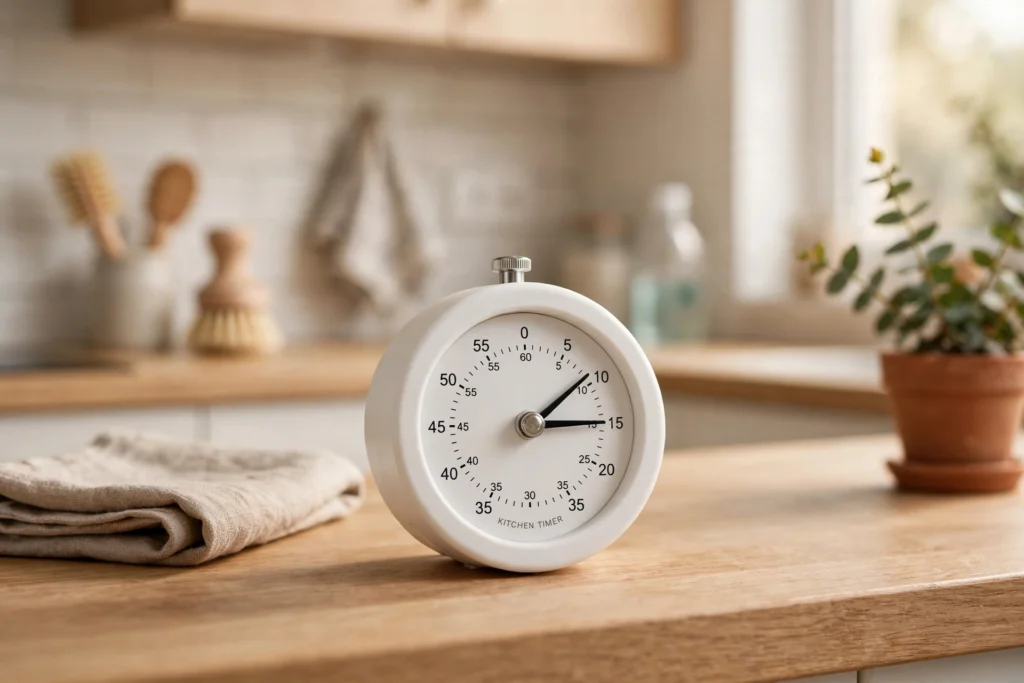
Set a timer for 20 minutes. When it rings, you stop — even mid-drawer. This sounds counterintuitive, but it’s the single most important rule. Decluttering burnout comes from marathon sessions, not from the work itself. Twenty focused minutes, once or twice a day, will clear a house faster than one heroic weekend that makes you never want to do it again.
The order that actually works
Start low-stakes, finish high-emotion. Here’s the sequence:
- Bathroom and linen areas first. Expired sunscreen and scratchy towels require zero emotional energy. Fast wins.
- Kitchen and pantry. Expired food, duplicate gadgets, chipped mugs — mostly easy calls, big visual payoff.
- Living areas. Surfaces, media, the random drawer everyone has.
- Bedrooms and closets. Clothes involve identity and money. Do these after you’ve built momentum.
- Home office and paperwork. Needs focus; schedule it when you’re fresh.
- Storage areas last. Garage, attic, basement — highest volume, lowest urgency. Your future self, armed with weeks of practice, handles these better.
Room-by-room: what to actually declutter
1. Bathroom
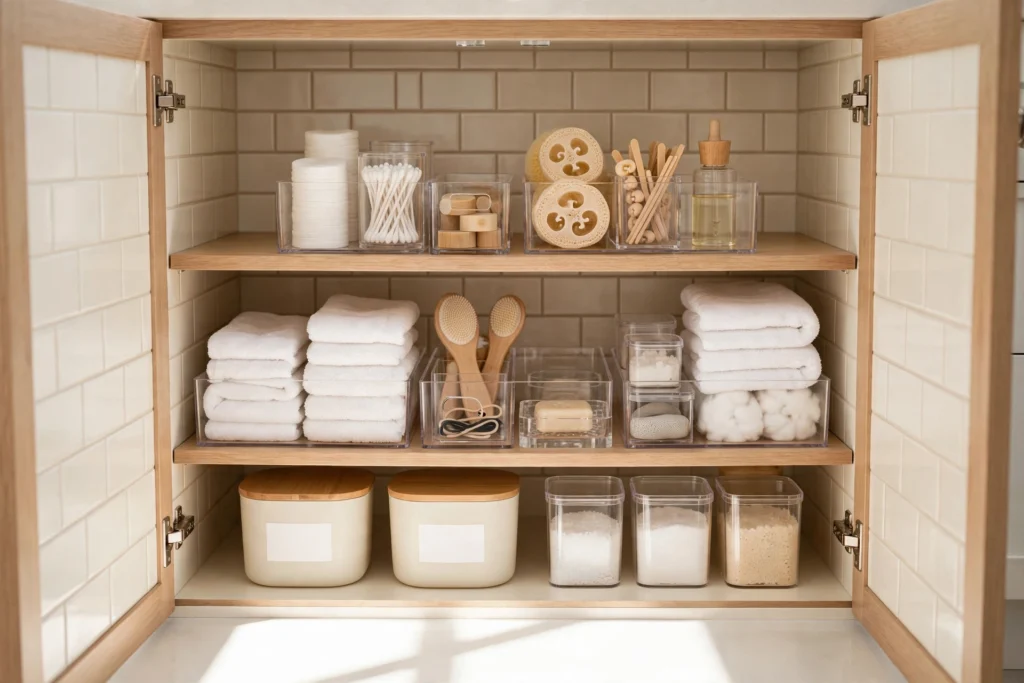
The smallest room with the fastest payoff. Pull everything out of the medicine cabinet and under the sink, wipe the shelves, and only put back what you use.
- Expired medications, sunscreen, and toiletries (check dates — most people are shocked)
- Hotel toiletries you’ve been “saving” for years
- Dried-out nail polish, old razors, stretched-out hair ties
- Duplicate styling tools you never reach for
- Ratty towels and washcloths — demote the worst to cleaning rags, toss the rest
2. Kitchen and pantry
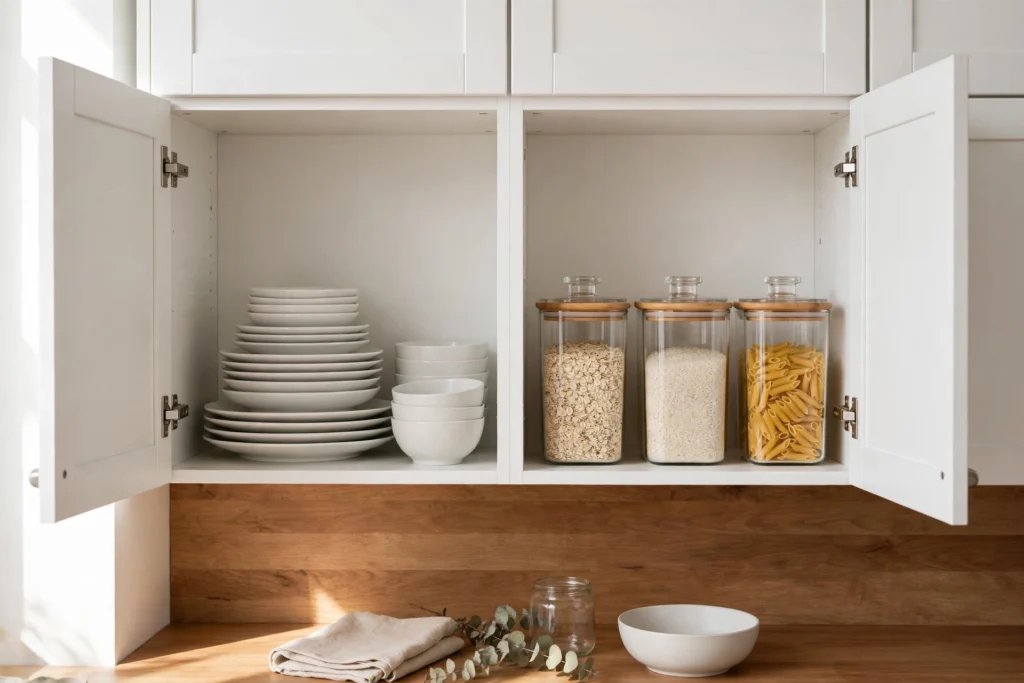
Work cabinet by cabinet. The goal isn’t a magazine kitchen; it’s being able to find the baking powder without an excavation.
- Expired food and spices (ground spices lose potency after about a year)
- Duplicate utensils — you do not need three vegetable peelers
- Chipped mugs, warped plastic containers, lids with no matching base
- Small appliances you haven’t touched in a year (bread makers, I’m looking at you)
- Takeout condiment packets, dead batteries in the junk drawer, instruction manuals for things you no longer own
As you go, group what stays into zones: cooking, baking, coffee/tea, snacks. Future you will thank present you every single morning.
3. Living areas
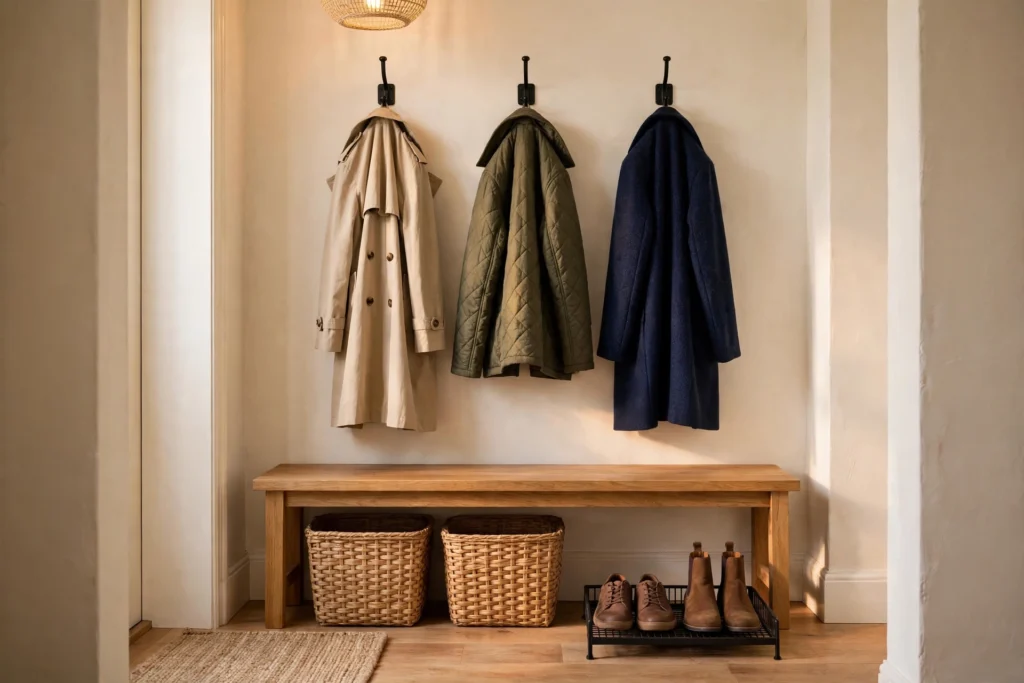
Start with flat surfaces — they’re what your eyes land on, so clearing them changes how the whole room feels.
- Magazines, catalogs, and mail more than a month old
- Remote controls for devices you no longer have
- Chargers and cables you can’t identify (if no one claims it in a week, recycle it)
- Decor you don’t actually like — gifts you’re keeping from guilt count double here
- Board games with missing pieces, DVDs nobody watches, books you’ll never reread

4. Bedrooms and closets
Do clothes in one focused session if you can. Try the hanger trick going forward: hang everything with hangers facing backward, and turn each hanger around when you wear the item. In six months, the still-backward hangers tell you exactly what to let go.
- Anything that doesn’t fit right now — not “someday” clothes, today’s clothes
- Items you haven’t worn in a full year (seasonal exceptions apply)
- Single socks, stretched-out underwear, worn-out shoes
- Nightstand clutter: old receipts, dead pens, books you abandoned
- Under-bed storage you haven’t opened in a year — open it, then decide

5. Home office and paperwork
Paper is the sneakiest clutter because it feels important. Most of it isn’t.
- Shred or recycle: old bills (once paid and recorded), expired coupons, junk mail
- Keep a simple filing rule: if you can download it from the provider’s website, you don’t need the paper
- Dead pens, dried-out markers, mystery keys, obsolete chargers
- Go through one drawer of “important papers” — you’ll usually find half of it is neither
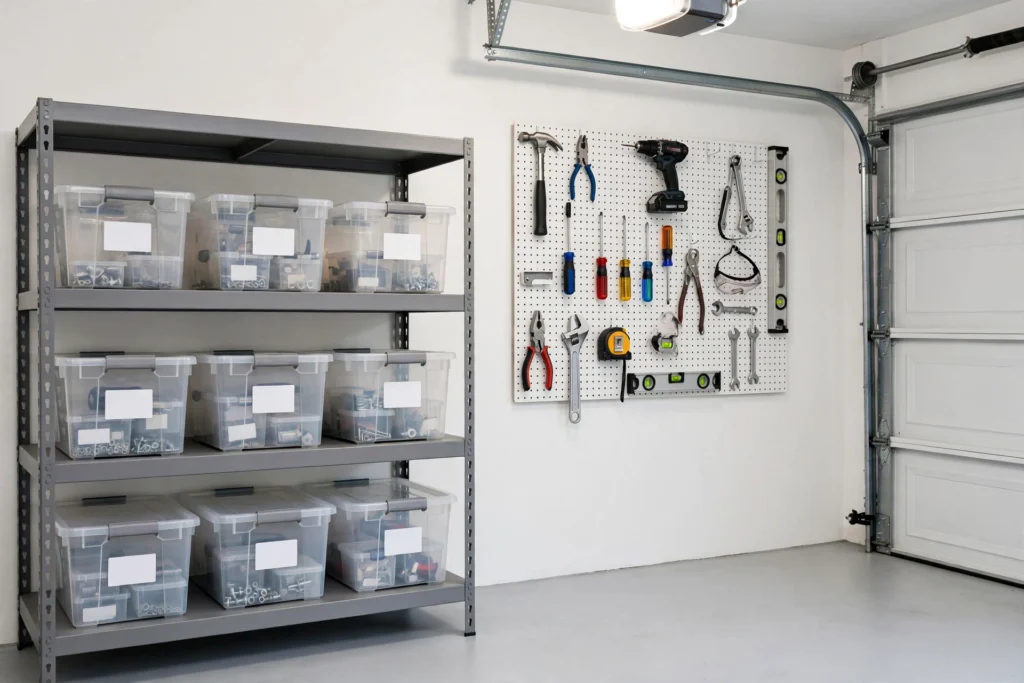
6. Garage, attic, and basement
Save these for last, when your decision muscle is strong. The rule here is honesty about “someday” projects: if the treadmill has been a clothing rack for two years, it’s a clothing rack. Sell it or donate it.
- Broken tools, dried-up paint, half-empty chemical bottles (dispose of these properly — most cities have hazardous waste drop-offs)
- Holiday decorations you haven’t used in three years
- Boxes you never unpacked from your last move — if you haven’t needed it by now, you don’t need it
- Anything you’re storing “for the kids” that they haven’t asked about

The step everyone skips (don’t)
Get the donate boxes out of your house within 48 hours. Bags of donations sitting in the trunk for three weeks have a mysterious way of migrating back inside. Drop them off, schedule a pickup, list the sellable items — whatever it takes. A declutter isn’t finished until the outgoing stuff is actually gone.
How to keep it decluttered
Decluttering is an event; staying decluttered is a habit. The maintenance version is much smaller than people expect:
- The 10-minute reset. Every evening, set a timer and return things to their homes. Ten minutes prevents the slow creep that undoes a whole weekend’s work.
- One in, one out. New shirt? An old one leaves. New kitchen gadget? Something gets donated. This single rule does more than any organizing product.
- A donation bag on standby. Keep a bag in the closet. When you notice something you don’t wear, it goes straight in — no “decluttering day” required.
- Shop your home first. Before buying storage solutions, use what you have. Most “organization problems” are actually “too much stuff” problems wearing a disguise.
Common mistakes that derail the whole project
Starting with sentimental items. Photo boxes and keepsakes on day one is how people quit by lunch. Save them for when you’re experienced.
Buying organizers first. Containers are for what survives the purge, not for hiding the mess. Declutter, then measure, then buy — in that order.
Doing someone else’s stuff. Declutter your own things first. Sorting your partner’s or kids’ belongings breeds resentment and stalls momentum. Model it; they’ll follow or they won’t, but your space will be calm either way.
Shoving it in the “storage room.” Moving clutter to the garage isn’t decluttering. It’s relocating the problem to somewhere you can’t see it.
Frequently asked questions
How long does it take to declutter a whole house?
At 20–40 minutes a day, most homes take three to six weeks. Anyone promising a weekend is selling something — or doesn’t have kids.
Where should I start decluttering when I’m overwhelmed?
The bathroom. It’s small, the decisions are easy, and you’ll finish in under half an hour. That first finished room rewires the whole project from dread to momentum.
What should I do with sentimental clutter?
Give it its own box and its own day — near the end of the project, not the beginning. Keep the pieces that genuinely matter, photograph the rest if it helps, and let the guilt-gifts go. Keeping something out of obligation isn’t sentiment; it’s storage.
Is it better to declutter or organize first?
Declutter first, always. Organizing stuff you don’t need is just arranging clutter in prettier containers.
What do I do with things I want to sell?
Set a deadline — two weeks is plenty. Photograph and list the valuable items immediately; whatever doesn’t sell by the deadline gets donated. A “sell pile” without a deadline becomes permanent clutter.
Where to go next
Once you’ve worked through the rooms, these guides go deeper on the trickiest spots:
- Small Pantry Organization Ideas That Actually Work — zones, shelf risers, and the backstock rule for tiny pantries.
- Small Kitchen Organization Ideas for Tiny Kitchens — work zones, vertical storage, and the countertop rules.
- How to Declutter Your Closet: A Step-by-Step System — the four-pile sort, the try-on round, and the one-in-one-out rule.
- Under-Sink Organization Ideas for Kitchen and Bathroom — pull-out drawers, tension rods, and bins that work around the pipes.
Final thoughts
You don’t need a perfect home. You need a home where you can find your keys, open a closet without flinching, and sit down at the end of the day without the mess narrating your evening. That’s what this process builds — not perfection, just a calmer baseline.
Start with the bathroom. Set the timer. Twenty minutes. You’ll be surprised how far that gets you.
Want a nudge each week? Join the Declutter Joy newsletter — one organizing idea every week, no spam.