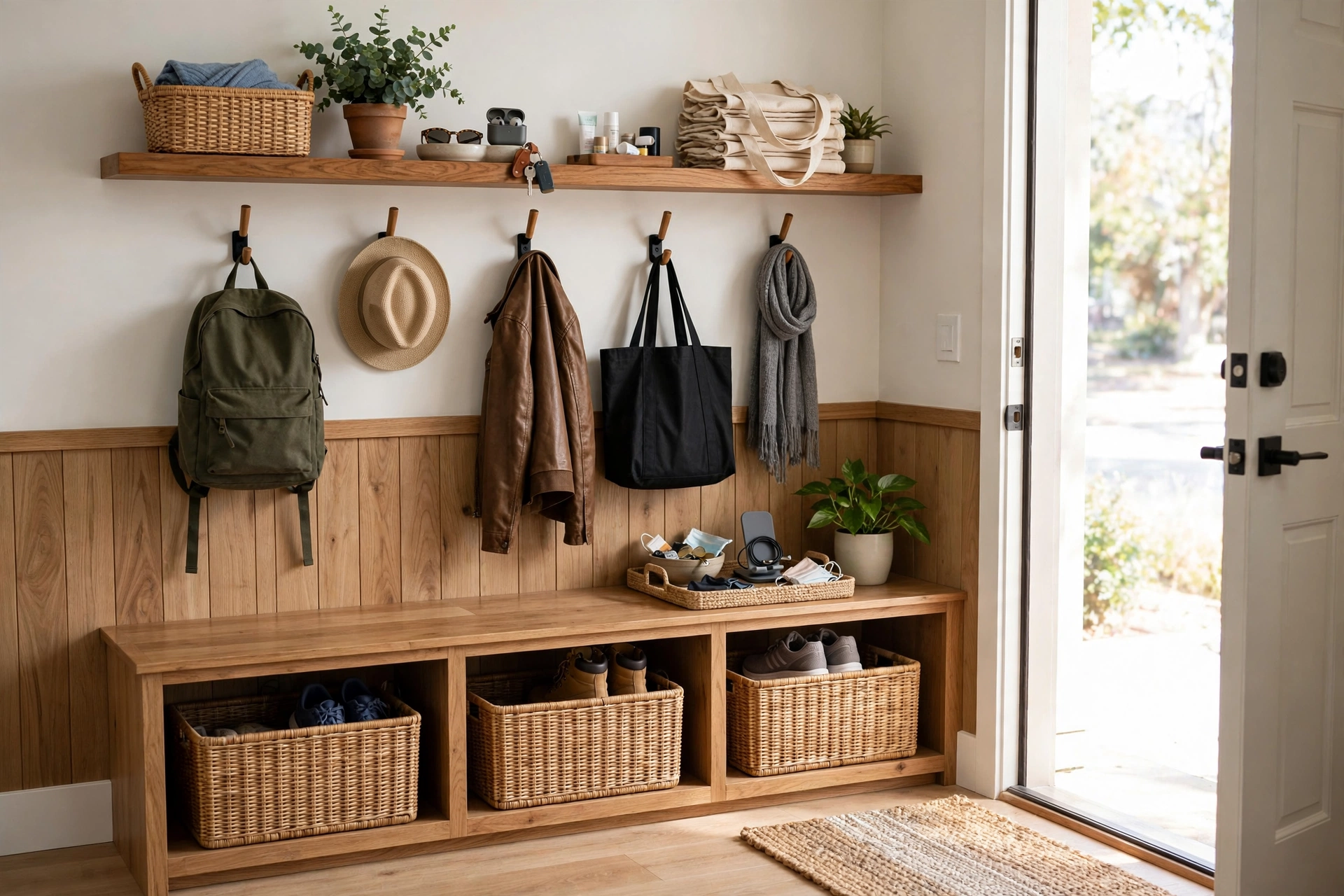
The best home organization hacks aren’t products — they’re small shifts in how you set up your space: putting things where you use them, making the right choice the easy choice, and building systems that maintain themselves. Here are the hacks that actually change daily life.
Pair this with our whole-home decluttering guide and budget organizing ideas.


Store it where you use it
- The prime-real-estate rule: everyday items live between knee and eye height, in the room where they’re used. Everything else is negotiable.
- Cleaning supplies in every bathroom: a small caddy under each sink means bathrooms get wiped down instead of “waiting for cleaning day.”
- Chargers where you sit: a charging station in the living room and bedroom ends the cable hunt forever.
- Duplicates of cheap essentials (scissors, tape, lint rollers) in multiple rooms beat one “correct” location nobody walks to.
Make the right choice the easy choice
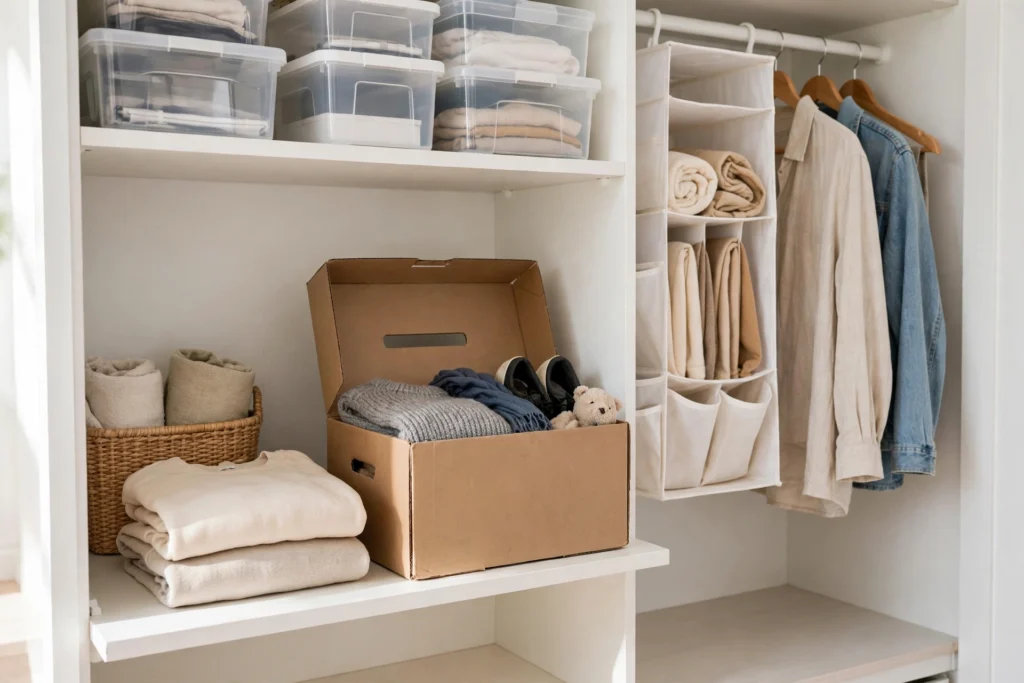
- Open bins for daily stuff, lids for the rest: if putting it away takes two hands, it won’t happen. Daily items get lidless homes.
- The donation box lives in the closet permanently: outgrown or unloved items go in immediately, not “someday.”
- Trash cans where trash happens: every bathroom, the home office, the craft corner. Trash on the floor means the can is too far.
- Hooks beat hangers for jackets, bags, and robes — one motion instead of three.
Contain the chaos zones
- The entryway launch pad: one hook, one shelf, one bin per person. Everything that leaves the house lives here.
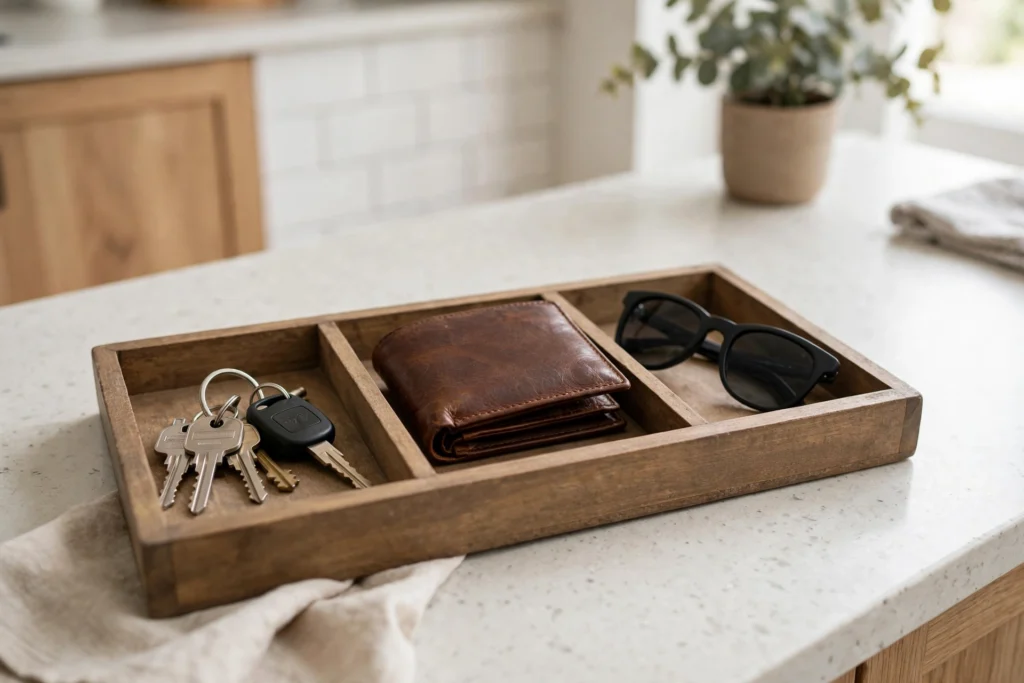
- A “landing strip” tray on the kitchen counter for keys, wallet, and sunglasses — one bounded zone instead of counter sprawl.
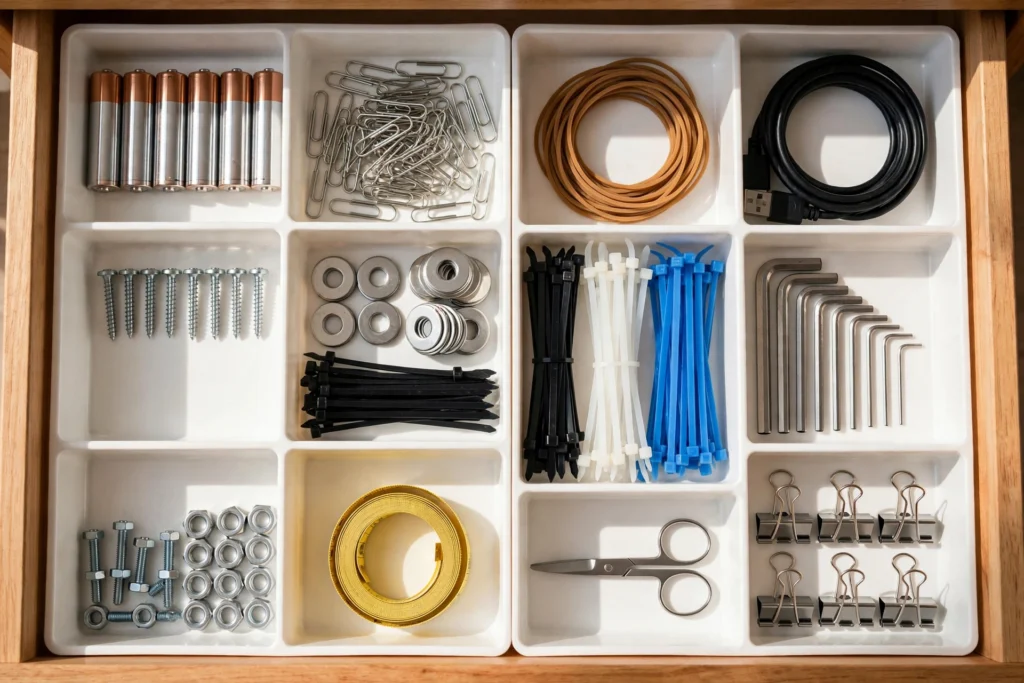
- The junk drawer gets rules: one drawer, divided, with a quarterly purge. Contained and intentional beats eliminated.
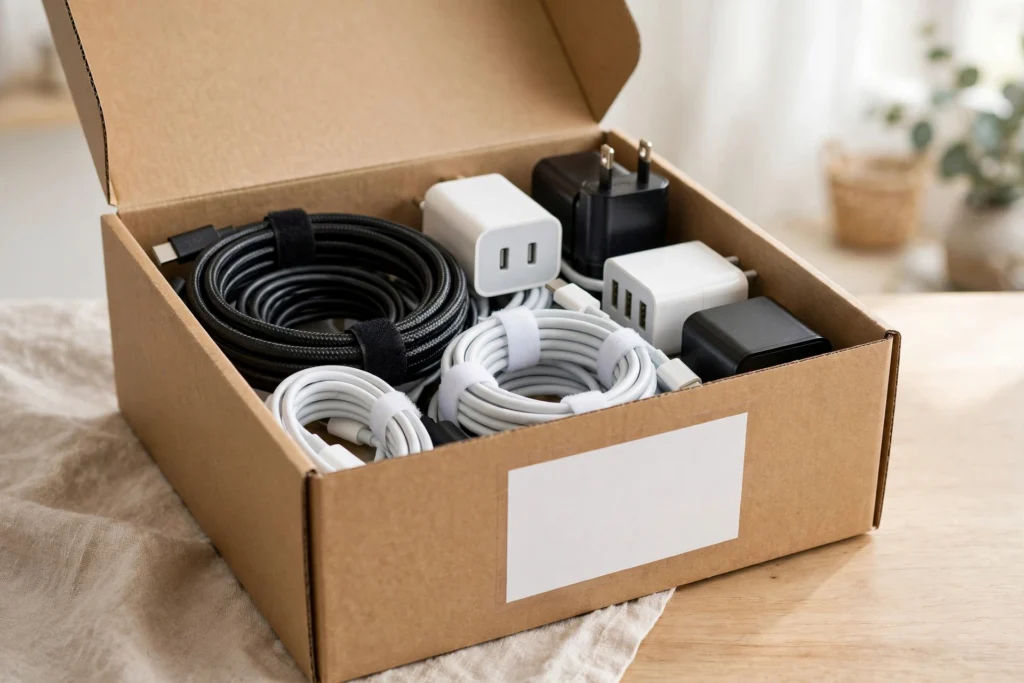
- Cables in one box: a single labeled box for spare cables and chargers. When it’s full, the oldest ones go.

Hacks that save time daily
- Prep the night before: bags packed, outfits chosen, coffee set. Mornings run on rails.
- The 5-minute reset: one room, one timer, every evening. Maintenance beats marathon cleaning.
- Laundry in one flow: hampers sorted by load from the start (lights/darks), so wash day needs no sorting step.
- Meal-adjacent stations: lunch-packing supplies together, coffee supplies together. Grouping by task saves steps.
Hacks for small homes
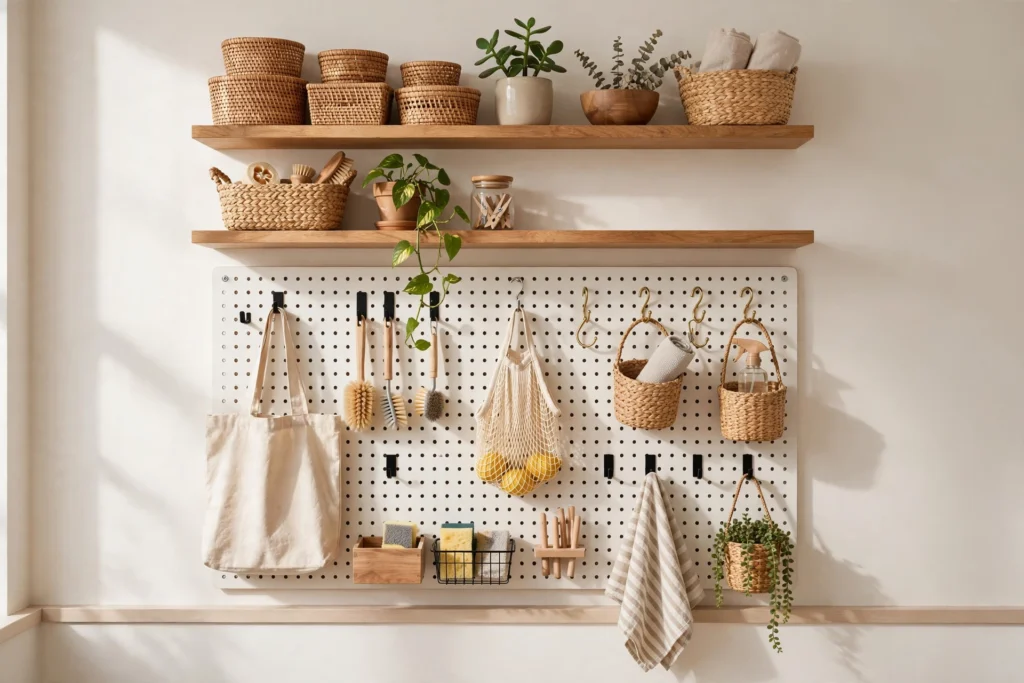
- Vertical everything: walls hold shelves, hooks, and pegboards — floor space is the scarcest resource.
- Furniture that stores: ottomans, benches, and beds with storage swallow the overflow invisibly.
- Decant ruthlessly: bulky packaging removed at the door; contents in stackable containers that fit your shelves exactly.
- One room, one function at a time: fold-down and nesting pieces let small rooms serve double duty.
Frequently asked questions
What are the most effective home organization hacks?
Store items where you use them, make putting things away a one-motion task (open bins, hooks), and contain chaos zones like the entryway and junk drawer with strict boundaries.
How can I organize my home without buying lots of products?
The best hacks are free: relocating items to their point of use, adding hooks, setting up a donation box, and running a 5-minute evening reset. Buy containers only after decluttering.
What’s the fastest way to make my home look organized?
Clear all flat surfaces into one sorting session, corral remaining items into trays and baskets, and do a 5-minute reset each evening. Visible surfaces drive 90% of the “organized” impression.
How do I maintain organization long-term?
Build systems with the lowest possible friction (open bins, hooks, point-of-use storage), keep a permanent donation box, and enforce one-in-one-out for categories that creep.

Final thoughts
The hacks that stick all share one trait: they reduce friction. Store it where you use it, make the tidy choice the easy choice, and contain what you can’t eliminate. Organization that fights your habits always loses — design for the life you actually live.