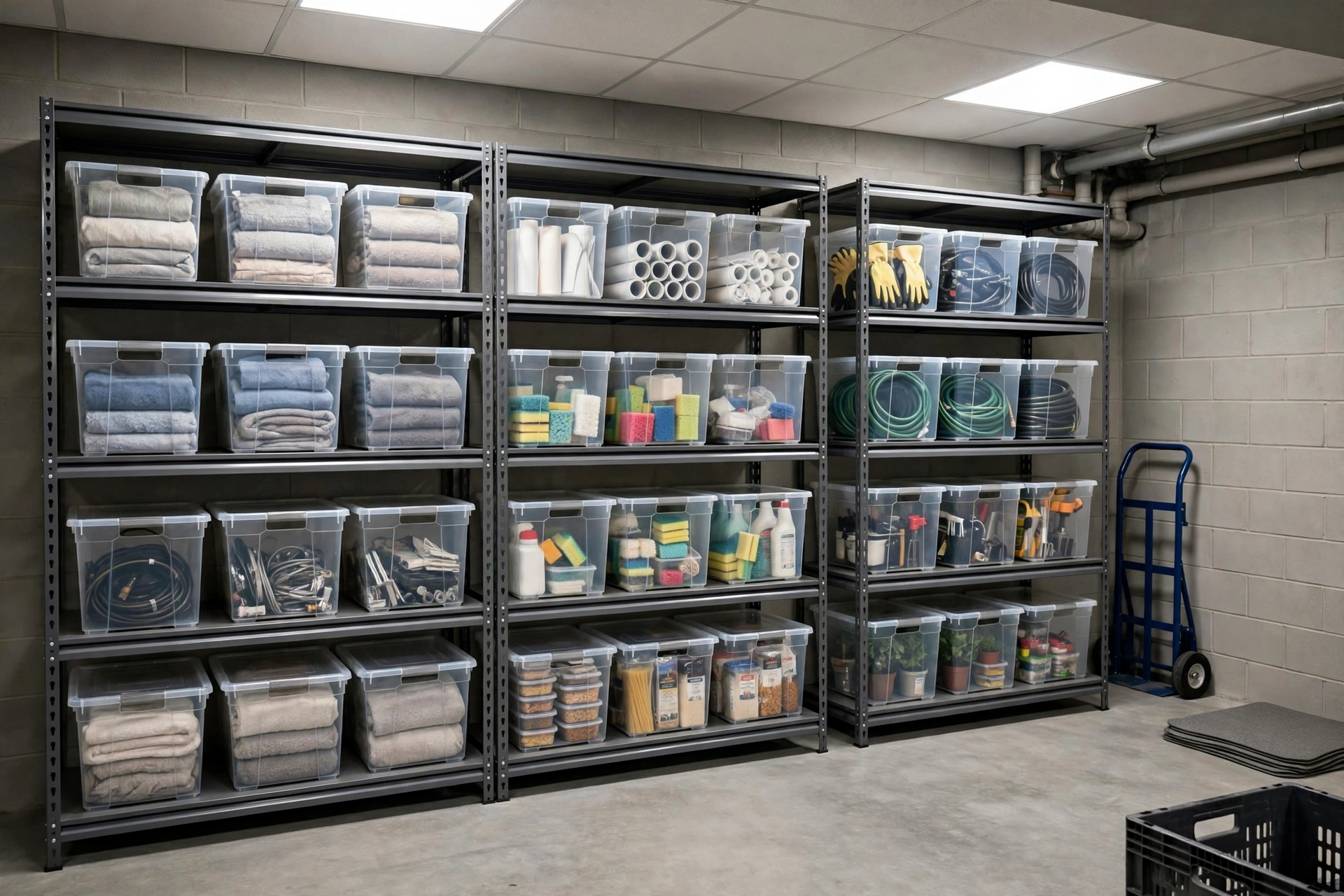
Basements are where good intentions go to fossilize. Boxes from three moves ago, the treadmill of optimism, holiday decor, and the “I’ll sort it someday” pile. But a basement is also the largest storage room in the house — and with zones, shelving, and honest labels, it becomes an asset instead of a mystery.
These are the basement organization ideas that reclaim the space: the zone map, shelving that survives damp, clear bins with real labels, and the rules that keep the basement from becoming a second attic.
Already tamed the garage? Our garage guide uses the same zone logic for the other big room.
The zone map
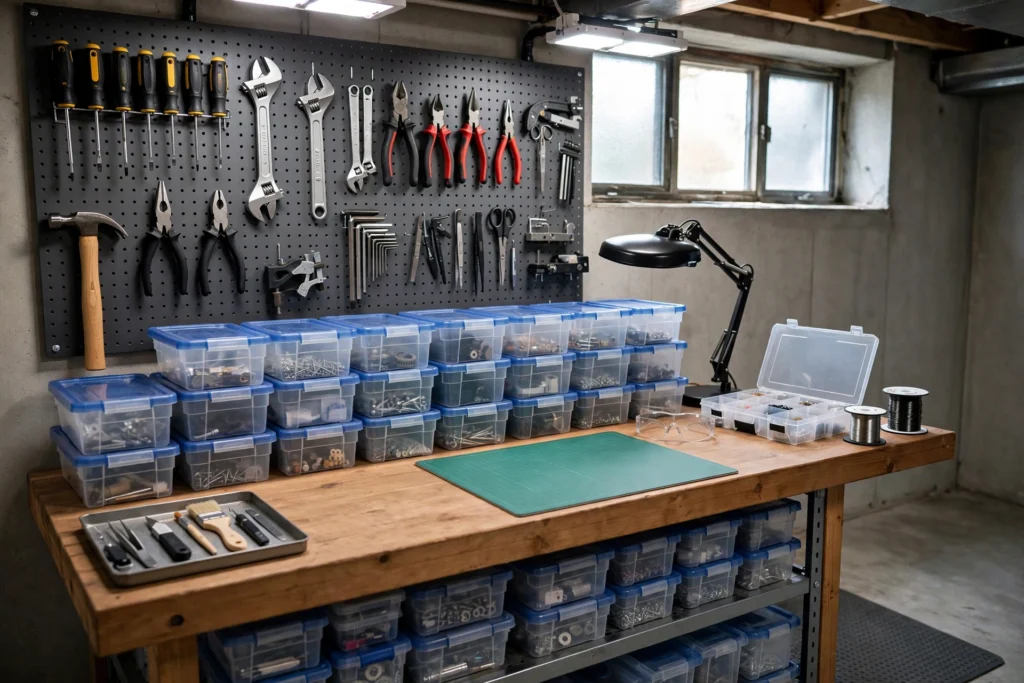
- Sketch the basement first. Divide it into zones before moving a single box: storage, seasonal, workshop/hobby, laundry overflow, and keep-clear (paths, furnace, breaker panel).
- Storage lives farthest from the stairs; the things you grab often live nearest. Distance = frequency.
- Nothing blocks utilities. Keep 3 feet clear around the furnace, water heater, and breaker panel — code and common sense.
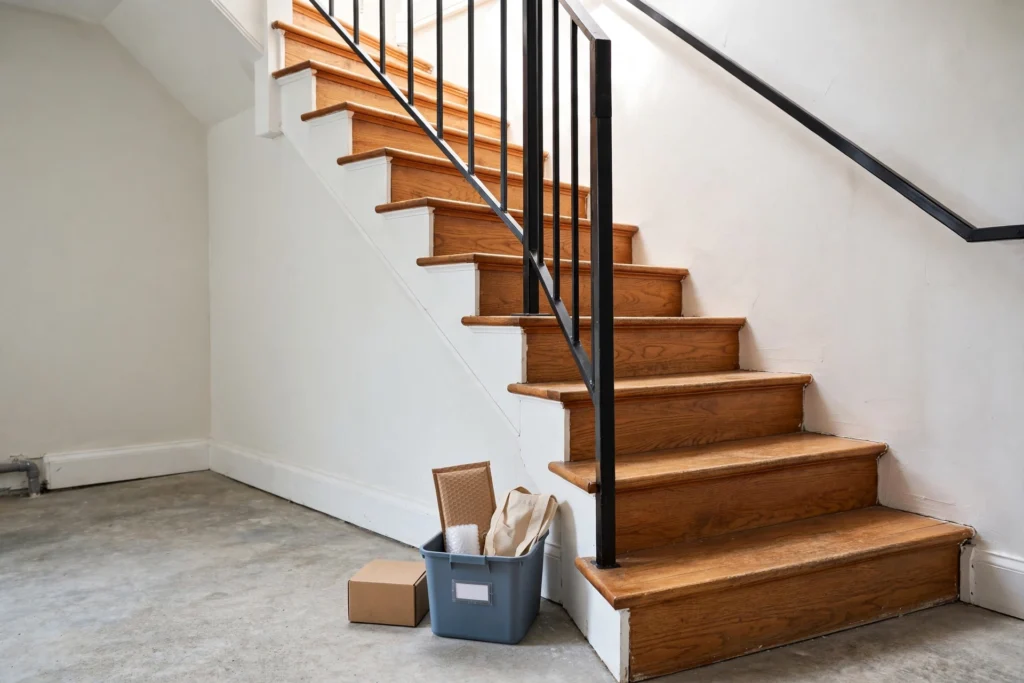
- One “inbox” zone near the stairs for items heading down. Process it monthly so it doesn’t become a pile.
Shelving that survives
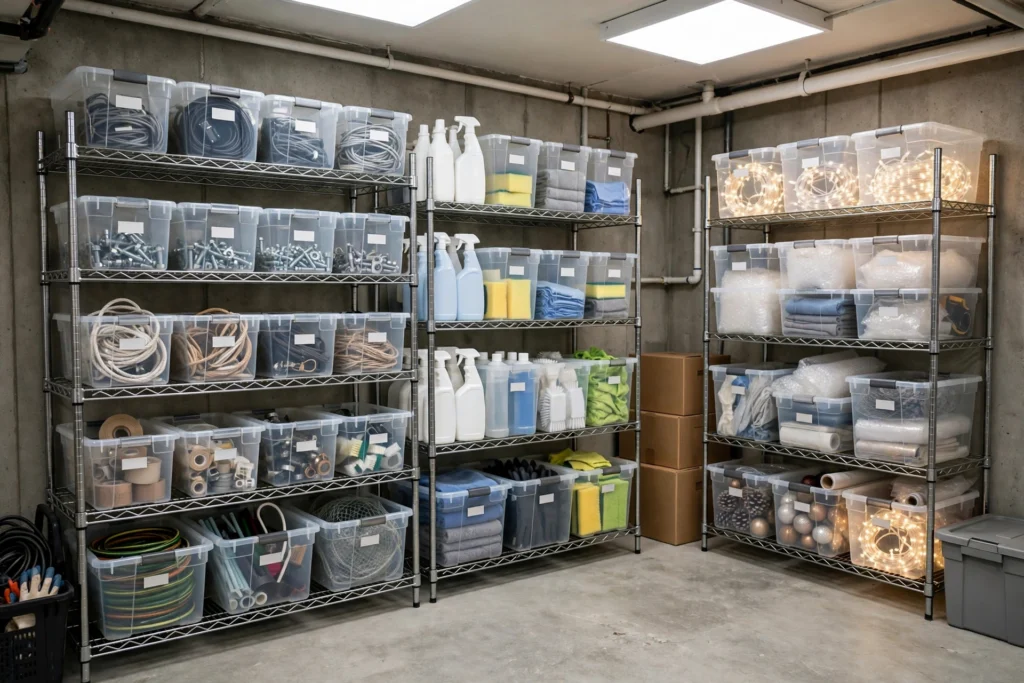
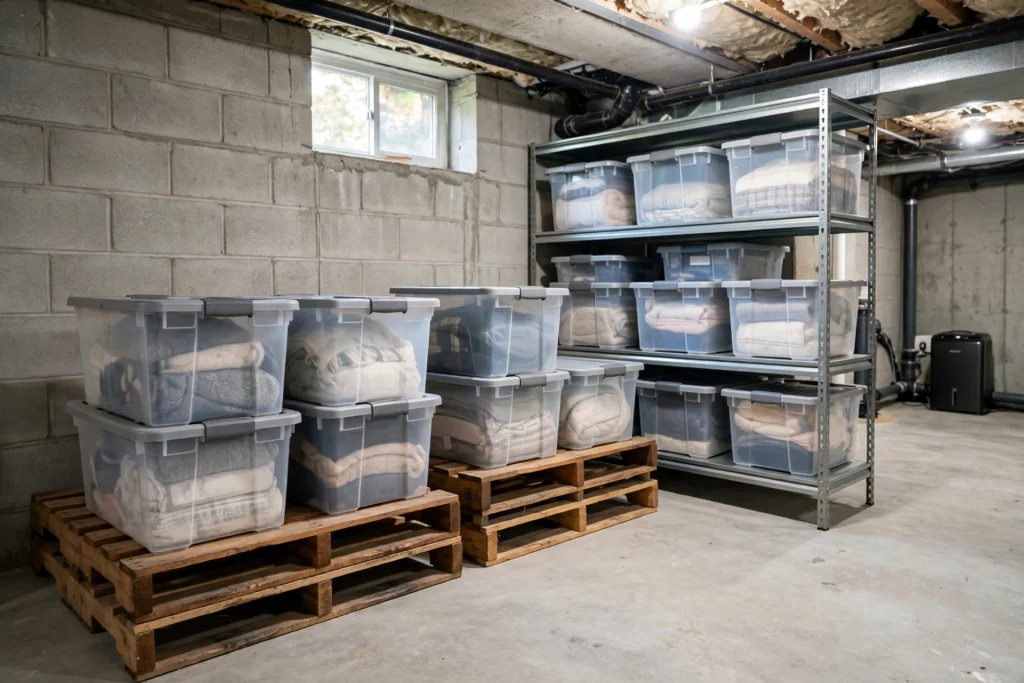
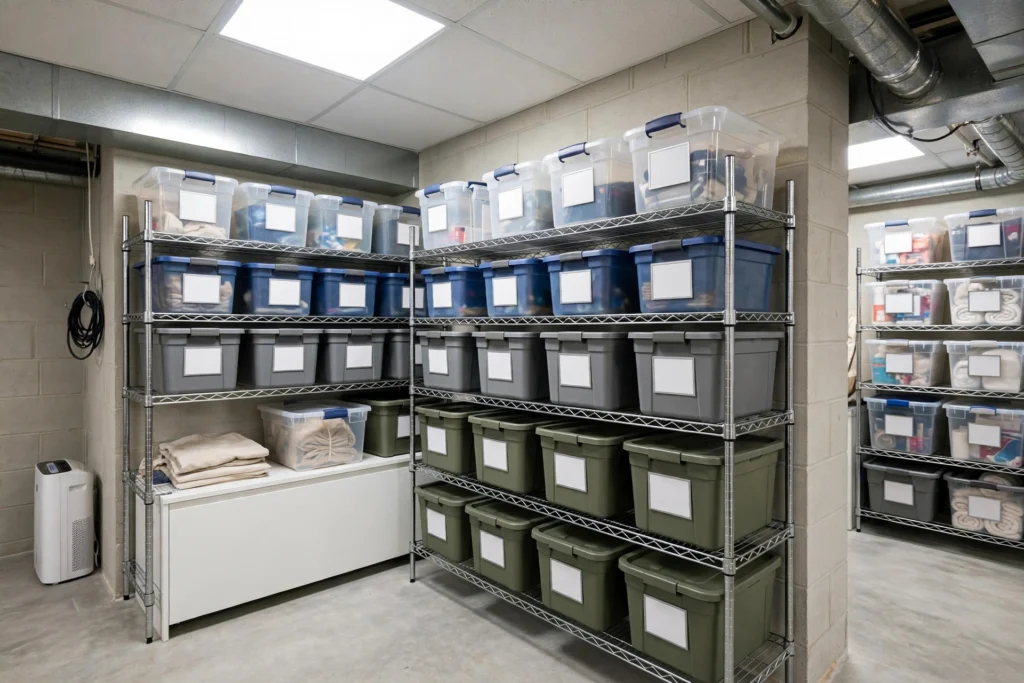
- Metal or plastic shelving only. Wood warps in basement humidity; wire or resin shelving survives.
- Everything off the floor. Even two inches matters — bins on pallets or shelves, never directly on concrete. Floods and seepage happen.
- Heavy low, light high. Paint cans and tools on bottom shelves; holiday decor up top.
- Leave the back row accessible. Shelving against the wall needs a gap or pull-out design — buried boxes are forgotten boxes.
Clear bins, real labels
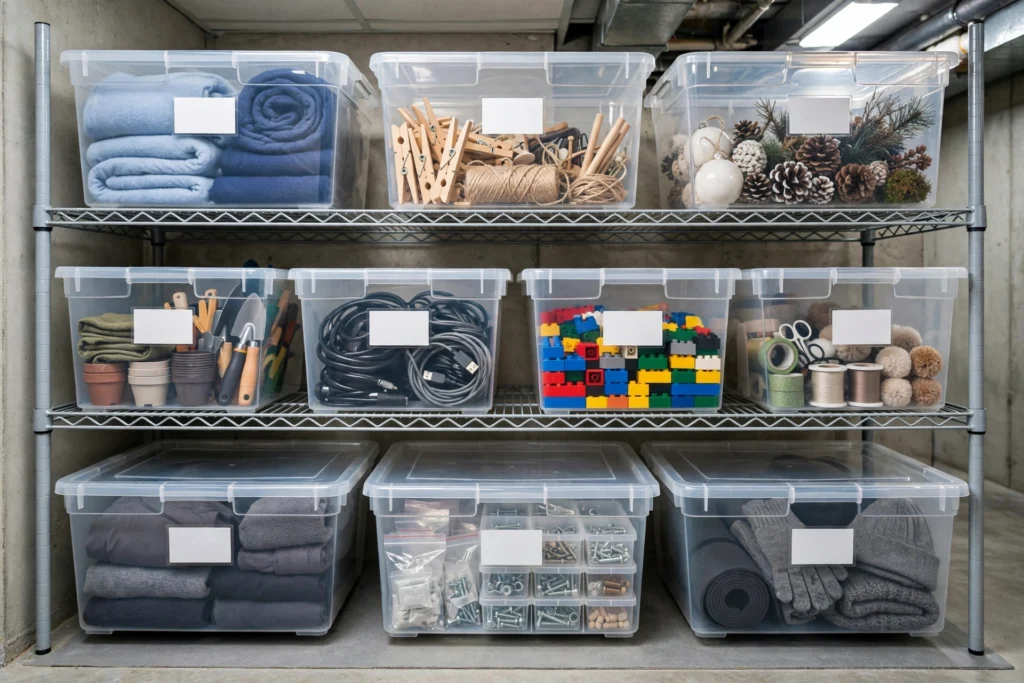
- Clear bins beat opaque. You can see contents without opening — the single biggest basement upgrade.
- One category per bin. “Christmas lights” not “holiday stuff.” Specific labels survive time; vague ones don’t.
- Label two sides so bins are readable from any angle on the shelf.
- Uniform bin sizes stack cleanly and look like a system instead of a jumble. Buy the same bin in bulk.
The damp and pest defense
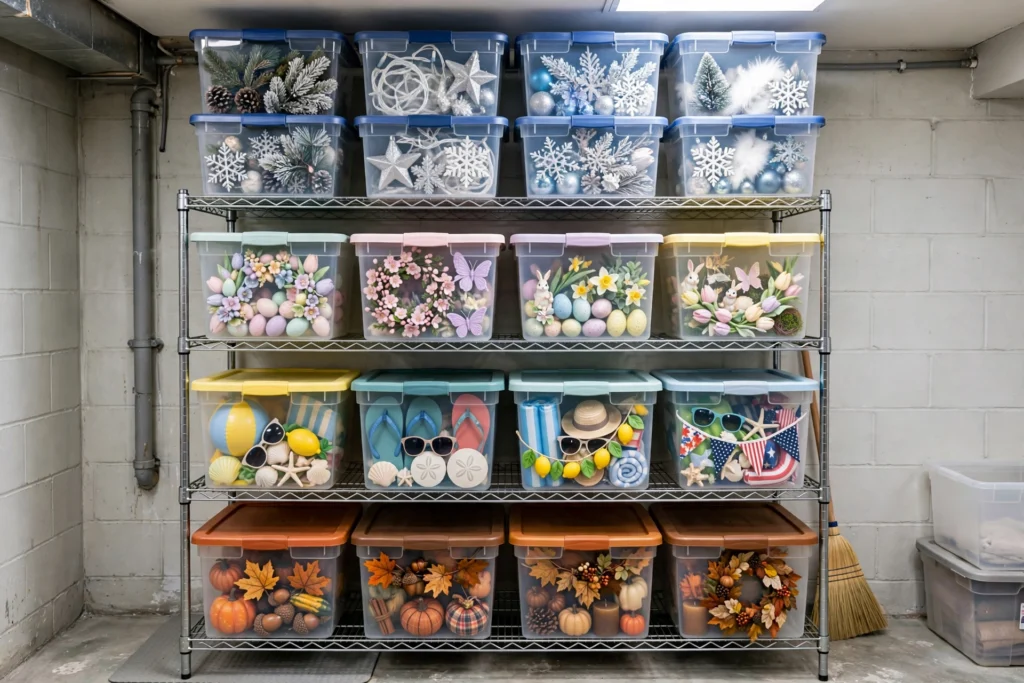
- Cardboard is a buffet. In basements, replace cardboard boxes with sealed plastic bins — pests and moisture both love cardboard.
- Silica packs or a dehumidifier for genuinely damp basements. Musty bins ruin what’s inside.
- No food storage in the basement unless sealed hard — it’s a pest invitation.
- Fabric items in sealed bags inside bins. Off-season clothes and linens need the double layer (see linen storage).
What doesn’t belong in the basement
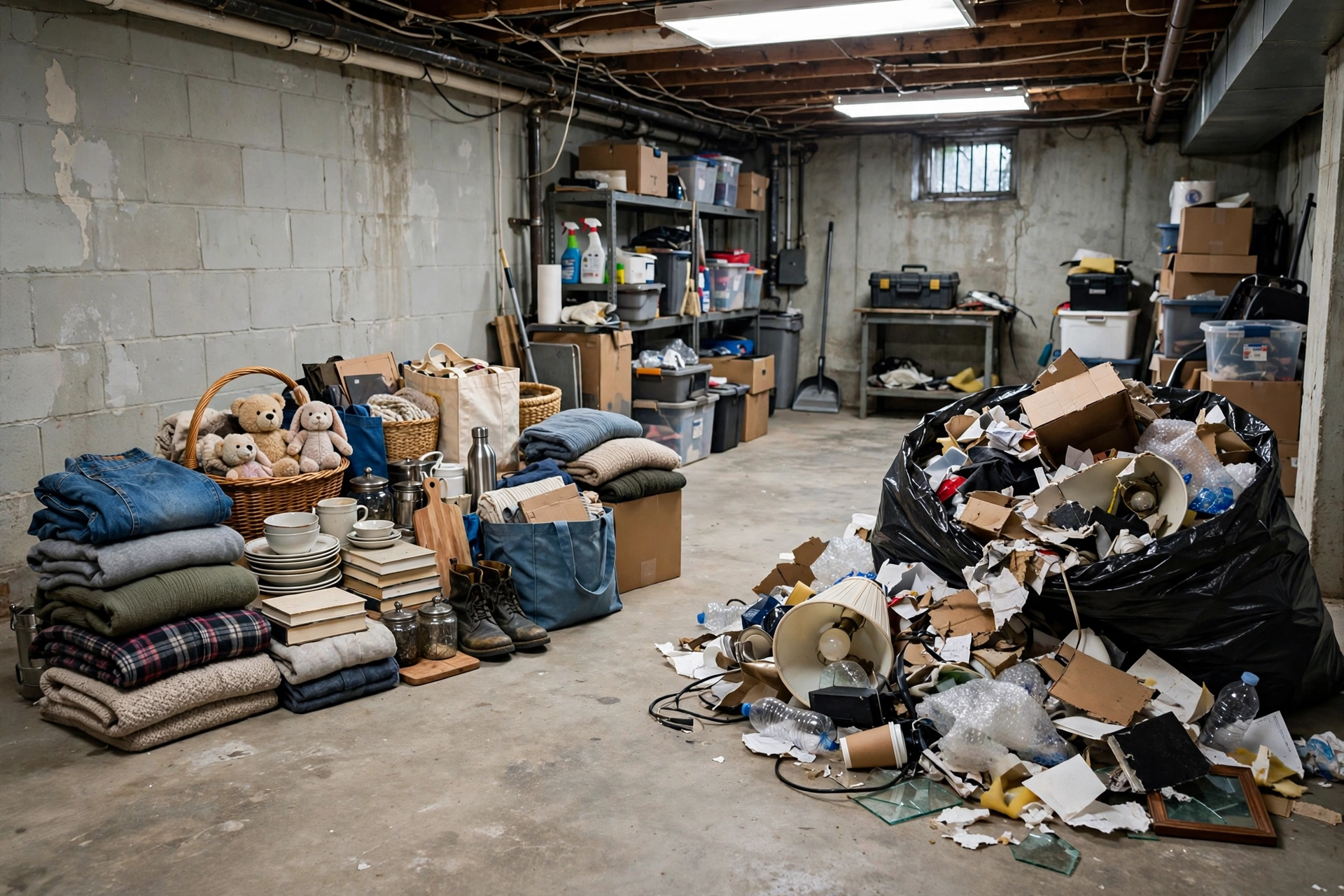
- Anything you use weekly — it belongs upstairs, not in a stair-climb.
- Important documents. Fire, flood, and damp risk. Documents live in the office.
- “Someday” without a date. Every stored item gets a review date on the label. Date passes, item gets re-decided.
- Broken things awaiting repair — set a 30-day repair deadline or let them go.

Keep it from reverting
The stair rule: nothing goes down the stairs without a zone and a label waiting. Unlabeled boxes don’t enter the basement — they get labeled first, at the top of the stairs.
Annual purge: once a year, walk every zone and pull anything unused, expired, or mysterious. Basements accumulate silently; the purge is the counterweight. Pair it with the decluttering checklist.
Frequently asked questions
How do I organize an unfinished basement?
Start with a zone map (storage, seasonal, workshop, keep-clear), use metal or plastic shelving with everything off the floor, store in clear labeled bins, and replace cardboard with sealed plastic against damp and pests.
How do I keep my basement dry for storage?
Keep everything off the concrete floor, use sealed plastic bins instead of cardboard, add silica packs or run a dehumidifier in damp basements, and double-bag fabric items.
What should not be stored in a basement?
Weekly-use items, important documents, food (unless sealed hard), and anything “someday” without a review date. Basements suit seasonal, bulky, and rarely-used storage.
How do I label basement storage bins?
One specific category per bin (“Christmas lights,” not “holiday stuff”), label two sides, and add a review date for anything you’re unsure about keeping.
Final thoughts
Basements fail when they’re undefined space and win when they’re zoned like a warehouse: everything off the floor, clear bins, honest labels, and nothing entering without a home. The largest room in the house deserves a system.