Shoes are bulky, oddly-shaped, and multiply fast — especially in small spaces where every square foot counts. These shoe storage ideas for small spaces fit more pairs into less room while keeping every pair visible and grabbable.
Pair this with our small apartment organization ideas and closet decluttering guide.

The shoe audit first
- Count them. Most people are shocked. The average small-space dweller does fine with 8–12 pairs.
- The wear test: painful, broken-down, or unworn for a year — they go. Shoes are the easiest category to over-keep.
- One pair in, one pair out: small spaces can’t absorb shoe creep. New pair arrives, an old pair leaves.
- Seasonal rotation: off-season shoes in labeled bins on the top shelf or under the bed.

Entryway shoe storage
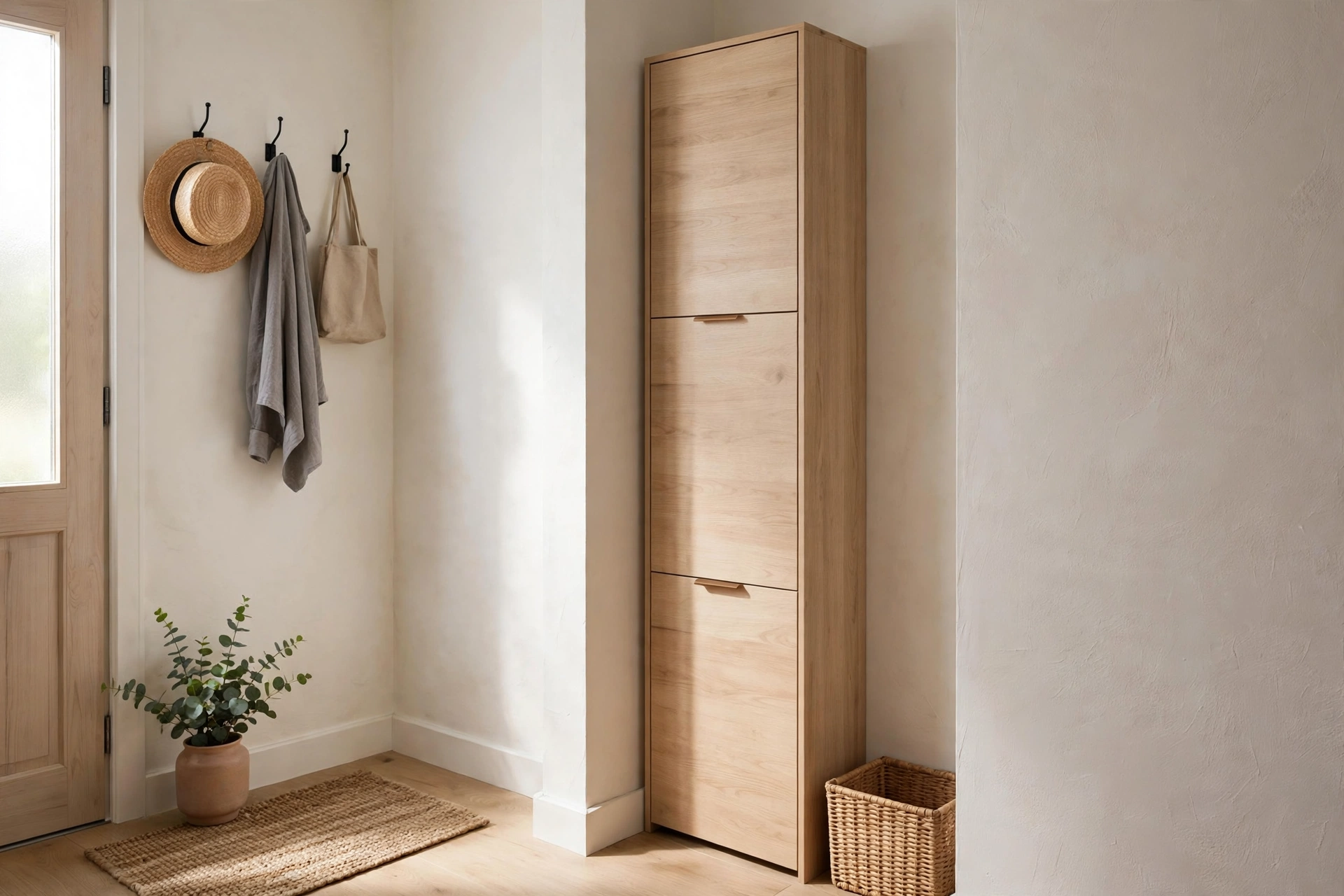
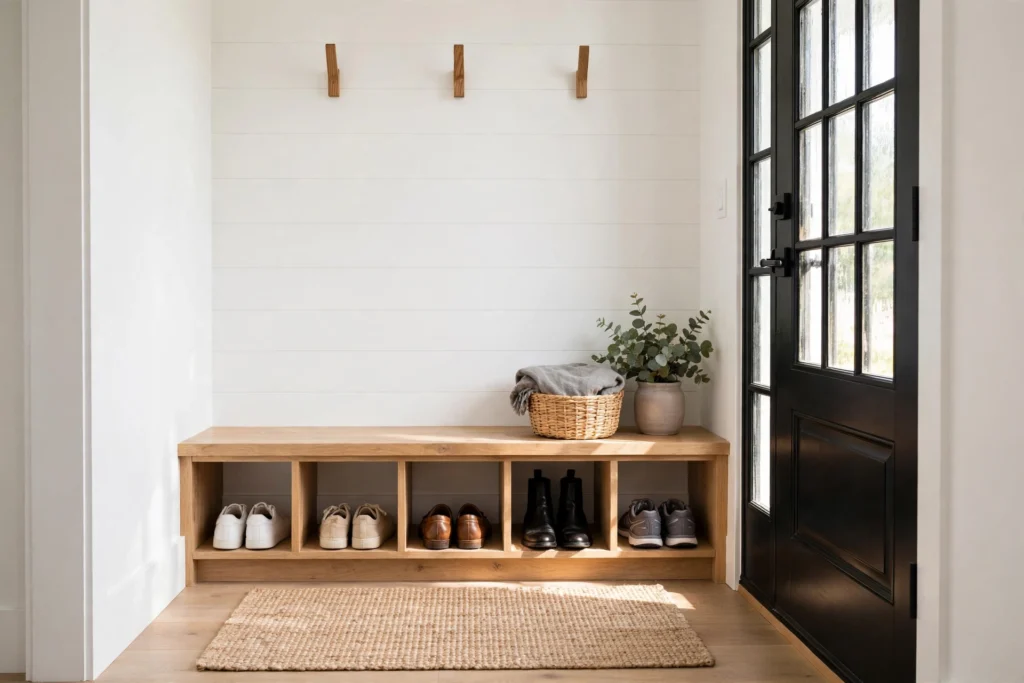
- A slim shoe cabinet (the tilt-out kind) holds 6–12 pairs in inches of depth — the small-space classic.
- One tray per person by the door for daily shoes. Everything else lives elsewhere.
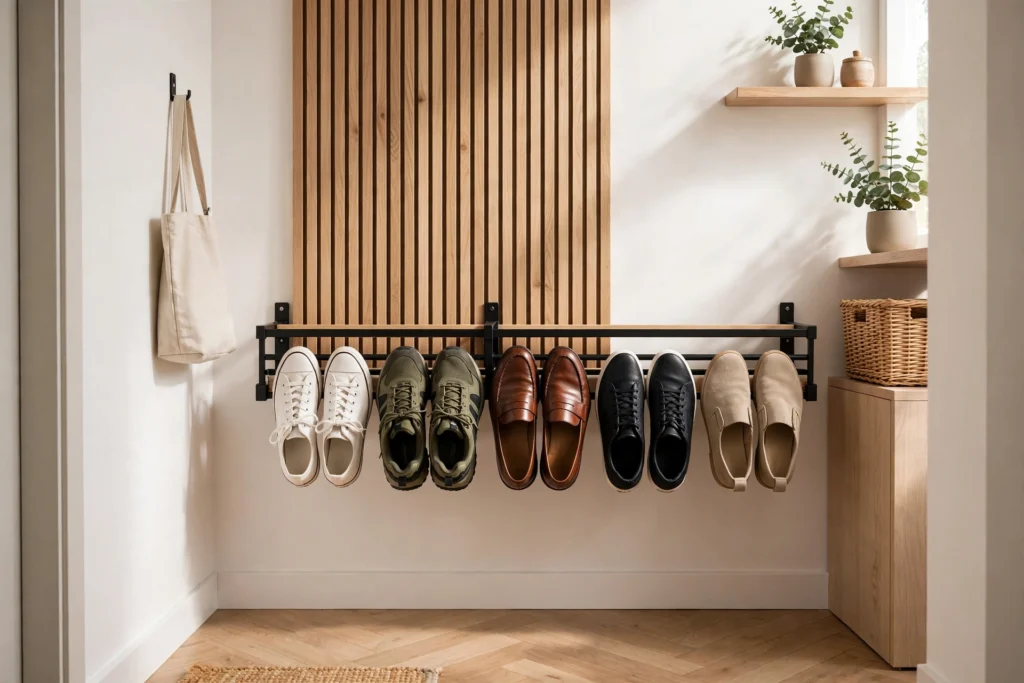
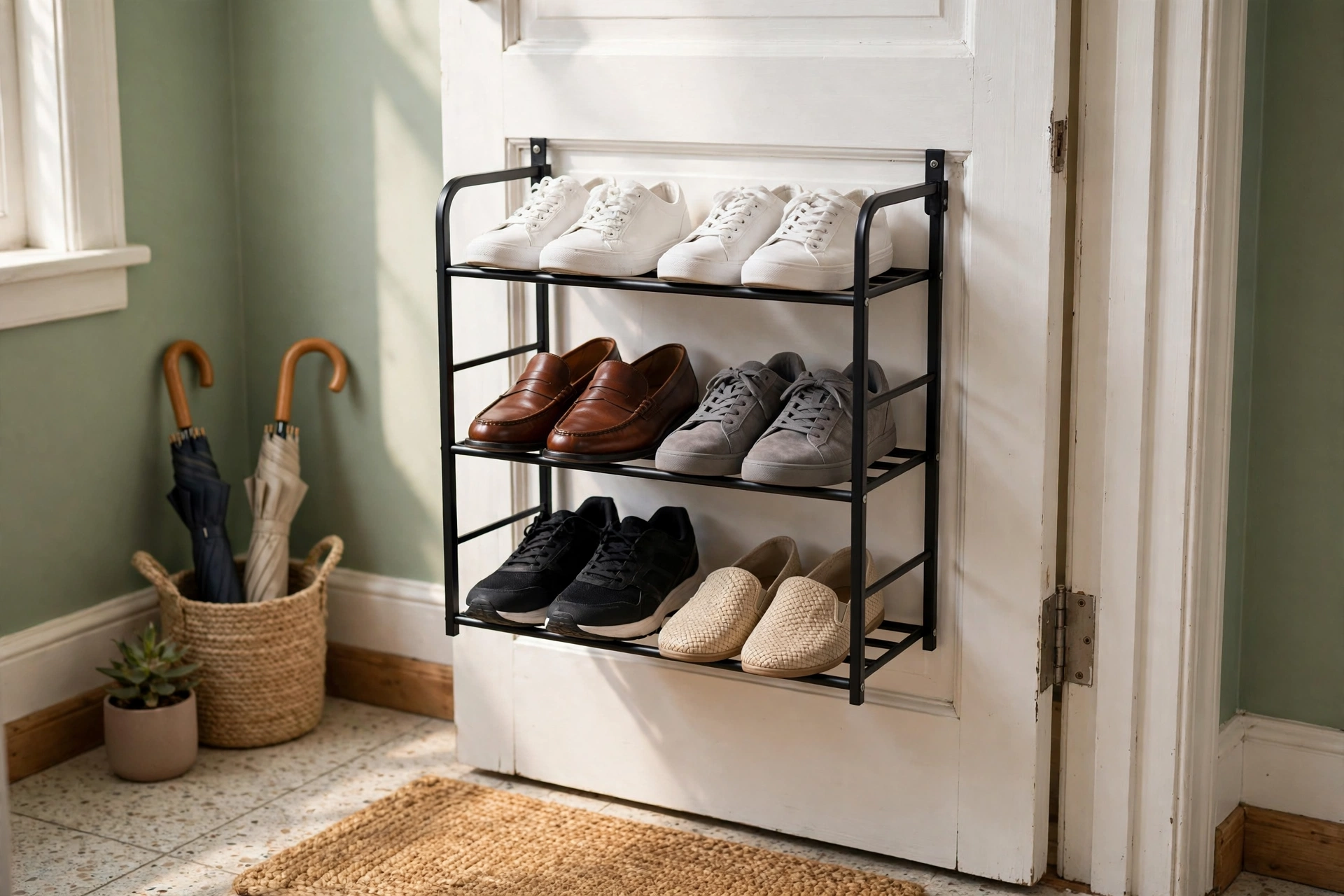
- Wall-mounted racks turn dead wall space into shoe storage without touching the floor.
- The 2-pair rule: only current daily shoes live at the entry. The rest have homes deeper in.
Closet shoe solutions
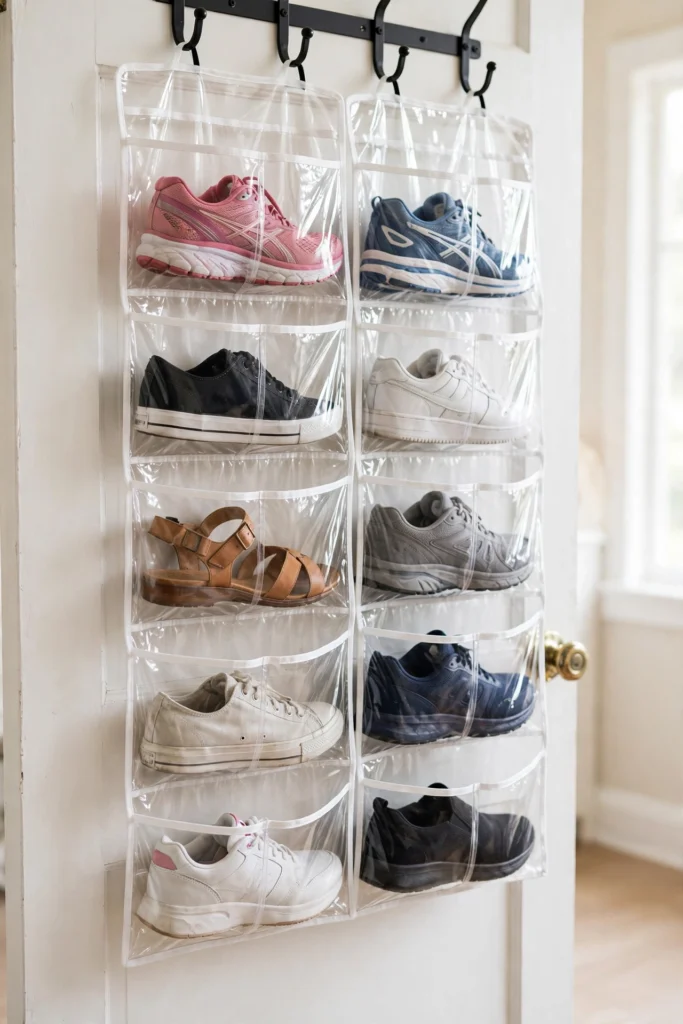
- Over-the-door organizers with clear pockets — each pair visible, zero shelf space used.
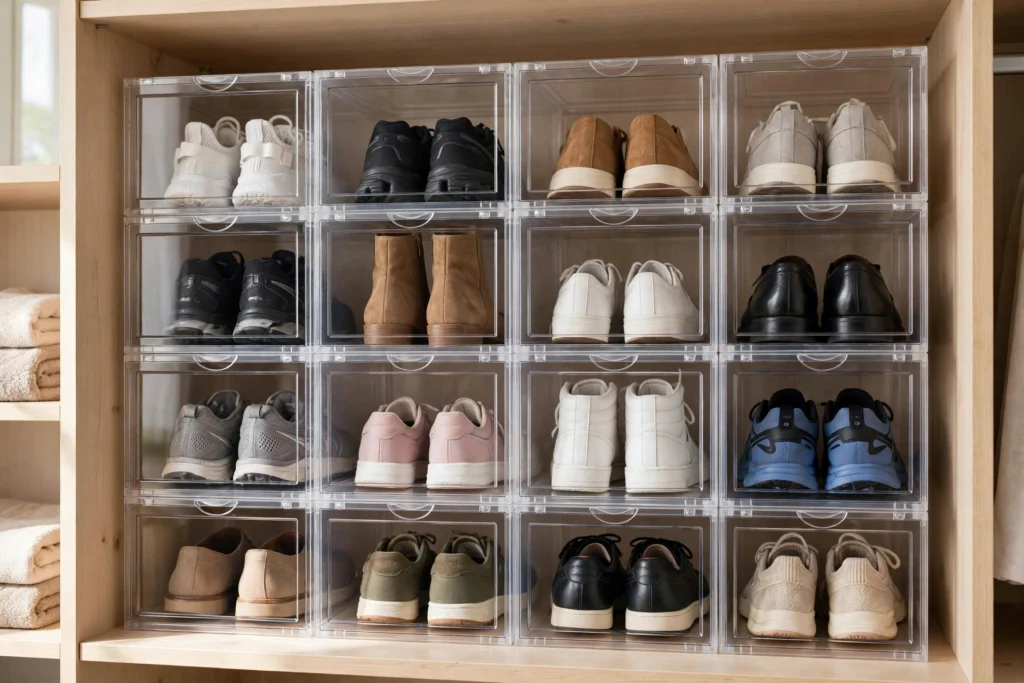
- Stackable shoe boxes (clear or photo-labeled) turn a shelf into a shoe wall.
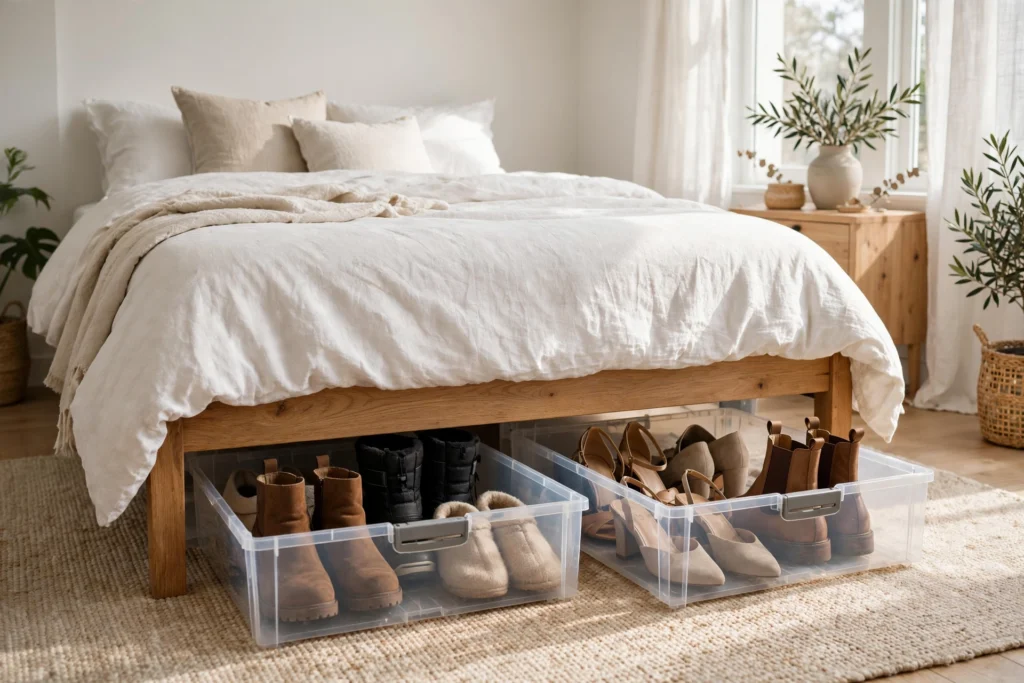
- Under-bed boxes for off-season or occasion shoes — the biggest hidden capacity in a small home.
- Angled shelf inserts make closet shelves hold more pairs while keeping them visible.

Tricky pairs and small-space hacks
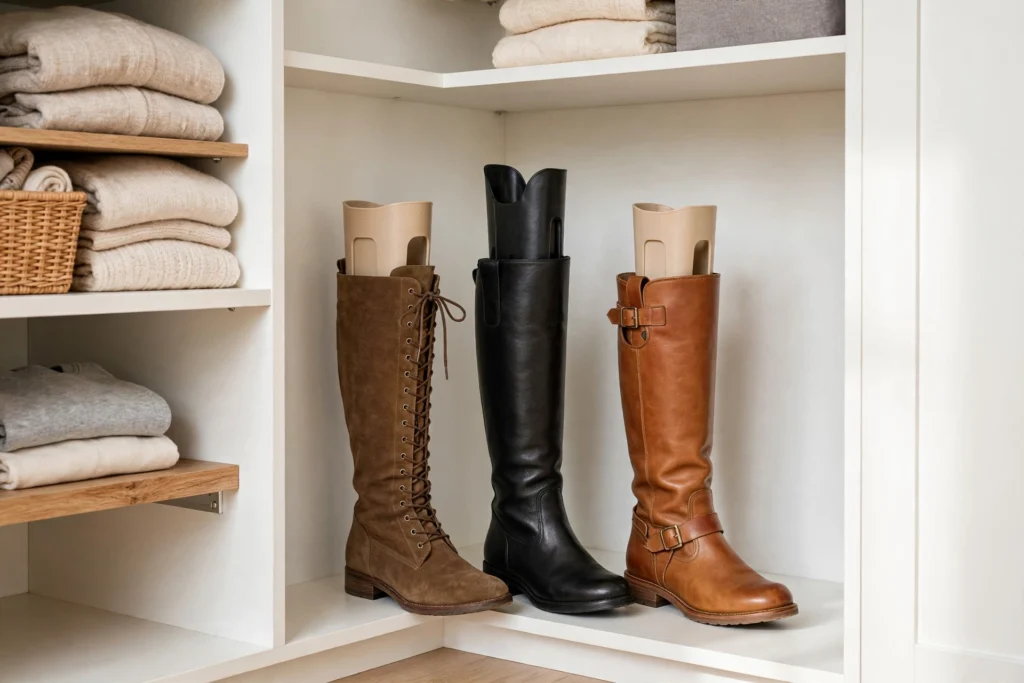
- Boots: boot shapers or pool noodles keep them upright in a corner instead of flopped over two feet of space.
- Heels: crown molding strips mounted on the wall make a chic, nearly invisible heel rack.
- Kids’ shoes: low bins or a hanging organizer at kid height — they can manage their own pairs.
- Behind furniture: the inches beside a dresser or behind a door fit a narrow rolling shoe rack.
Keeping it under control
- A home for every pair: shoes without assigned spots become the hallway pile. Assign spots ruthlessly.
- The hallway test: if shoes are piling by the door, the system has too much friction — simplify it.
- Clean before storing: wipe soles and stuff toes with paper to hold shape, especially for seasonal storage.
- Donate the “maybes”: shoes you’re unsure about are shoes you don’t wear. Let them go.
Frequently asked questions
How do you store lots of shoes in a small apartment?
Audit down to what you wear, use a slim tilt-out shoe cabinet at the entry, over-the-door organizers in the closet, and under-bed boxes for off-season pairs.
What’s the best shoe storage for a small entryway?
A slim tilt-out shoe cabinet plus one tray per person for daily shoes. Only current daily pairs live at the entry — the rest goes deeper.
How many pairs of shoes should I keep in a small space?
Most people do fine with 8–12 pairs: daily walkers, work shoes, one dressy pair, sneakers, boots, sandals, and a spare or two. Enforce one-in-one-out.
How do I store boots in a small closet?
Keep them upright with boot shapers or pool noodles in a corner, or store off-season boots in under-bed boxes. Never let them flop — it wastes space and ruins the shape.
Final thoughts
Small-space shoe storage is audit plus vertical thinking: fewer pairs, every pair with a home, walls and doors and under-bed space doing the work. The hallway pile is a system failure, not a space failure.