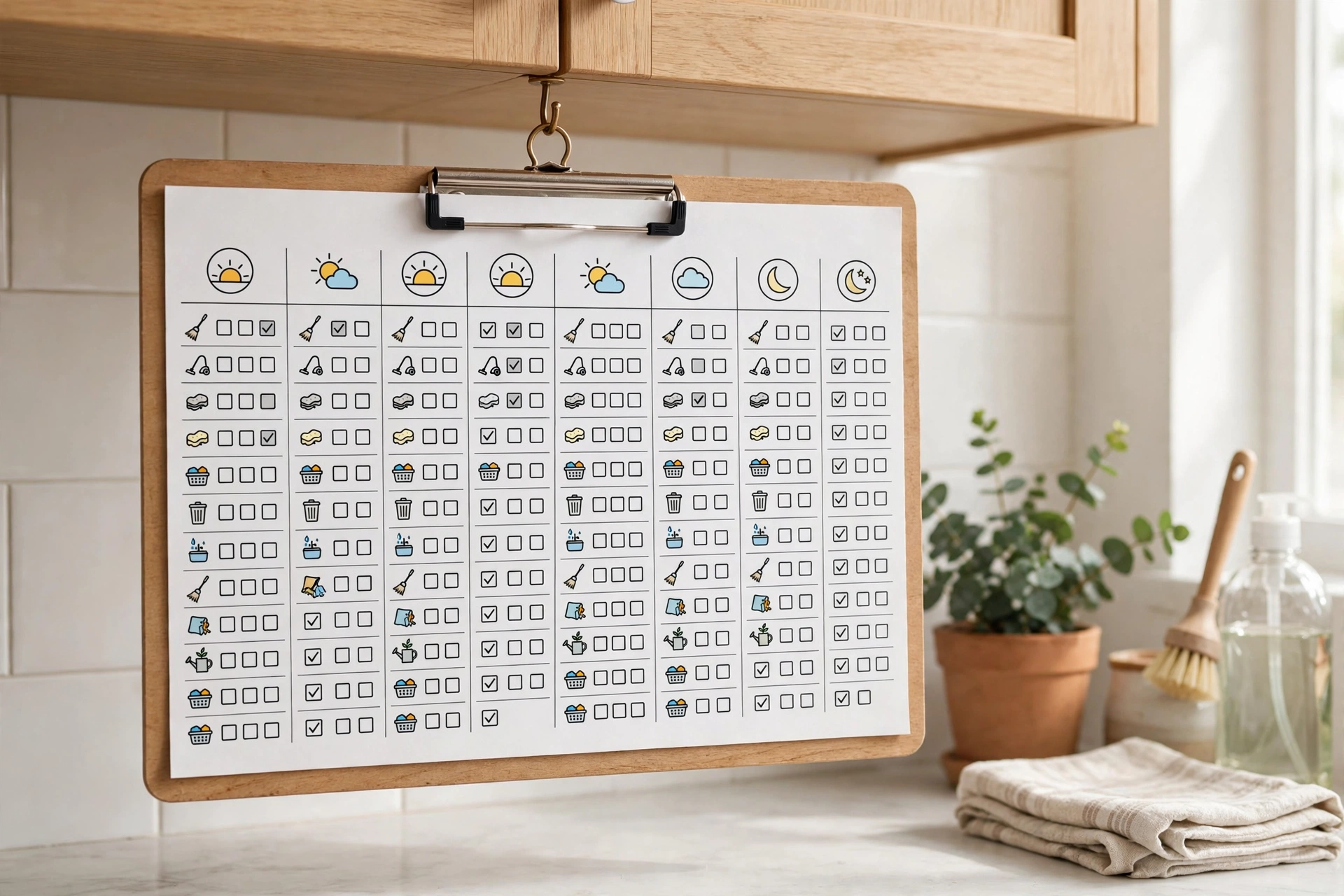
A house doesn’t stay clean by accident — it stays clean on a schedule. This weekly house cleaning schedule spreads the work across seven days so nothing ever takes more than 30 minutes, and the whole home stays at a steady, guest-ready baseline.
Pair this with our 15-minute daily cleaning routine and decluttering guide — clean is easier when there’s less stuff.

How the weekly schedule works
- One focus area per day, 20–30 minutes. Small daily efforts beat one exhausting weekend marathon.
- Daily non-negotiables underneath: dishes, one laundry load started, 5-minute reset. The weekly tasks sit on top of these.
- Pick your rest day and protect it. A schedule with no break is a schedule you’ll quit.
- Adjust the days to your life: the order matters less than the rhythm. Move days around freely.

Monday: bathrooms
- Toilets, sinks, mirrors — the big three. A sprayed-and-wiped bathroom takes 10 minutes when done weekly.
- Swap towels and bath mats for fresh ones; the used ones go straight in the wash.
- Quick product check: toss empties and wipe the counter while you’re there.
- Floors: quick sweep or vacuum of bathroom floors.

Tuesday: dusting and surfaces
- Top to bottom, one direction: dust settles downward — start high (shelves, fans) and work down.
- Microfiber cloths beat feather dusters: they trap dust instead of relocating it.
- Electronics and baseboards get attention every other week — they don’t need weekly work.
- Declutter surfaces as you dust: anything without a home gets relocated on the spot.

Wednesday: vacuuming and mopping
- Whole-house vacuum: one focused pass, moving light furniture. Weekly vacuuming keeps dust and allergens down.
- Mop hard floors right after vacuuming — the one-two punch that makes floors actually feel clean.
- Under the big pieces monthly, not weekly — under beds and sofas on a rotating schedule.
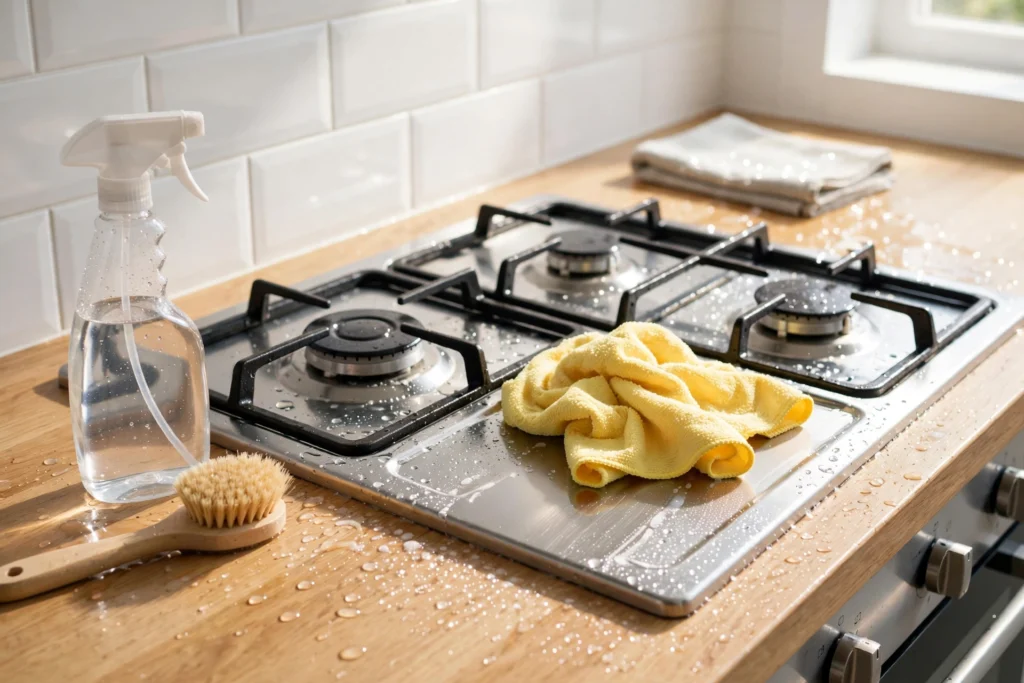
Thursday: kitchen deep-ish clean
- Appliances: microwave inside, stovetop, and the outside of the fridge — the weekly grime trio.
- Pantry and fridge scan: toss expired items, wipe one shelf. (Your organized fridge makes this fast.)
- Trash cans: take out, wipe down, fresh bags. The source of most kitchen smells.
- Counters and sink: full wipe-down including the faucet and drain area.

Friday: bedrooms and laundry
- Strip and remake beds with fresh sheets — the single highest-impact bedroom task.
- Laundry catch-up: sheets, towels, and anything left. Fold and put away same-day (the rule that prevents chair piles).
- Nightstands and dressers: quick dust and declutter while changing sheets.
- Floors: vacuum bedroom floors, especially under the bed.

Weekend: flexible and rest
- Saturday: catch-up or project day — one deeper task (windows, baseboards, the garage) or nothing at all if the week went well.
- Sunday: rest and reset — 15-minute whole-house reset so Monday starts clean, then done.
Frequently asked questions
What is a good weekly cleaning schedule?
One focus area per day: bathrooms Monday, dusting Tuesday, floors Wednesday, kitchen Thursday, bedrooms and laundry Friday, with the weekend for catch-up and rest. 20–30 minutes a day keeps the whole home at baseline.
How do I stick to a cleaning schedule?
Keep daily sessions under 30 minutes, protect one rest day, stack tasks onto existing habits (wipe the bathroom while the shower warms up), and let imperfect weeks be imperfect — resume, don’t restart.
Should I clean a little daily or all at once weekly?
A little daily wins: 20–30 focused minutes a day maintains a steady baseline with no marathon sessions, and nothing ever gets bad enough to dread.
How do I fit cleaning into a busy work schedule?
Shrink the sessions (even 15 minutes maintains the rhythm), combine the lightest days, and protect the daily non-negotiables — dishes, one laundry load, 5-minute reset.

Final thoughts
The weekly cleaning schedule works because it’s boring: same rhythm, small sessions, nothing heroic. Twenty minutes a day, one focus area at a time, and your home holds a steady clean without ever eating your weekend.