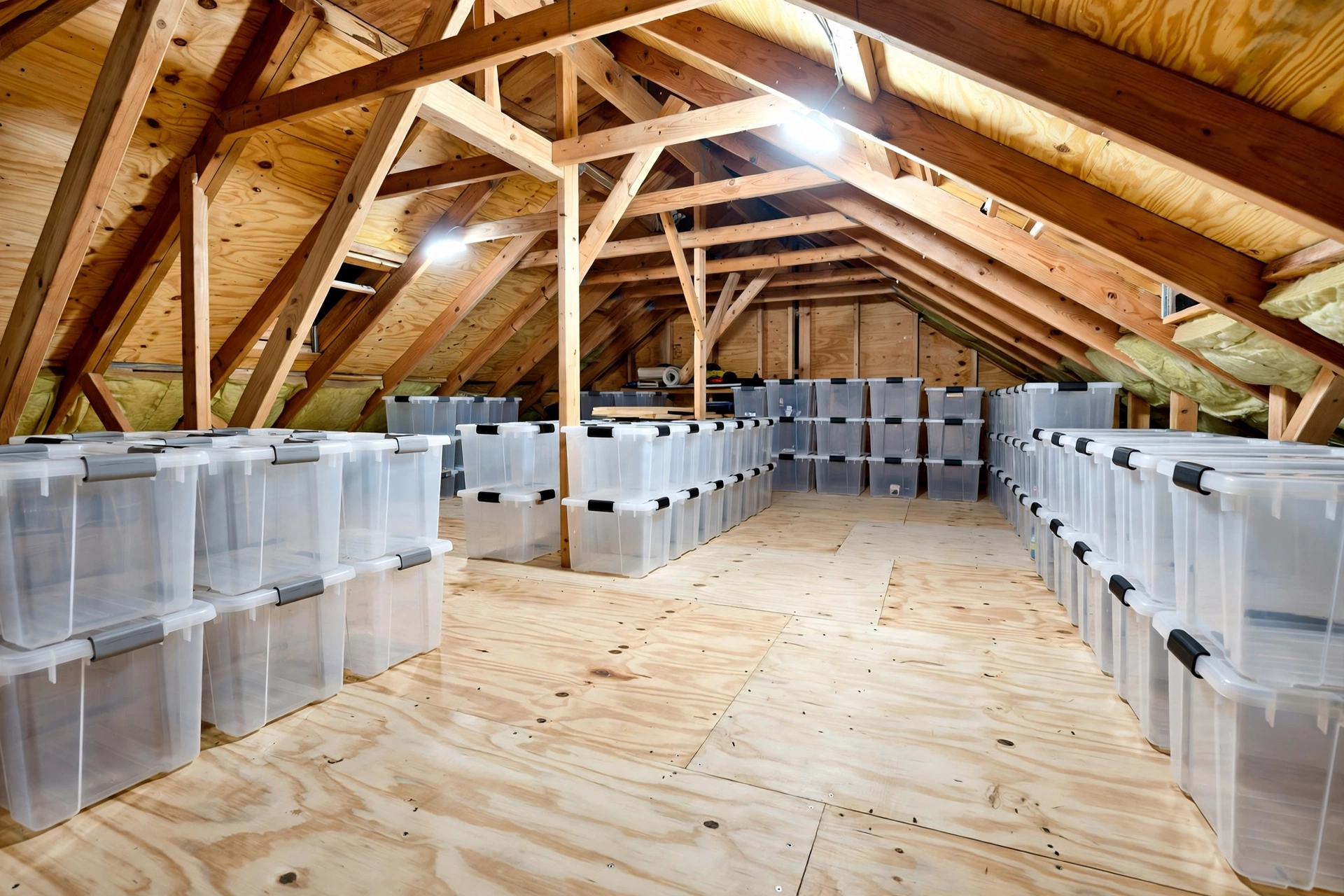
Attics are the final frontier of home storage — big, awkward, and full of things nobody has touched in years. Sloped ceilings, summer heat, winter cold, and one tiny access hatch make them the hardest storage space to use well. But with the right containers, a floor you can walk on, and honest labeling, the attic becomes genuinely useful square footage.
These are the attic organization ideas that make the space work: flooring and access first, heat-proof containers, the zone layout, and the rules that keep attics from becoming time capsules.
The same warehouse logic tamed our basement — attics just need the heat-proof version.
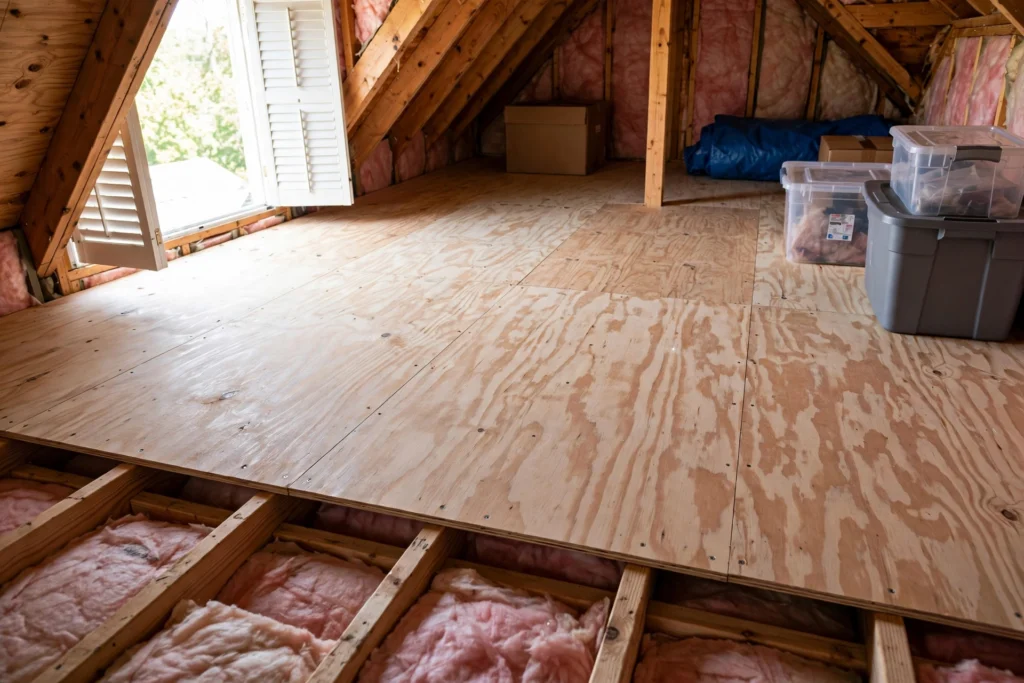
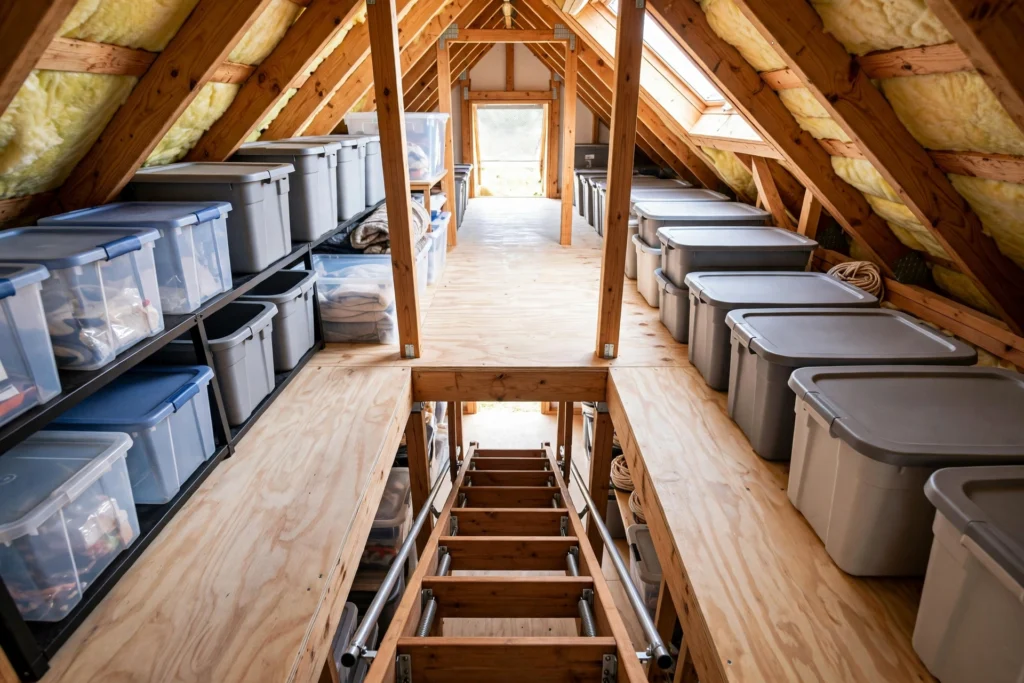
Flooring and access first
- Don’t store on bare joists. Lay plywood or attic decking panels over the joists before storing anything — stepping through the ceiling is the classic attic disaster.
- A stable light matters. Battery or wired lighting turns a scary dark space into a usable one. You can’t organize what you can’t see.
- Widen the path: keep a clear walkway from the hatch to every storage zone. Buried boxes become permanent boxes.
- The hatch upgrade: a pull-down ladder beats balancing on a chair with a box in your hands.
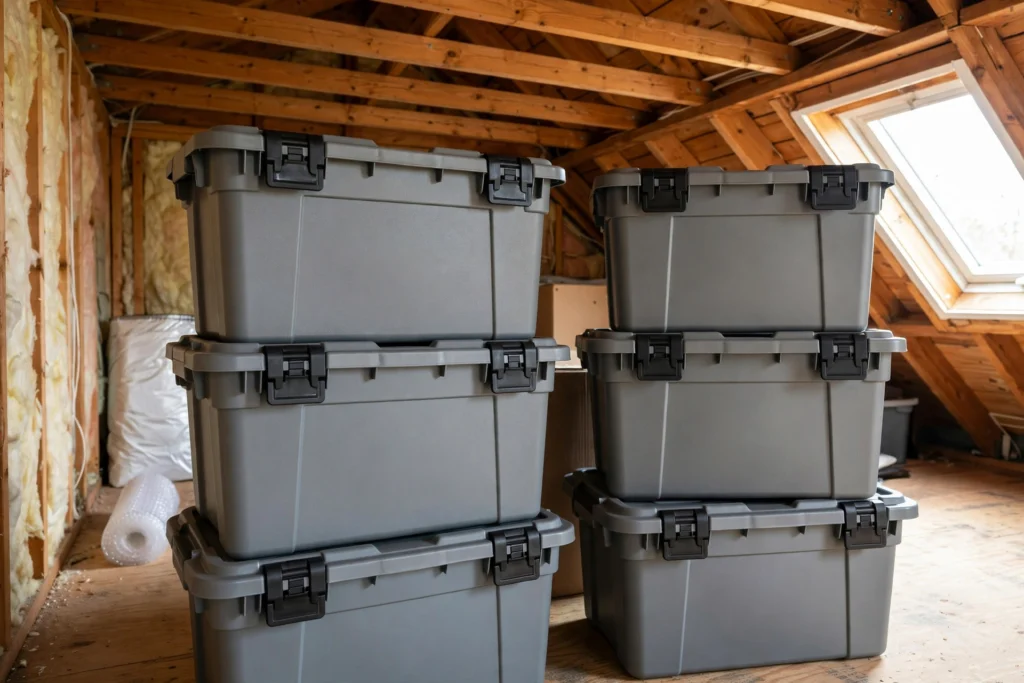
Heat-proof containers
- Attics bake. Summer attic temperatures can top 130°F — candles melt, photos warp, electronics die. If it’s heat-sensitive, it doesn’t live in the attic.
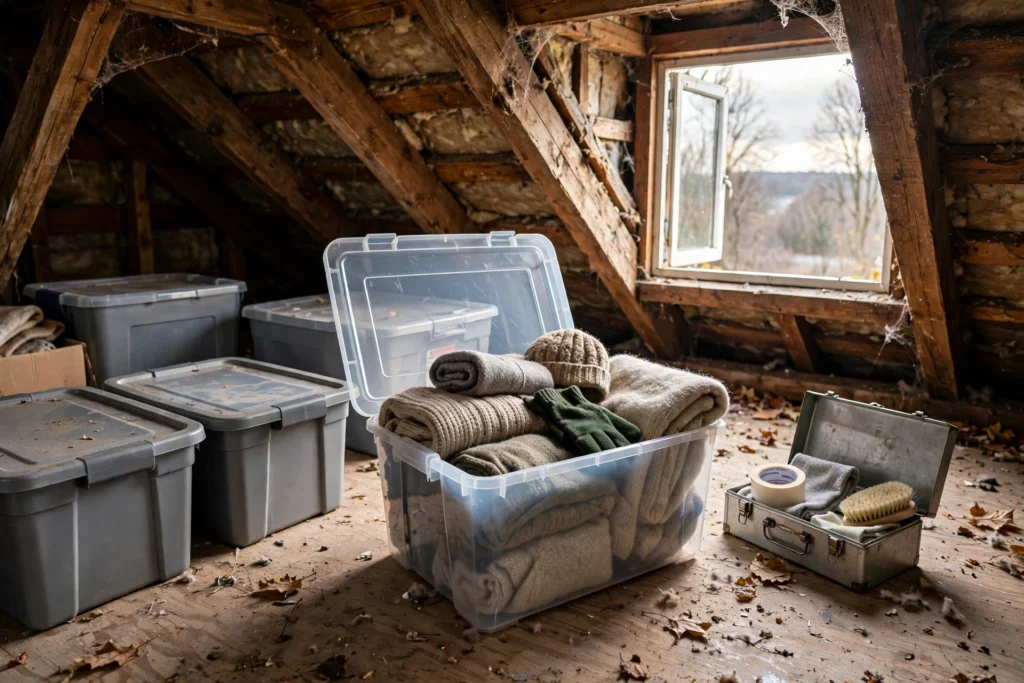
- Hard plastic bins with latching lids beat cardboard: they resist heat, pests, and the occasional roof leak.
- No cardboard, ever. Heat, humidity, and pests destroy it. Decant everything into bins on day one.
- Clear bins where possible so you can identify contents without opening lids in a 120-degree space.
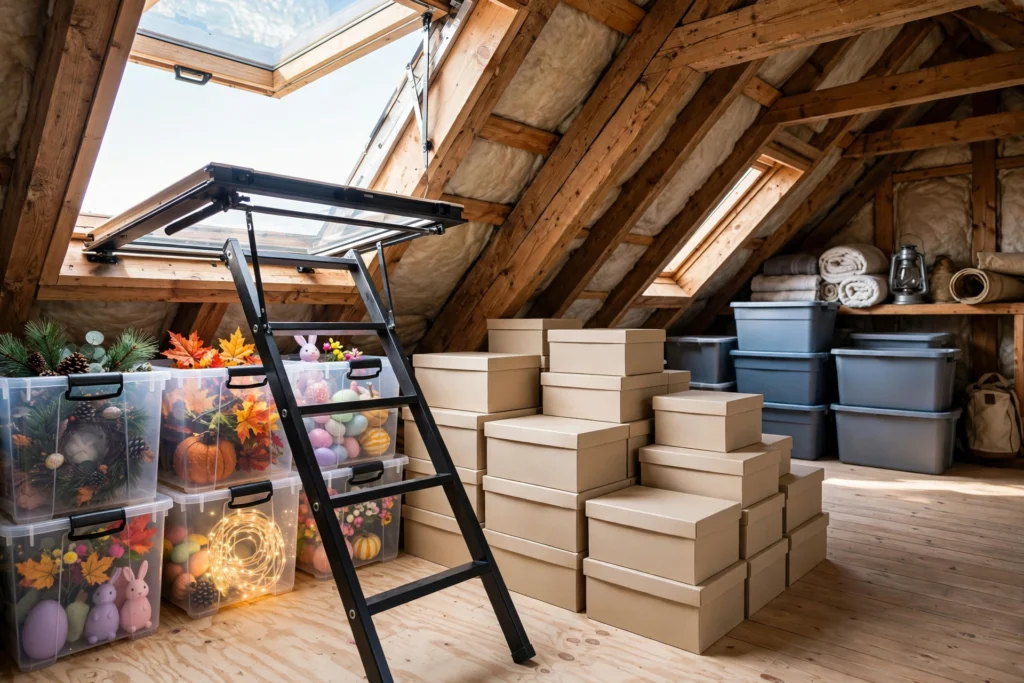
The attic zone layout
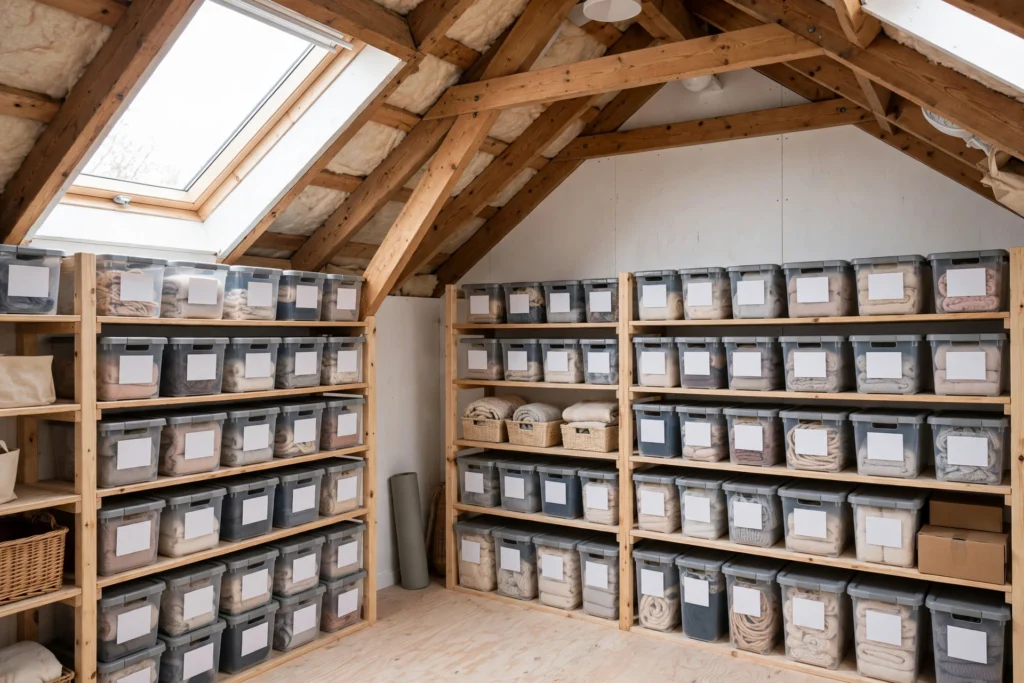
- Near the hatch: the things you access most — seasonal decor, luggage. Frequency = proximity.
- Middle ground: keepsakes and memory boxes, well-labeled and dated.
- Far corners: the rarely touched — old files (digitize first), the “someday” items with review dates.
- Never in the attic: photos and film (heat damage), candles, electronics, important documents, anything irreplaceable without a digital copy.
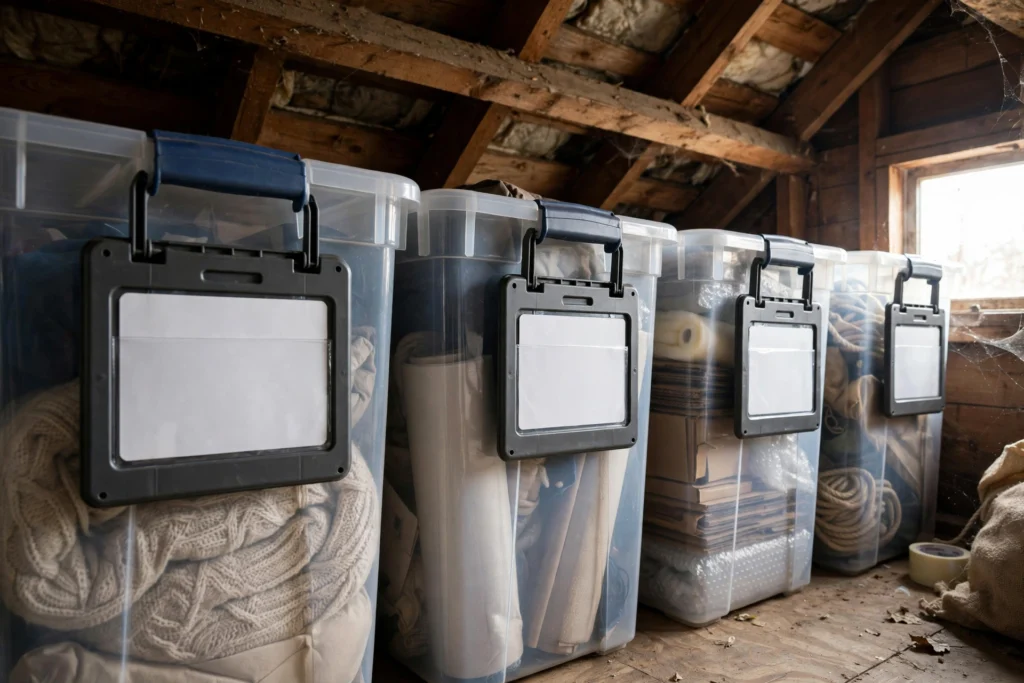
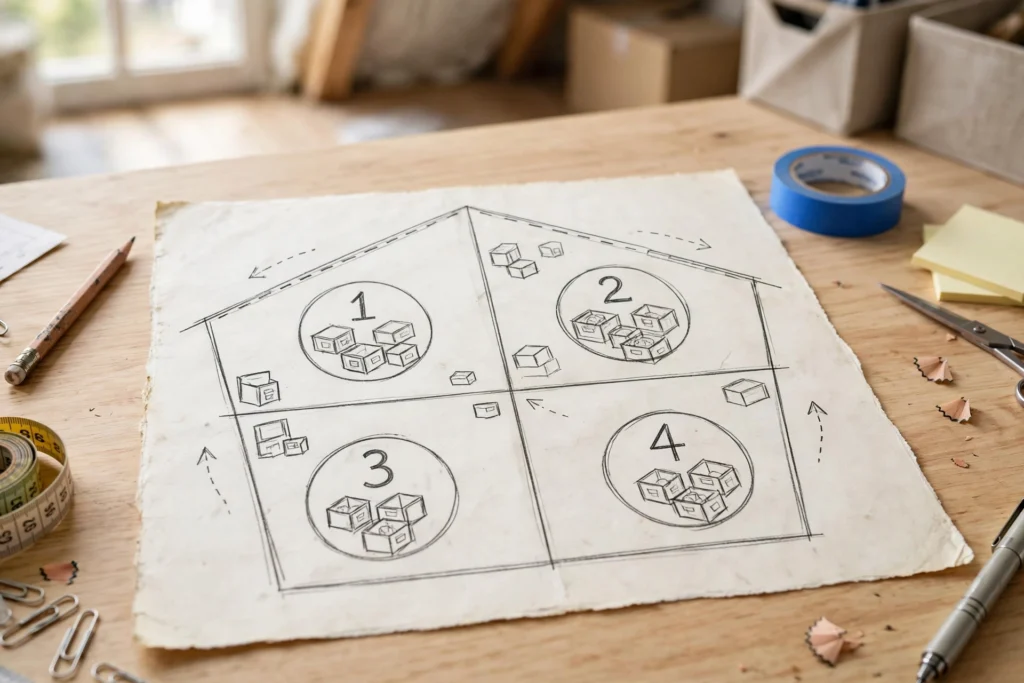
Label like you’ll forget
- Big labels, two sides. You’ll be reading them in dim light while balancing on decking — make them huge and specific.
- The contents list: tape an index card to each bin listing what’s inside. Future you won’t remember “misc attic 3.”
- Date everything. “Christmas decor 2024” tells you when it was packed; a review date tells you when to reconsider it.
- A master map: one sheet (kept downstairs) mapping zones to bin numbers. No more attic treasure hunts.
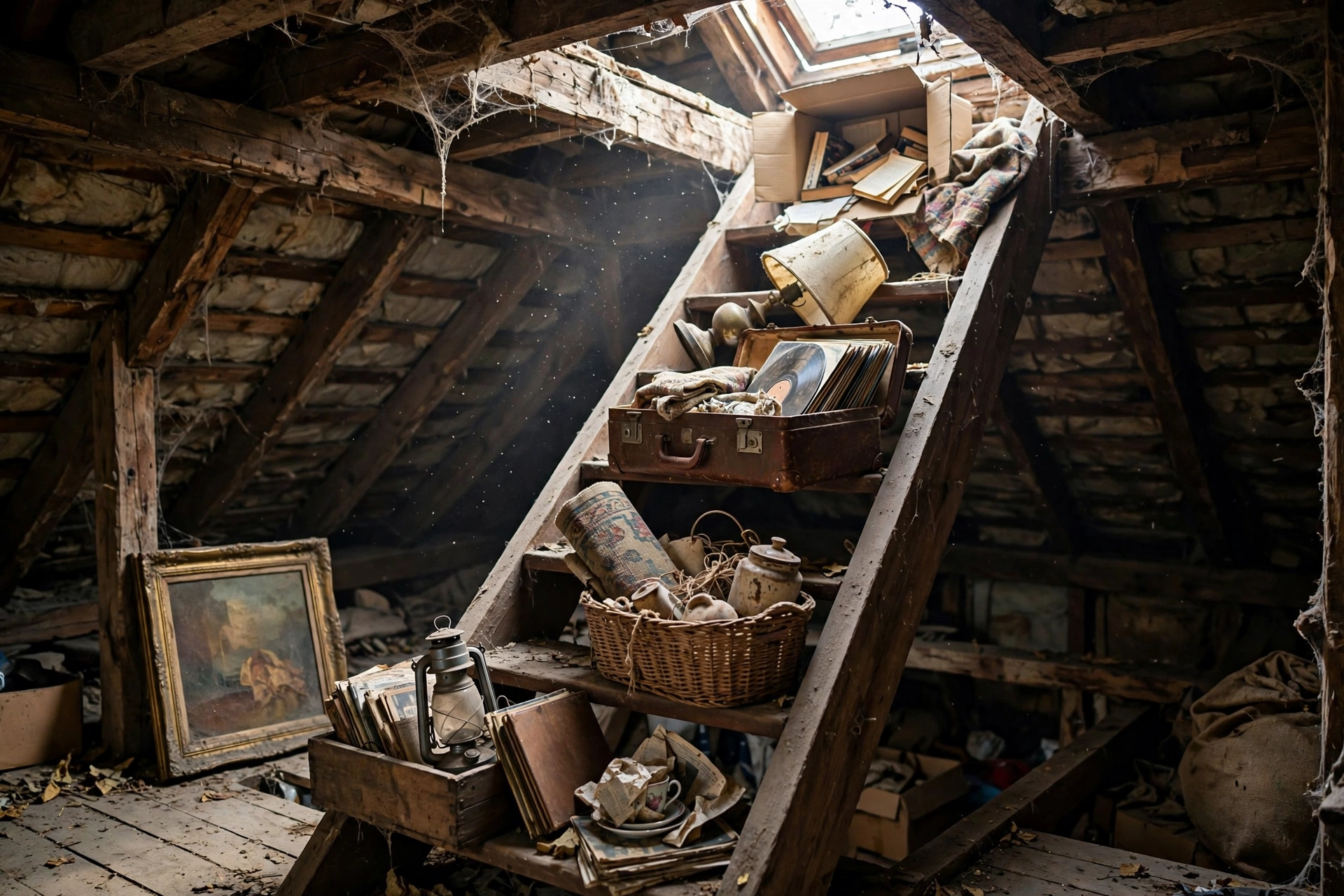
What doesn’t survive the attic
- Photographs and negatives: heat and humidity fade them permanently. Digitize, then store copies downstairs.
- Electronics and batteries: heat kills batteries and warps components.
- Candles, crayons, anything wax: they’ll be modern art by August.
- Wood furniture: temperature swings crack joints and warp panels over time.
- Important documents: fire risk plus heat damage. Documents live in the office.
Keep it from becoming a time capsule
The hatch rule: nothing goes up without a labeled bin and a zone waiting. Unlabeled boxes get labeled downstairs first.
The annual attic trip: once a year (pick a cool month), walk every zone and pull anything damaged, obsolete, or mysterious. Attics preserve things you meant to decide about — the trip forces the decision. Pair it with the decluttering checklist.
Frequently asked questions
How do I organize my attic for storage?
Lay decking over the joists, add lighting, use latching hard-plastic bins (never cardboard), zone by access frequency with the most-used near the hatch, and label everything big on two sides with contents lists.
What should not be stored in an attic?
Photos, electronics, batteries, candles, wood furniture, and important documents — attic heat (often 130°F+ in summer) damages all of them. Digitize photos and keep documents downstairs.
How do I keep my attic cool for storage?
You can’t fully — but proper ventilation, radiant barriers, and storing only heat-tolerant items in sealed plastic bins keeps contents safe. Heat-sensitive items don’t belong in attics at all.
Cardboard or plastic bins for attic storage?
Plastic, always. Cardboard degrades in attic heat and humidity, invites pests, and collapses. Latching hard-plastic bins are the attic standard.
Final thoughts
Attics reward preparation: deck the floor, light the space, bin everything in plastic, label like you’ll forget, and keep heat-sensitive things out entirely. Do that, and the hardest storage space in the house finally earns its keep.