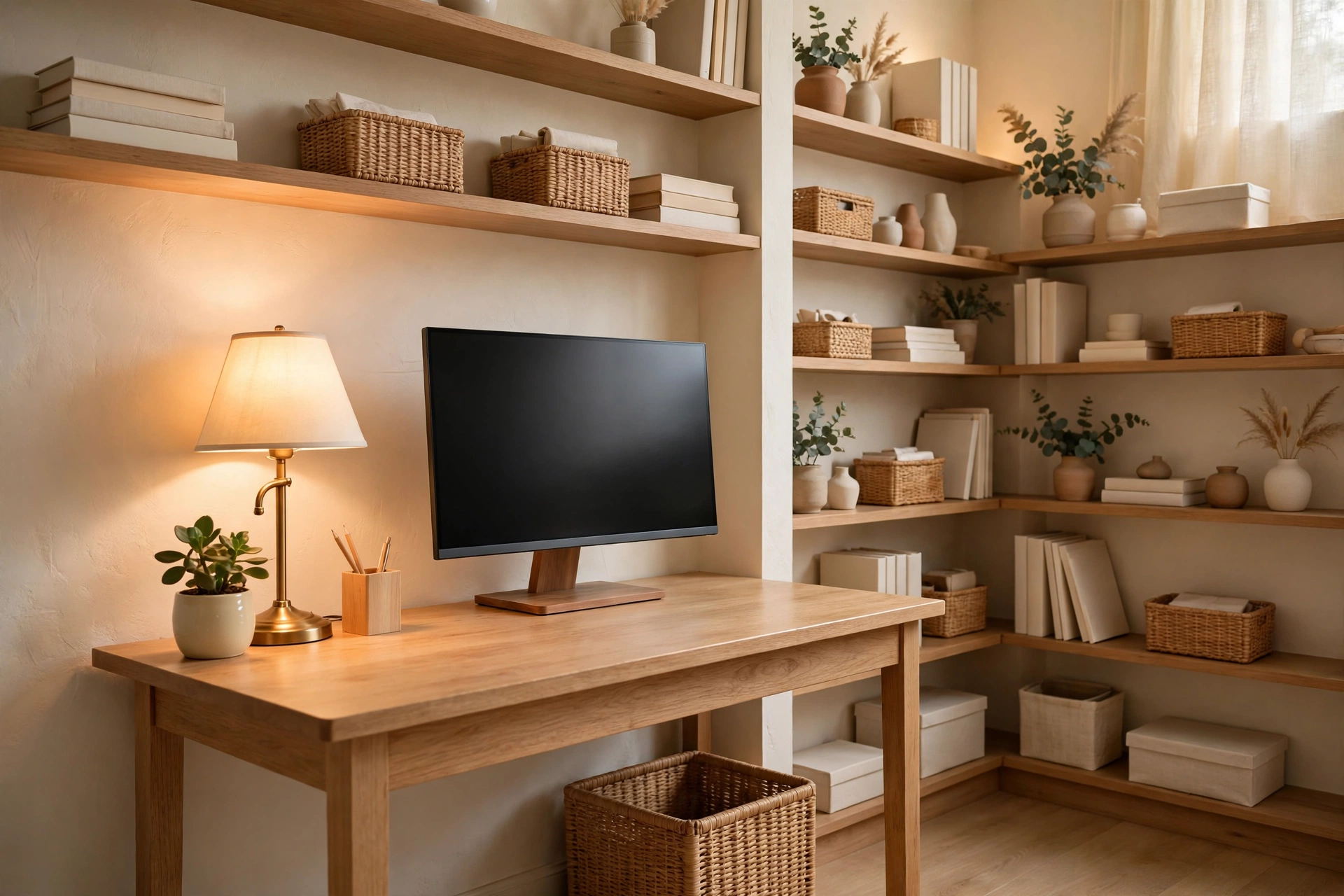
A messy desk makes a messy mind — and when your office is also your home, the clutter follows you into evenings and weekends. But a home office doesn’t need much: a clear desk, a paper system that isn’t a pile, and cables that aren’t a nest. Small, calm, and built for focus.
These are the home office organization ideas that work in real homes: desk setups, paper systems, cable control, and the routines that keep a small workspace clear.
Starting from chaos? Run the room-by-room decluttering checklist on the office first.
The focus-first principles
- Clear desk, clear head. The desk holds only what the current task needs. Everything else lives in drawers, shelves, or the paper system.
- Zones, not piles. Every office has the same zones: active work, reference, supplies, and tech. Piles are just zones without decisions.
- Paper has a pipeline. Inbox → action → file or recycle. Paper that sits on the desk is paper without a next step.
Desk setup that supports focus

- The landing strip: one tray or mat where the laptop, notebook, and pen live. When the workday ends, everything returns to the strip — the desk resets in seconds.
- Monitor at eye level: a stand or stack of books. Ergonomics and desk space in one move — the space underneath holds the keyboard or notebook.
- One drawer for active supplies: pens, sticky notes, chargers. Not the junk drawer — curated, small, and restocked monthly.
- Lighting matters: a desk lamp aimed at the work, not the screen. Good light reduces the visual noise that makes a desk feel cluttered.
The paper system
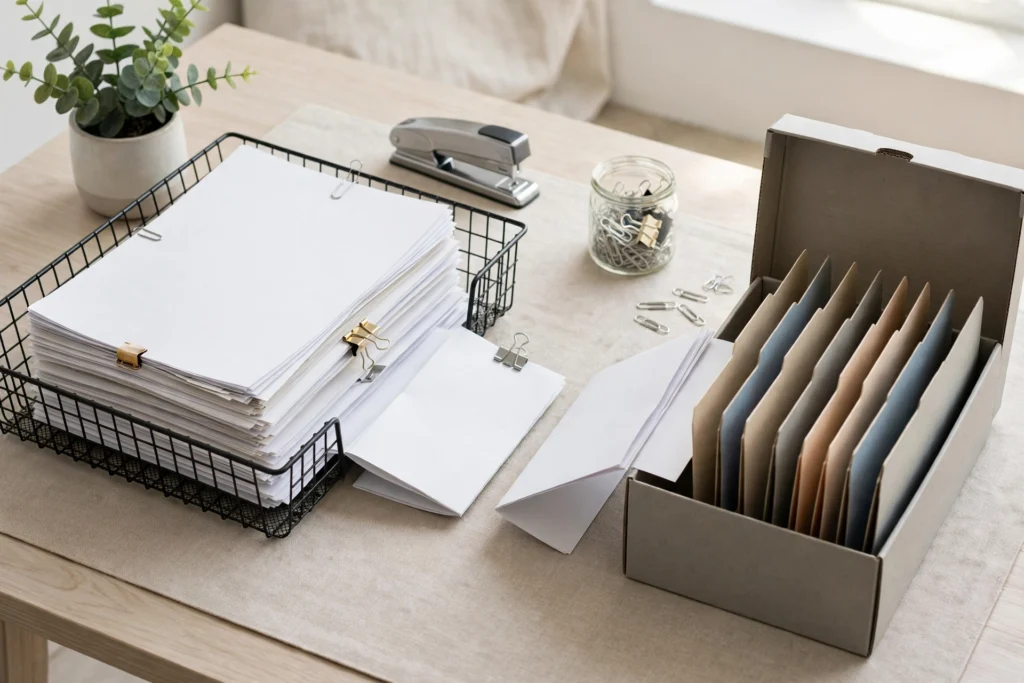
Paper is the #1 home office clutter source. The pipeline:
- Inbox tray — all incoming paper lands here. Nothing skips the inbox.
- Weekly processing — once a week, empty the inbox: act, file, or recycle. Fifteen minutes, same day each week.
- One filing box — broad categories (home, money, medical, work). If it doesn’t fit a category, it probably doesn’t need filing.
- Go digital by default — scan or photograph, then recycle the original. Our budget guide’s digitizing tips keep this free.
Cable control

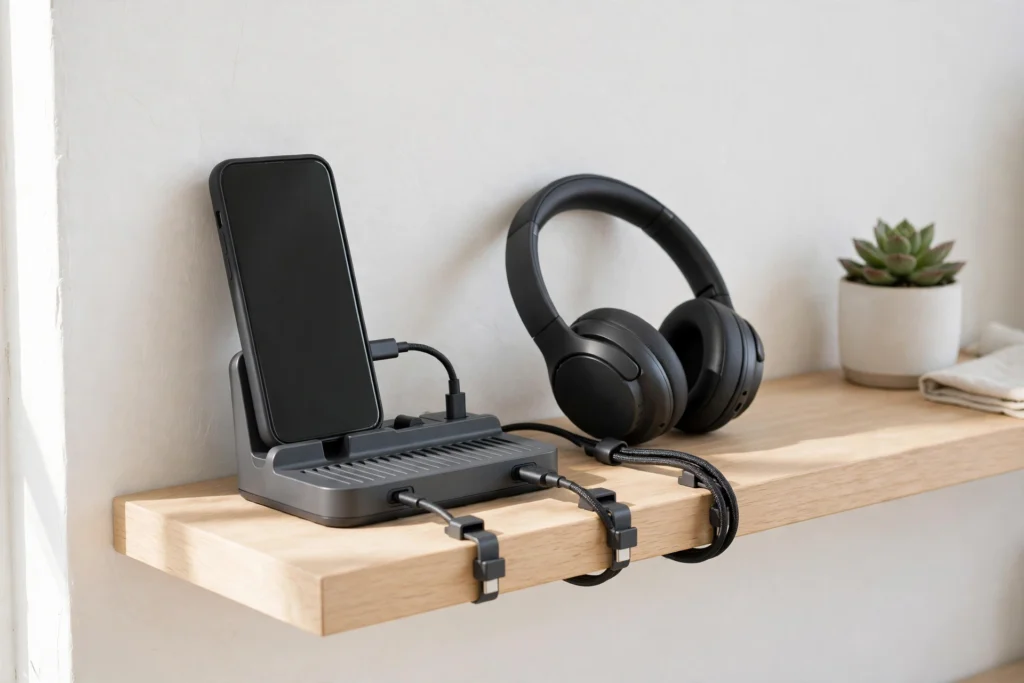
- One power strip, mounted — under the desk or behind it. Cables plug in once and stay.
- Label every cable — a $5 label maker (or tape) ends the “what is this plugged into” mystery forever.
- Velcro ties, not zip ties — reusable, adjustable, and they don’t strangle cables.
- Charge in one spot — a single charging station for phone, headphones, and devices. Not scattered across the desk.
Small home office ideas
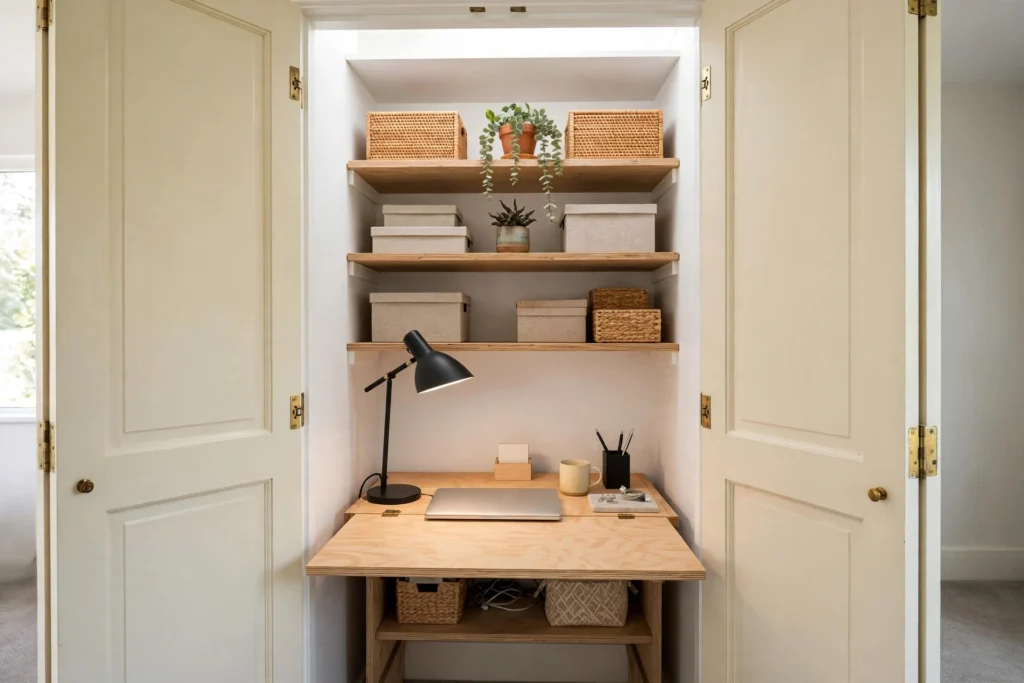
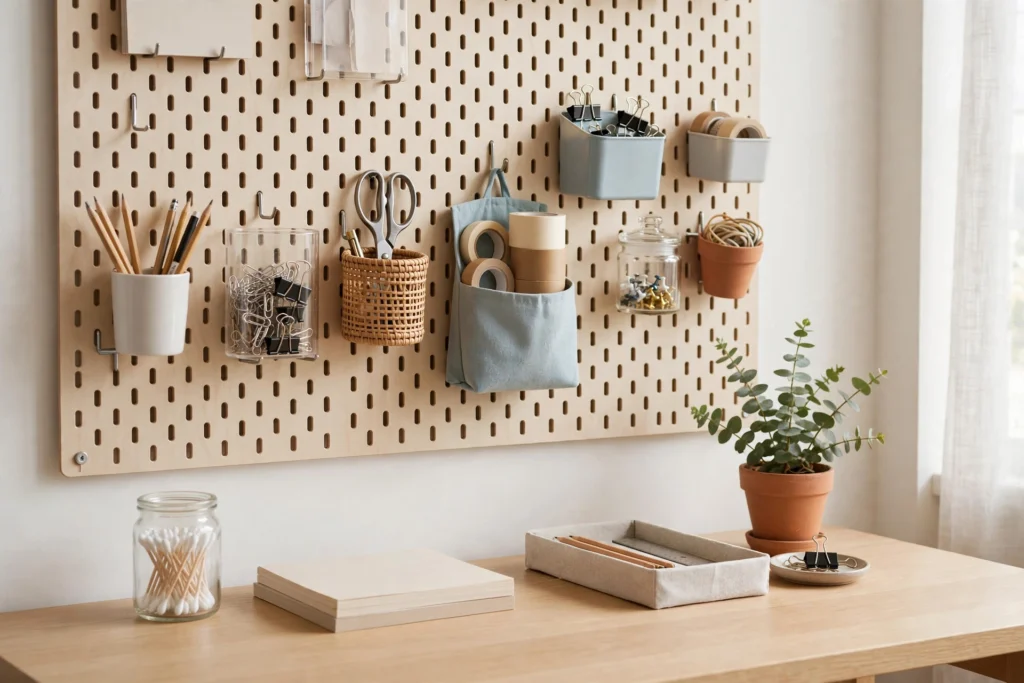
No spare room? The same systems fit anywhere:
- Closet office: a desk in a closet with doors that close on the workday. The ultimate work-life boundary.
- Wall-mounted drop-leaf desk: folds away when work ends. Pair with a wall organizer for supplies.
- Corner command: an L-desk in a bedroom or living room corner, zoned with a rug. Our small-space zoning techniques apply.
- Rolling cart office: supplies on a cart that parks in a closet after hours. The whole office disappears.
The end-of-day shutdown

The five-minute routine that protects your evenings:
- Tomorrow’s top three tasks on a sticky note.
- Everything back to zones — desk clear.
- Inbox check: anything urgent flagged, rest waits for processing day.
- Close the door, the closet, or the laptop — the workday has a visible ending.
This is the office version of the daily cleaning routine’s evening reset — same principle, smaller room.
Mistakes that clutter a home office


Pretty organizers for ugly habits. A beautiful tray doesn’t fix a paper pile — the pipeline does. System first, containers second.
The chair-drobe and floor-drobe. Clothes and bags colonize office chairs. A hook by the door and a hamper nearby end it.
No processing day. Without a weekly inbox session, the system silently becomes a pile again. Put it on the calendar.
Storing the office’s past. Old notebooks, dead tech, manuals for things you don’t own — the checklist’s office section purges it.
Frequently asked questions
How do I organize a small home office?
Go vertical (wall shelves, pegboard), keep the desk surface minimal with a landing strip, run the paper pipeline, and control cables once. Closet offices and drop-leaf desks work where no spare room exists.
How do I keep my desk clear?
The landing-strip rule: only the current task’s tools on the desk, everything else in zones. End each day with the five-minute shutdown — a clear desk is a maintained desk, not a naturally occurring one.
What’s the best way to organize paperwork at home?
Inbox tray → weekly processing → one filing box with broad categories → digitize by default. Paper needs a pipeline with a next step, not a pile with good intentions.
How do I hide office clutter in a shared room?
Closet offices with closing doors, rolling carts that park away, and drop-leaf desks. The visible-ending principle: when work ends, the office should visually disappear.
Final thoughts
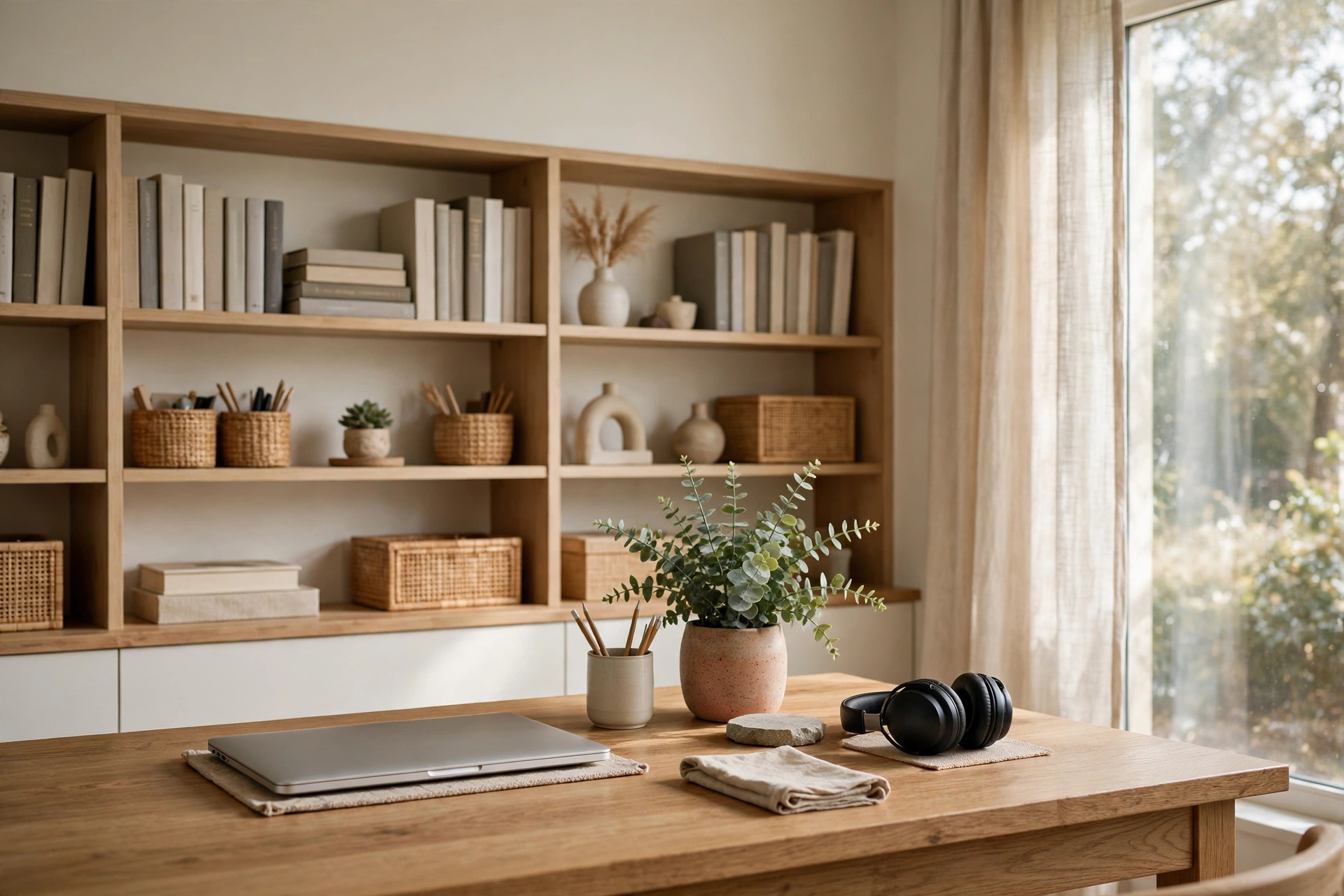

A focused home office is a maintained one: clear desk, paper pipeline, controlled cables, and a five-minute shutdown. Build the zones once, run the routine daily, and the smallest workspace starts feeling like the calmest room in the house.