
The fridge is the most-opened, least-organized appliance in the house. Leftovers disappear into the back, condiments multiply on the door, and produce wilts in drawers nobody checks. But a fridge is just a small, cold pantry — and the same zone logic that organizes a pantry organizes a fridge in under an hour.
Here’s how to organize your fridge with zones that actually work: what goes where, which bins earn their space, and the weekly routine that keeps it from sliding back into chaos.
For the dry-goods side, see our pantry organization guide — the two systems work as a pair.
First: the fridge purge
- Toss expired condiments, fuzzy leftovers, and the “science experiments” in the back.
- Check dates on dairy, deli, and sauces — the fridge hides expired items better than any room in the house.
- Pull everything out, wipe the shelves, and only put back what you actually eat.
- Combine the three half-empty bottles of the same mustard.
The fridge zones

 Every fridge has temperature zones. Work with them, not against them:
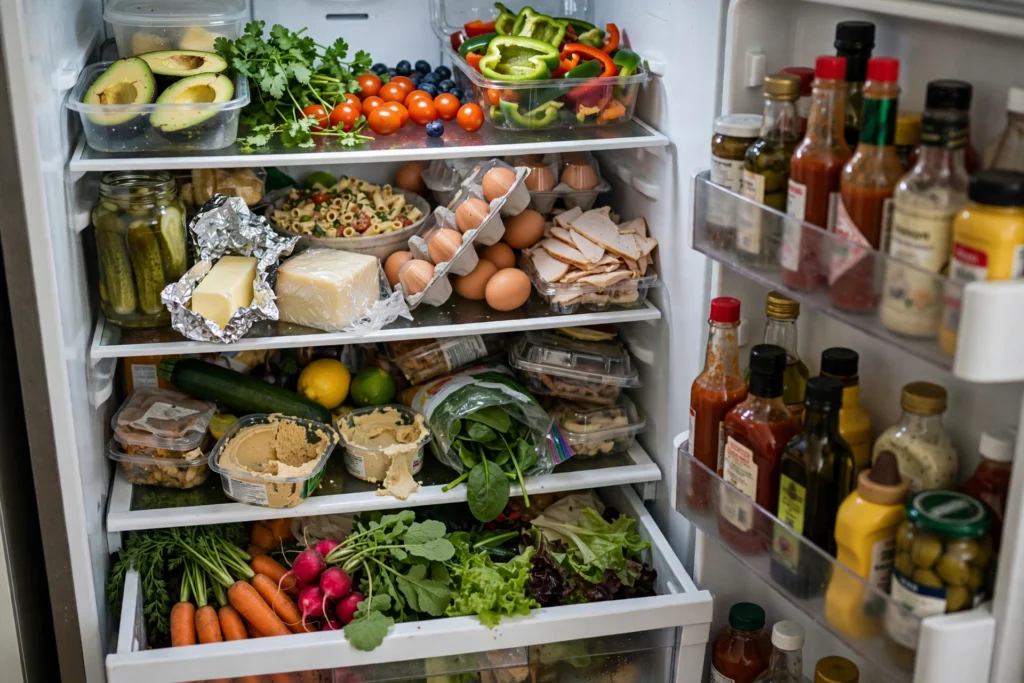
- Top shelf: ready-to-eat foods — leftovers, drinks, yogurt, herbs. Most consistent temperature, most visible spot.
- Middle shelves: dairy, eggs, and everyday items. Eye-level = used most.
- Bottom shelf: raw meat and fish (coldest spot, and nothing drips onto other food).
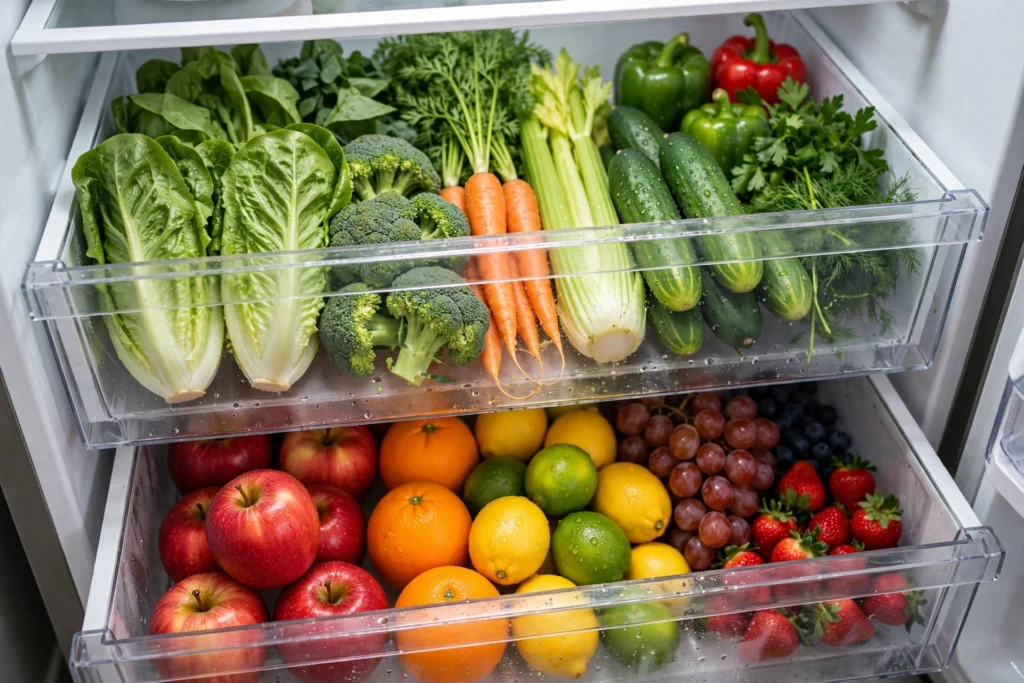
- Drawers: produce — high humidity for vegetables, low for fruit. Actually use the humidity sliders.
- Door: condiments only. It’s the warmest spot — milk and eggs don’t belong here despite the built-in holders.
Bins and labels

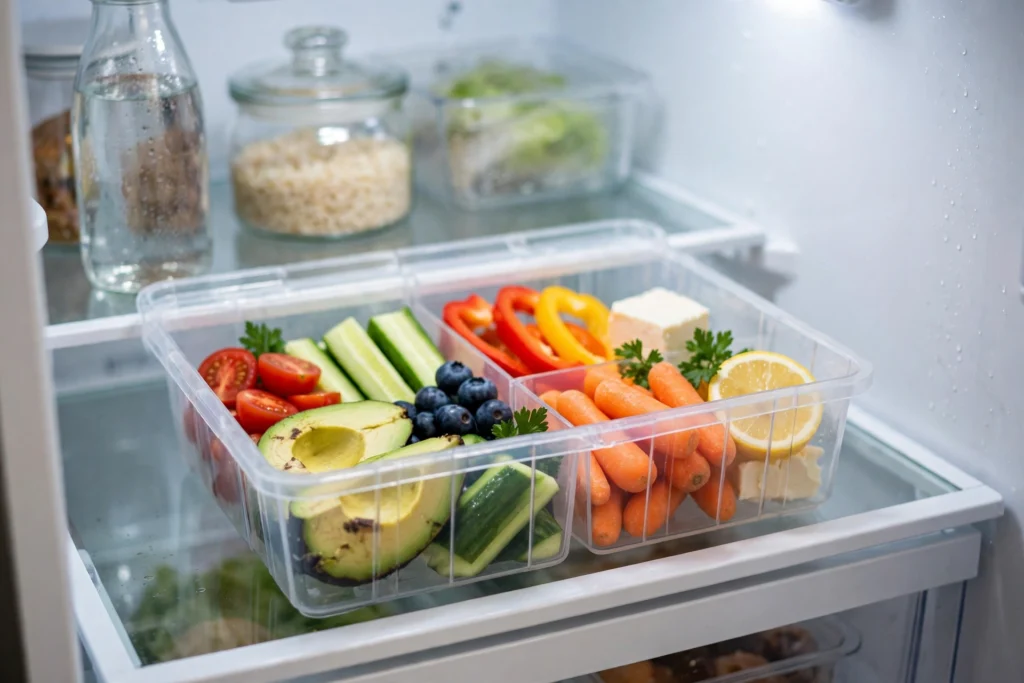
- Clear bins by category: one for snacks, one for lunch ingredients, one for leftovers. Pull the bin out instead of digging.
- A “use first” bin: anything expiring soon or leftover goes here, front and center. Food waste drops immediately.
- Labels for shared fridges: masking tape + marker for leftovers (contents + date). No more mystery containers.
- Lazy susan for condiments: a turntable on a deep shelf ends the condiment excavation.

The weekly fridge reset

Five minutes, once a week — ideally before grocery day:
- Toss anything expired or past its prime.
- Move “use first” candidates to the front bin.
- Wipe one shelf or drawer (rotate weekly — the whole fridge gets cleaned monthly without a big job).
- Check the shopping list against what’s actually in there.
Pair it with the weekly cleaning rhythm and it becomes automatic.
Small fridge and shared fridge ideas

- Go vertical: stackable bins and shelf risers double usable space.
- Decant the bulky: transfer juice, milk, and bulk items into compact uniform containers.
- Shared fridge zones: one shelf or bin per person, labeled. Roommates and families stop eating each other’s food.
- Door discipline: condiments only, one row deep. If the door overflows, something’s expired — purge it.
Our small-space strategies cover the rest of a compact kitchen.
Mistakes that wreck a fridge
Milk in the door. The door is the warmest spot. Dairy lives on the middle shelf — ignore the built-in door holders.
No “use first” system. Without a front-and-center spot for expiring food, the back of the fridge becomes a graveyard.
Overstuffing. A packed fridge blocks airflow and hides food. If you can’t see it, you won’t eat it — buy less, waste less.
Cleaning never. Spills become sticky archaeology. The rotating weekly wipe handles it in minutes.
Frequently asked questions
Where should things go in the fridge?
Top shelf: ready-to-eat foods. Middle: dairy and everyday items. Bottom: raw meat. Drawers: produce (use the humidity settings). Door: condiments only — never milk or eggs.
How do I keep my fridge organized?
Zone by temperature, use clear bins by category, keep a “use first” bin front and center, label leftovers with dates, and run the five-minute weekly reset before grocery day.
What containers are best for fridge organization?
Clear stackable bins (see what’s inside), a lazy susan for condiments, and uniform compact containers for decanting bulky items. Match the bin to the category, not the aesthetic.
How often should I clean out the fridge?
A five-minute purge weekly (toss expired, rotate “use first”) plus wiping one shelf or drawer each week — the whole fridge gets deep-cleaned monthly without ever needing a big session.
Final thoughts
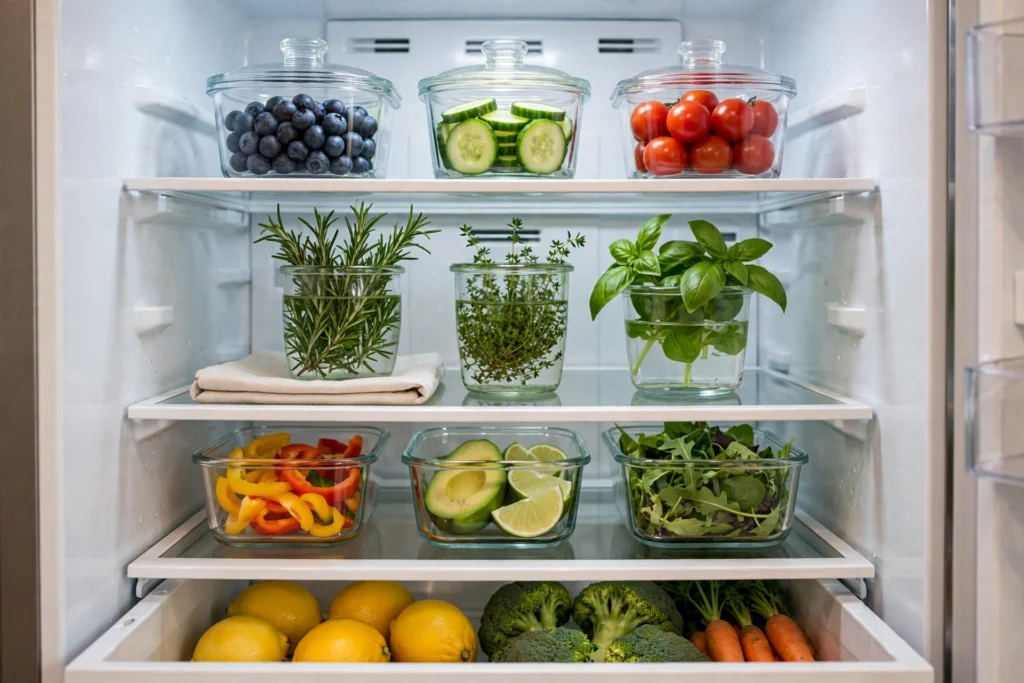

An organized fridge isn’t about pretty bins — it’s about zones, a “use first” bin, and five minutes a week. Set the zones once, run the reset before grocery day, and the most-opened appliance in the house stops being the most chaotic.