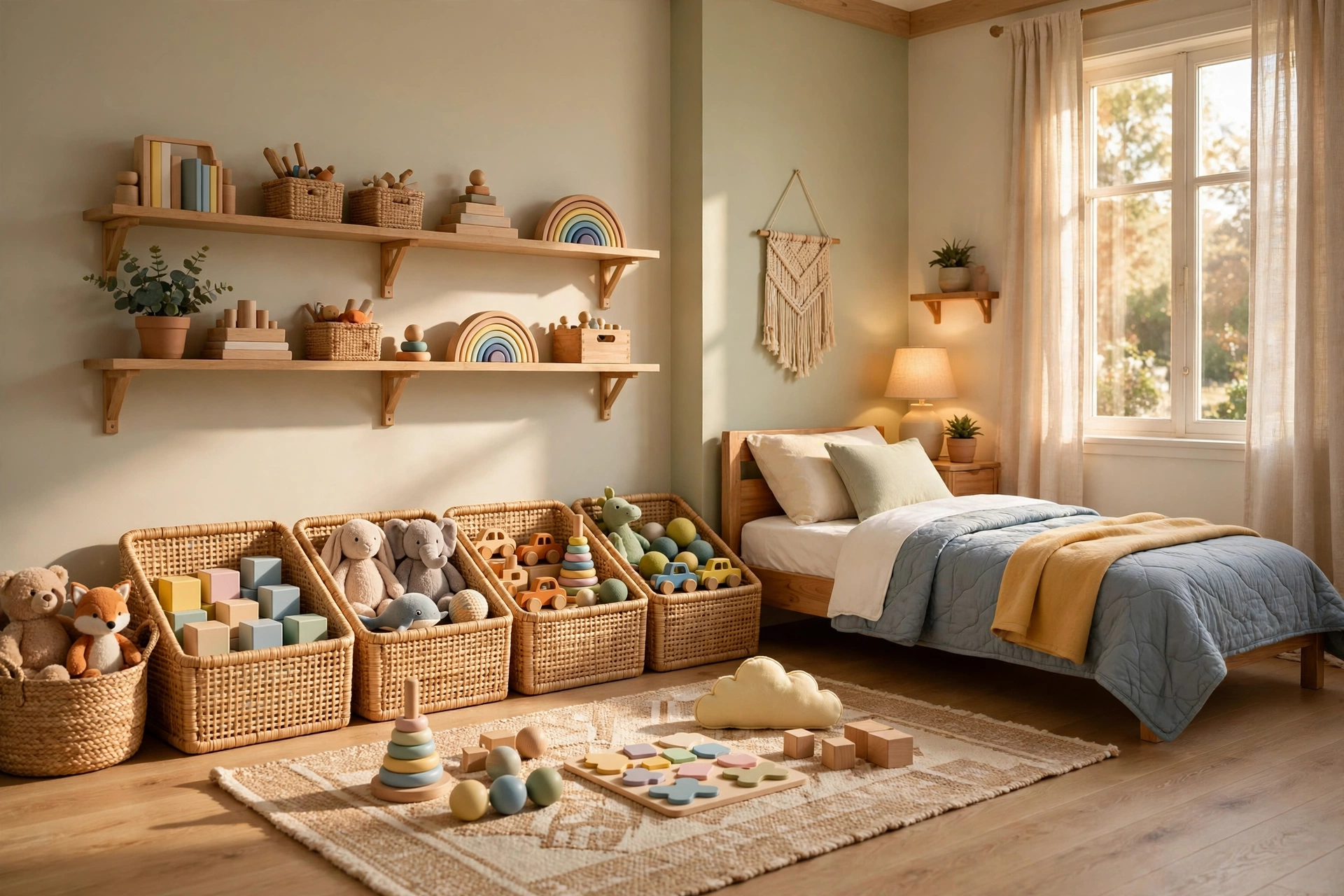
Kids’ rooms are entropy engines. No matter how nicely you organize one, it returns to chaos within 48 hours — unless the system is built for the way kids actually live. The secret isn’t more storage. It’s fewer decisions, lower shelves, and routines a seven-year-old can run without you.
These are the kids’ room organization ideas that survive real families: toy systems that contain the sprawl, clothes setups kids can manage, paper solutions that don’t become mountains, and the five-minute reset that keeps it all working.
Starting from chaos? Run the room-by-room decluttering checklist on the kids’ rooms first — organizing around outgrown toys doubles the work.
The kid-proof principles
- Low and reachable. If a child can’t reach it without climbing, they won’t put it back. Storage lives at kid height; your height is for your things.
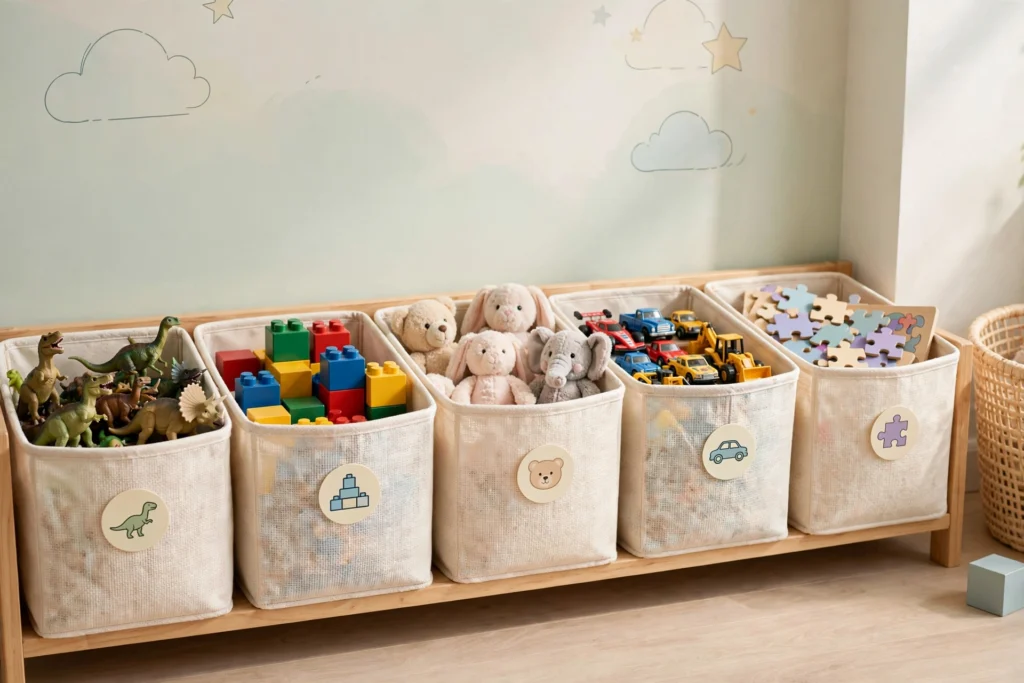
- Picture labels, not word labels. A photo of blocks on the blocks bin works for pre-readers and speeds up every age. Our budget labeling tricks keep this nearly free.
- Fewer categories, bigger bins. Ten tiny sorted categories fail; four big ones (“blocks,” “dolls,” “cars,” “art”) succeed. Broad beats precise with kids.
- Less stuff, less mess. The fastest way to organize toys is to own fewer of them. Rotation (below) does the rest.
Toy organization that contains the sprawl
Rotate, don’t display
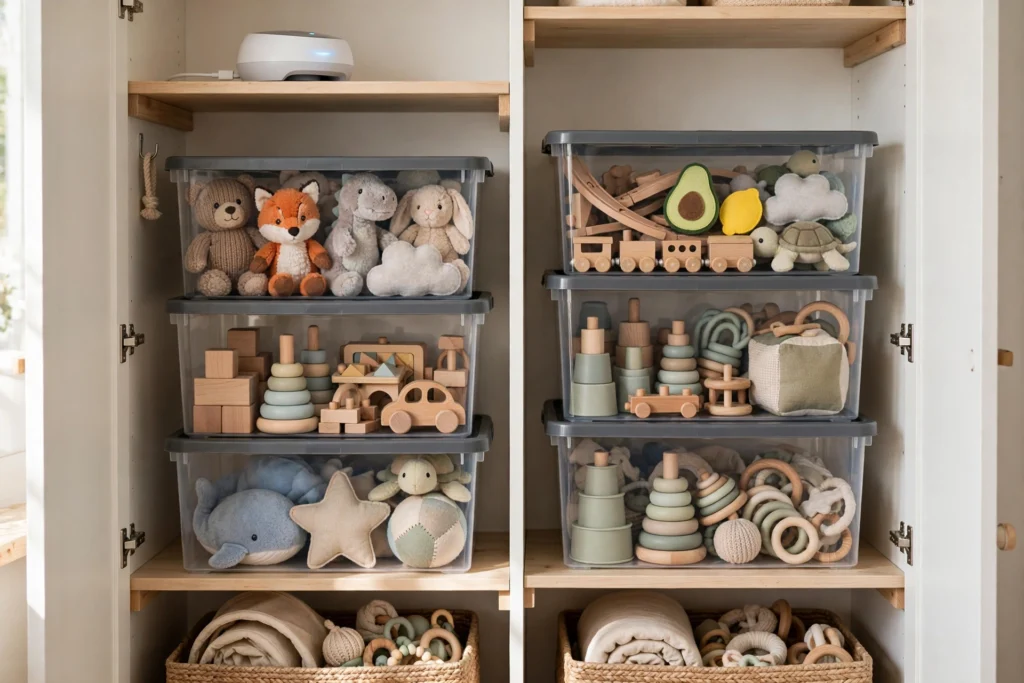
Keep roughly a third of the toys out and store the rest in labeled bins in a closet. Every month or two, swap. Kids get “new” toys for free, cleanup involves a third of the inventory, and you learn which toys nobody misses — those leave permanently.
Zone by activity
One corner for building, one for pretend play, one for art. Zones keep the whole room from becoming one mixed toy soup, and cleanup becomes “everything back to its zone” instead of a hundred micro-decisions.
One in, one out
Birthdays and holidays are the clutter pipeline. The rule: for every new toy that arrives, one leaves (donate or pass down). Kids choose, which also builds the decision muscle.
Clothes kids can manage
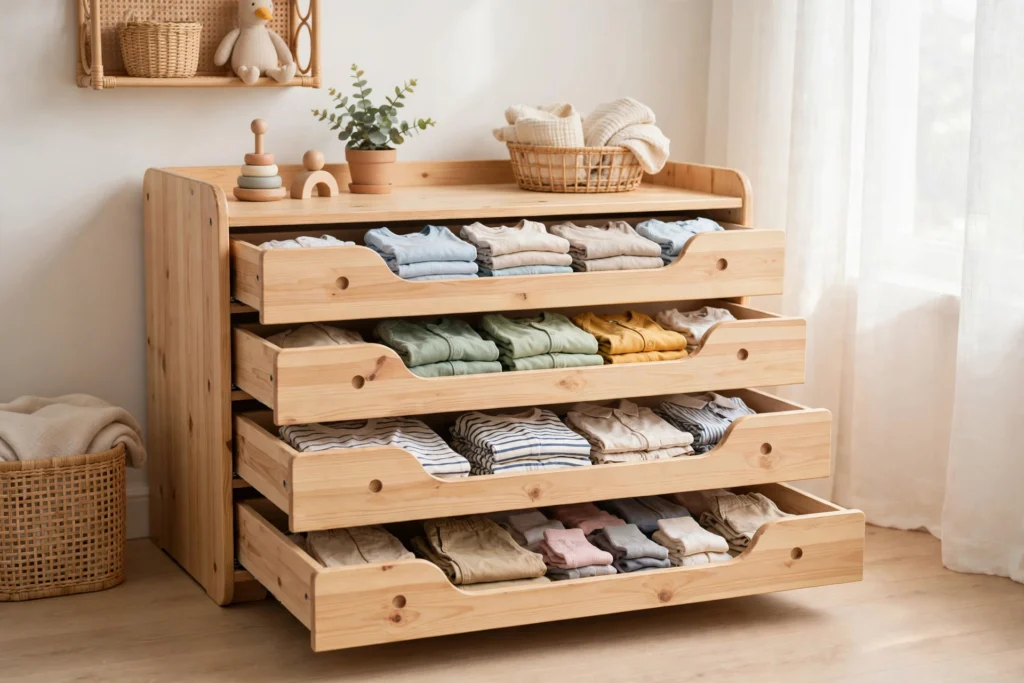
- Low rods and reachable drawers — if they can’t reach it, you become the wardrobe assistant forever.
- Outfit batching — for younger kids, pre-assemble a week’s outfits in labeled day-bins. Mornings go from negotiation to grab-and-go.
- The outgrown bin — one permanent bin in the closet. When something doesn’t fit, it goes in immediately instead of migrating back to drawers.
- Seasonal swap — off-season clothes live elsewhere, not stealing prime drawer space. See our closet system for the method.
Artwork and school papers
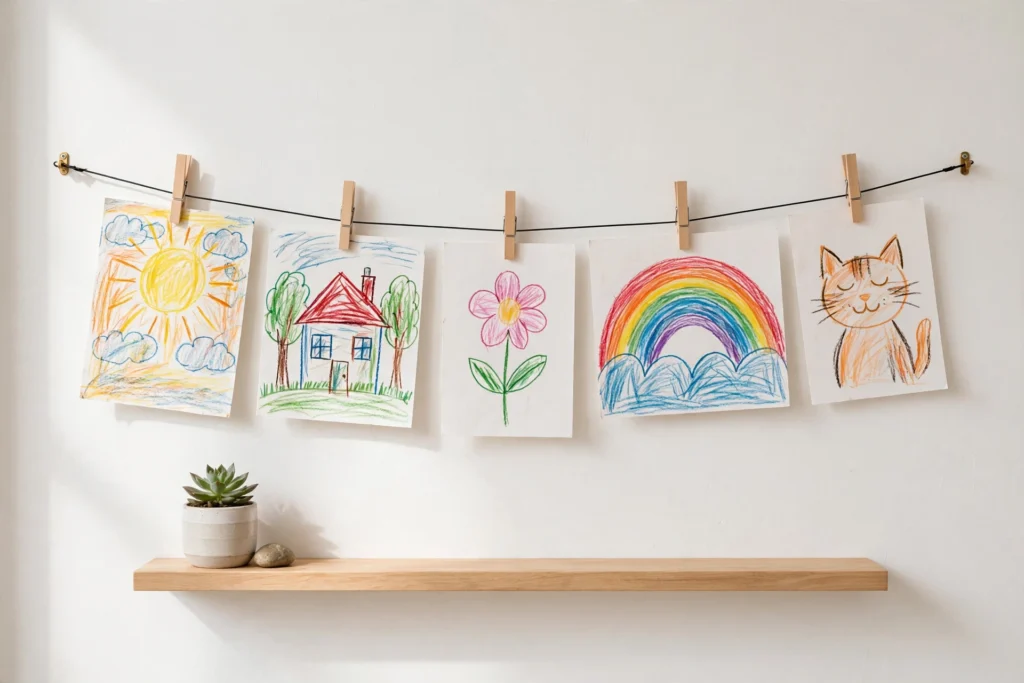
The paper avalanche is real. The system: one display spot (a wire with clips or a single frame), one keepsake box per child per year, and a phone camera for everything else. When the keepsake box is full, something must leave to make room — the box is the limit, not your guilt. At year’s end, photograph the box contents and keep the true treasures.
The five-minute nightly reset

The whole system runs on one habit: five minutes before bed, everything back to its zone. Make it a game — timer on, music up, race the clock. Kids who reset nightly wake up to a calm room, and you never face the weekend disaster-room cleanup again. It works because the zones are simple enough for the game to be winnable.
Storage that actually works
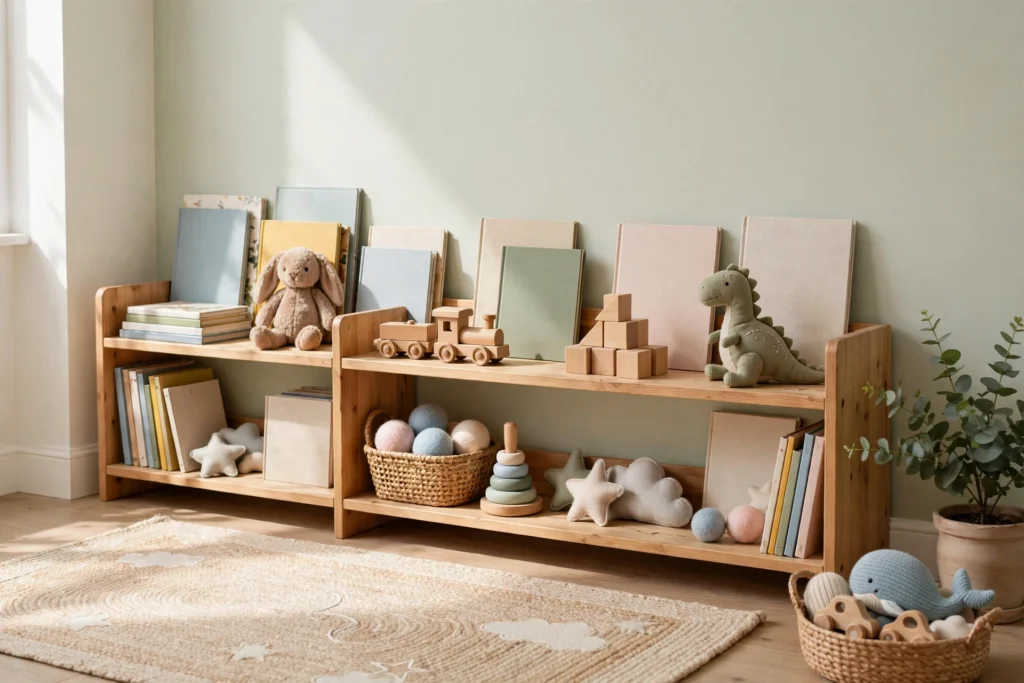
- Open bins over lidded boxes — lids are a barrier kids won’t cross. Open bins at kid height get used; pretty lidded boxes get ignored.
- A bookshelf as a room divider — doubles as toy storage and zone definition in shared rooms.
- Under-bed bins — for the rotated toys and off-season clothes. Hidden capacity without floor space.
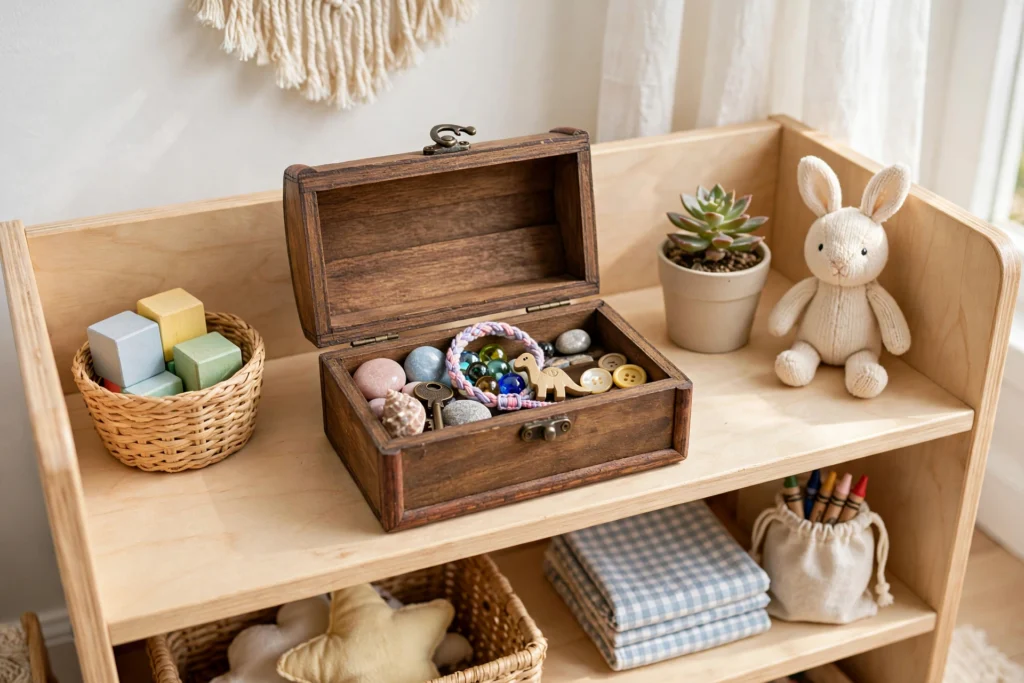
- One “treasure box” per child — a small box for the rocks, ticket stubs, and tiny treasures. Contained sentimentality beats scattered sentimentality.
Mistakes that break the system
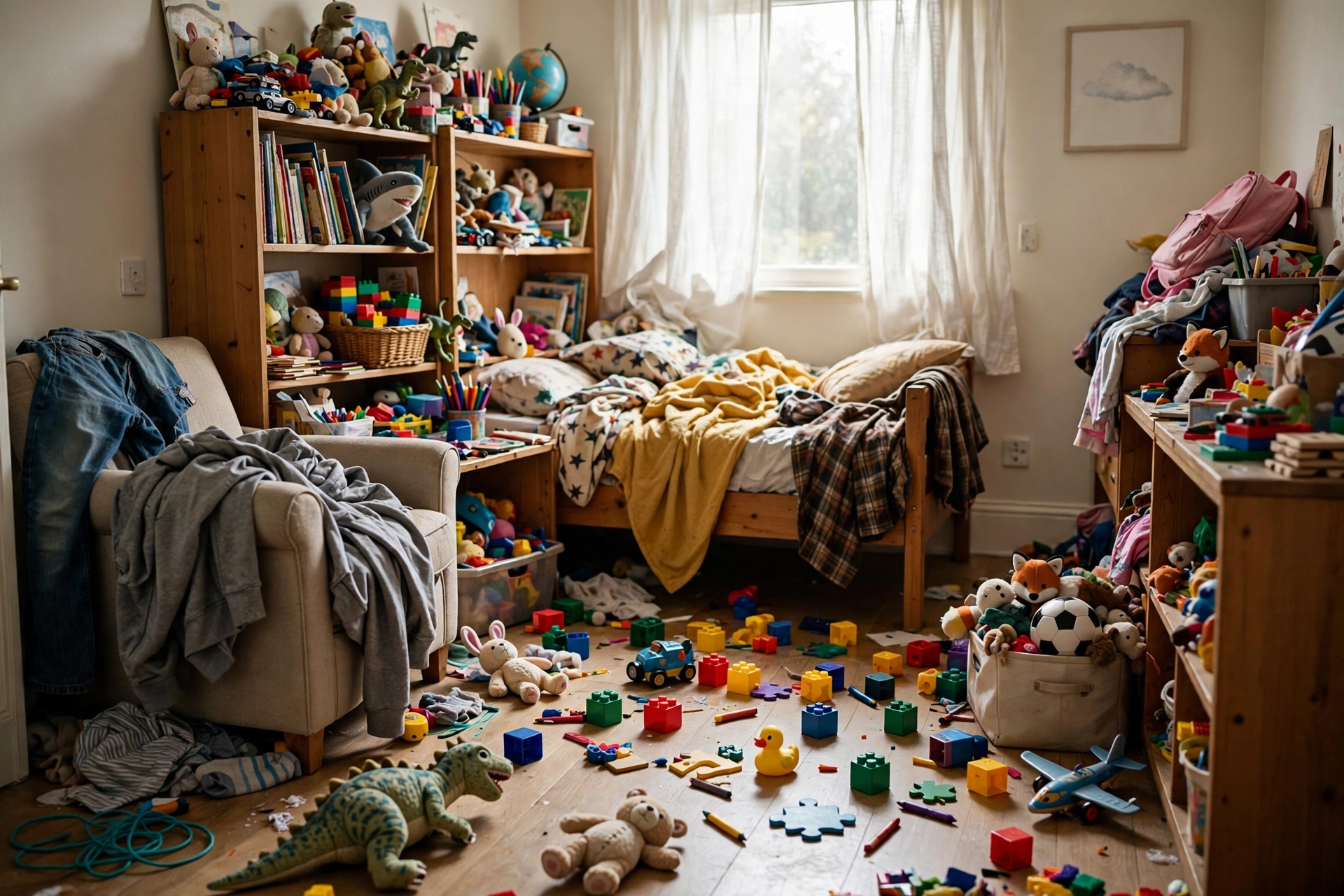
Organizing for the photo, not the child. Tiny labeled compartments look great and fail by Tuesday. Design for the messiest day, not the prettiest.
Too many toys out. If cleanup takes longer than play, the inventory is the problem, not the child. Rotate aggressively.
You as the permanent reset crew. If the system needs an adult to maintain it, it’s the wrong system. Kid-height, kid-simple, kid-runnable.
No donation pipeline. Outgrown is constant with kids. Keep the donation box in the closet permanently — see the checklist’s keep-it-clear rules.
Frequently asked questions
How do I organize a small kids’ room?
Go vertical with wall shelves (yours, up high), keep everything else low and open, use under-bed bins, and rotate toys so only a third are out. Our small-space strategies apply perfectly to kids’ rooms.
How do I get my kids to keep their room clean?
Make it winnable: few broad categories, open bins at kid height, picture labels, and a five-minute nightly reset framed as a game. Systems kids can run beat lectures every time.
What ages should kids start organizing their own rooms?
Toddlers can do “put the blocks in the blocks bin” with picture labels. By five or six, most kids can run the full nightly reset. Match the system to the age — broad bins for little ones, more categories as they grow.
How do I declutter kids’ toys without upset?
Use rotation first — box up half and store it. If nobody asks for a toy in two months, it’s safe to donate. Involve older kids in one-in-one-out decisions; they accept their own choices far better than yours.
Final thoughts


A kid-proof room isn’t a tidy room — it’s a resettable room. Low open bins, broad categories, rotating toys, and a five-minute nightly game. Build the system for the child you have, not the showroom you imagine, and the room starts cleaning itself.