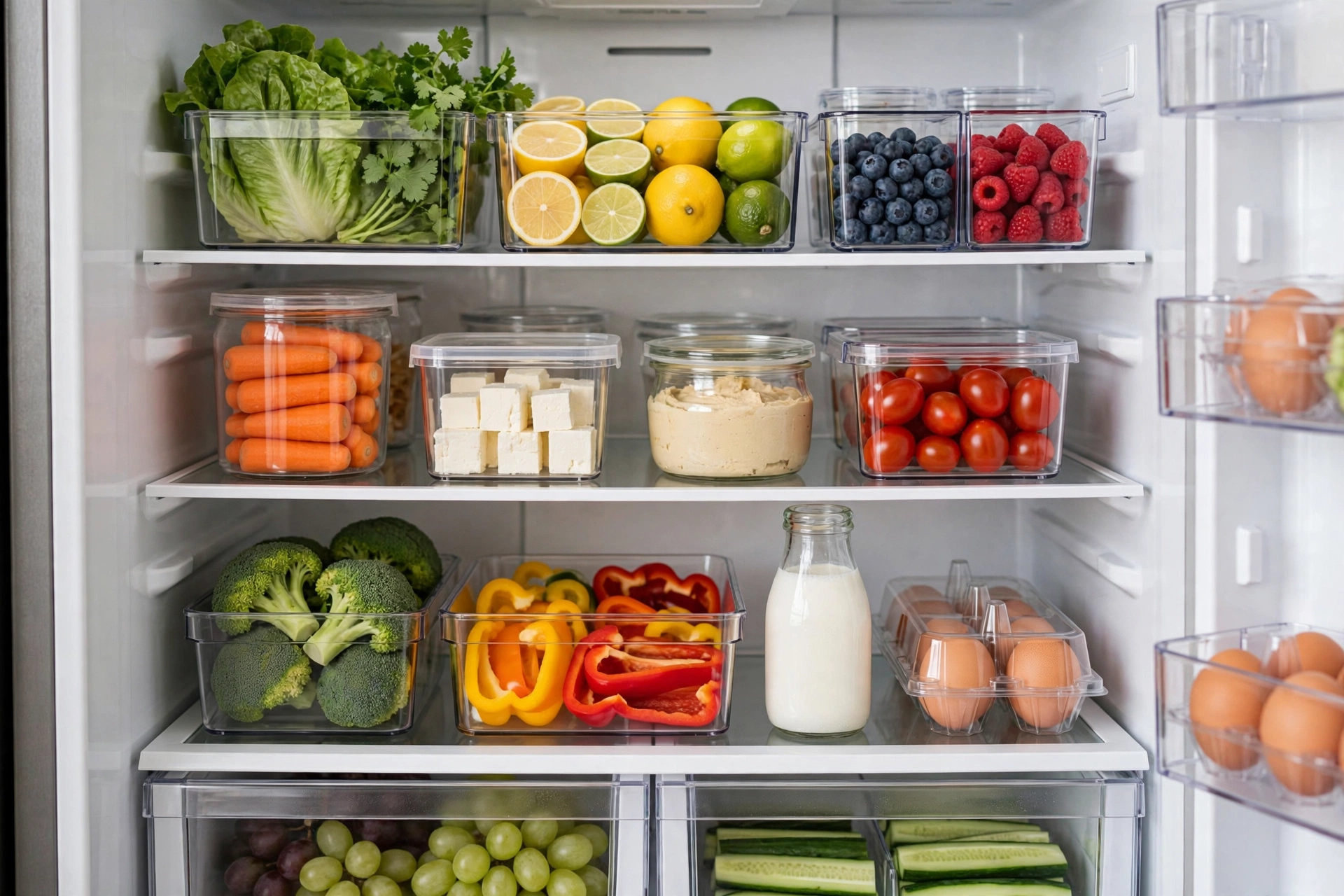
Fridge organization is having a moment — and the best part is that the viral, picture-perfect fridge doesn’t require expensive containers. The current surge is being driven by budget finds: simple bins, turntables, and labels that cost a few dollars each. Here’s how to get the look and the function without the fancy price tag.
This guide covers the purge, the zone system, the budget containers that do the heavy lifting, and the maintenance routine that keeps it looking good.
Pair this with our small kitchen organization ideas and the room-by-room decluttering guide.

Clear it out first
- Empty every shelf. You can’t organize around expired condiments. Check every date — the average fridge hides a surprising number of expired items.
- Wipe as you go. Warm water and a drop of dish soap on each shelf before anything goes back. A clean fridge makes the whole system feel new.
- Toss the science experiments. If you can’t identify it or remember buying it, it goes. No second chances for mystery containers.
- Group as you reload: dairy together, condiments together, produce together. Grouping is the foundation every zone builds on.
The zone system (the real secret)
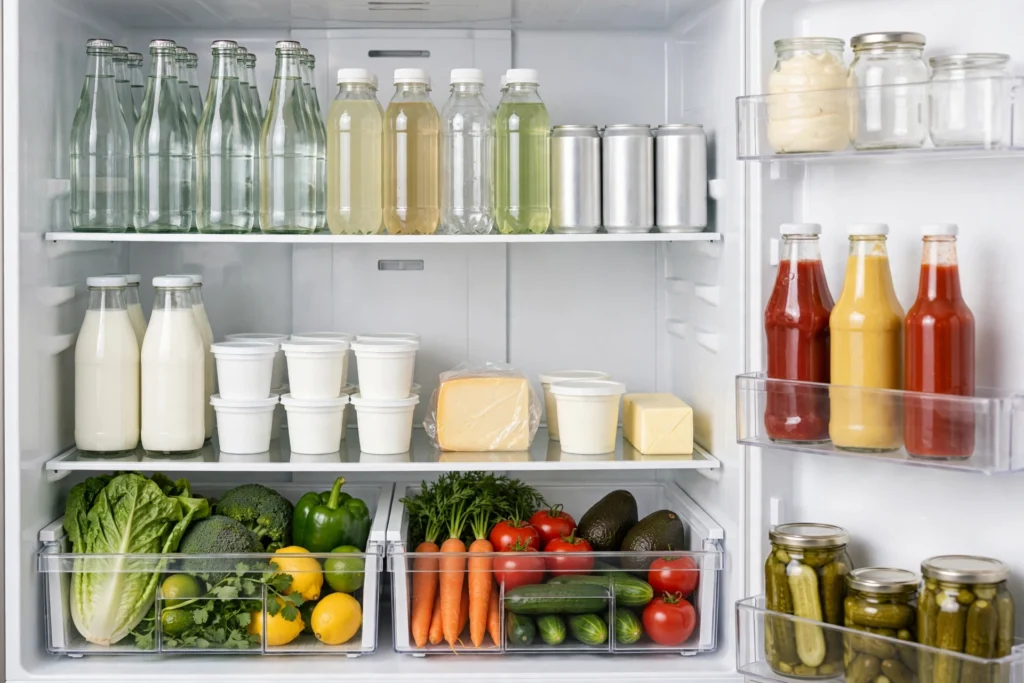
- Top shelf: drinks, ready-to-eat foods, leftovers. The most visible shelf — keep it tidy and it looks organized even when the rest isn’t perfect.
- Middle shelves: dairy, eggs, and everyday items at eye level where you actually reach.
- Bottom shelf: raw meat and anything that could drip — coldest spot, and drips can’t contaminate food below.
- Door: condiments only. It’s the warmest zone, so milk and eggs don’t belong here despite the built-in shelves.
- Drawers: produce by type — fruits in one, vegetables in the other. Herbs in a jar of water last twice as long.
Budget containers that do the heavy lifting


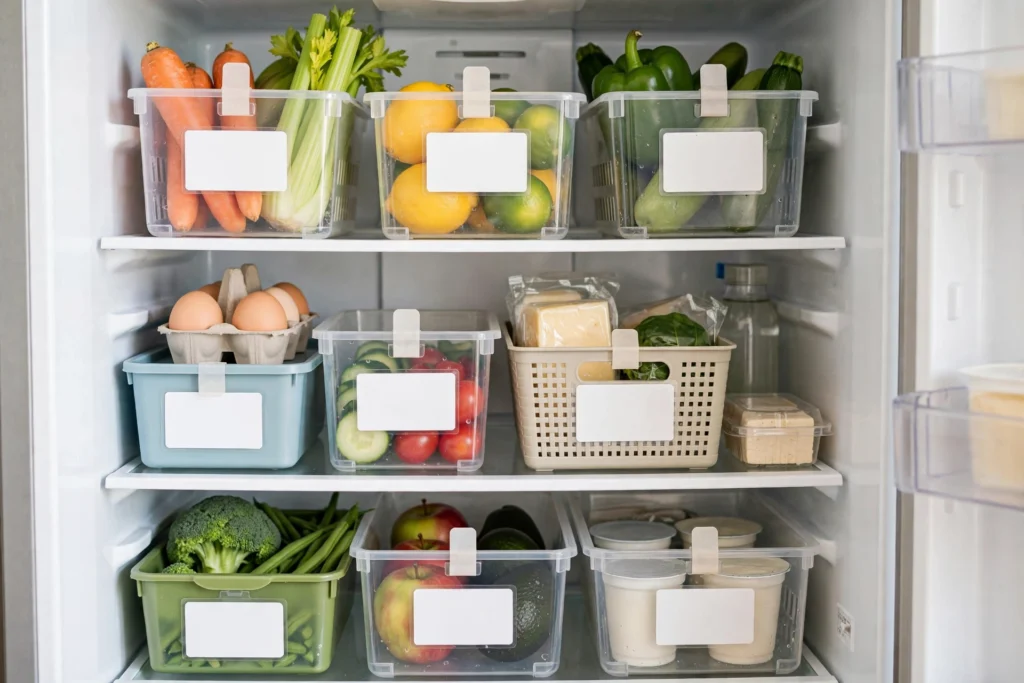
- Clear stackable bins (a few dollars each at discount stores): one per category — snacks, yogurts, sauces. Visibility is the whole game.
- A turntable for condiments: the single best fridge upgrade. No more knocking over five bottles to reach the mustard.
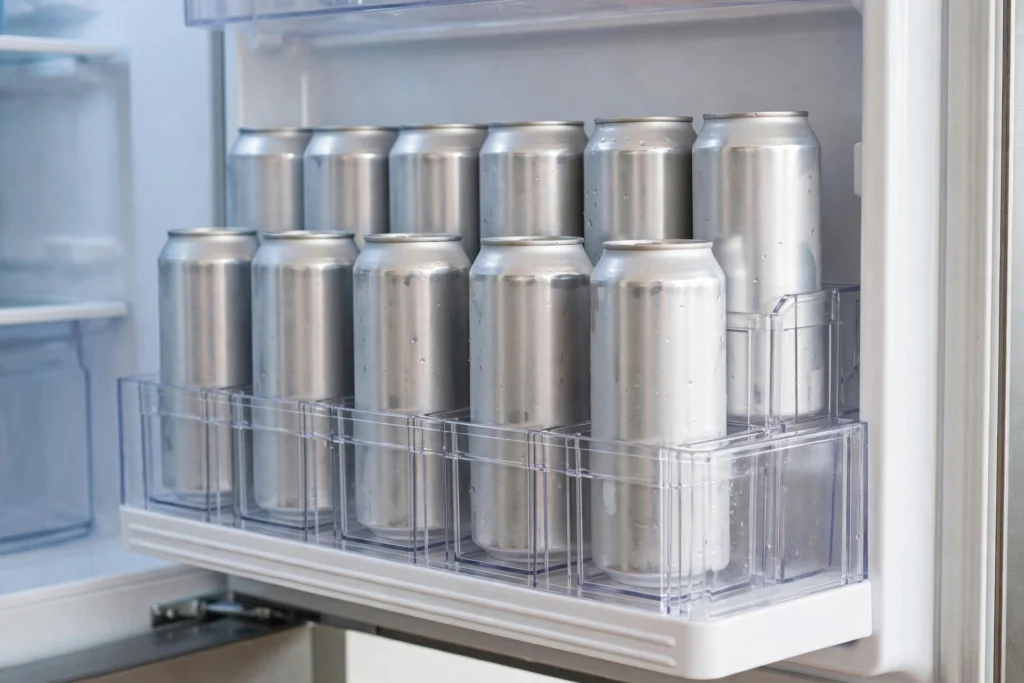
- Can dispensers: a simple rack keeps drink cans in a neat row instead of a rolling avalanche.
- Small baskets for packets: ketchup packets, butter, cheese sticks — the small stuff that migrates everywhere gets one basket.
- Egg holders and produce containers with vents: keep produce visible and breathing instead of rotting in a drawer you never open.

The viral look for less
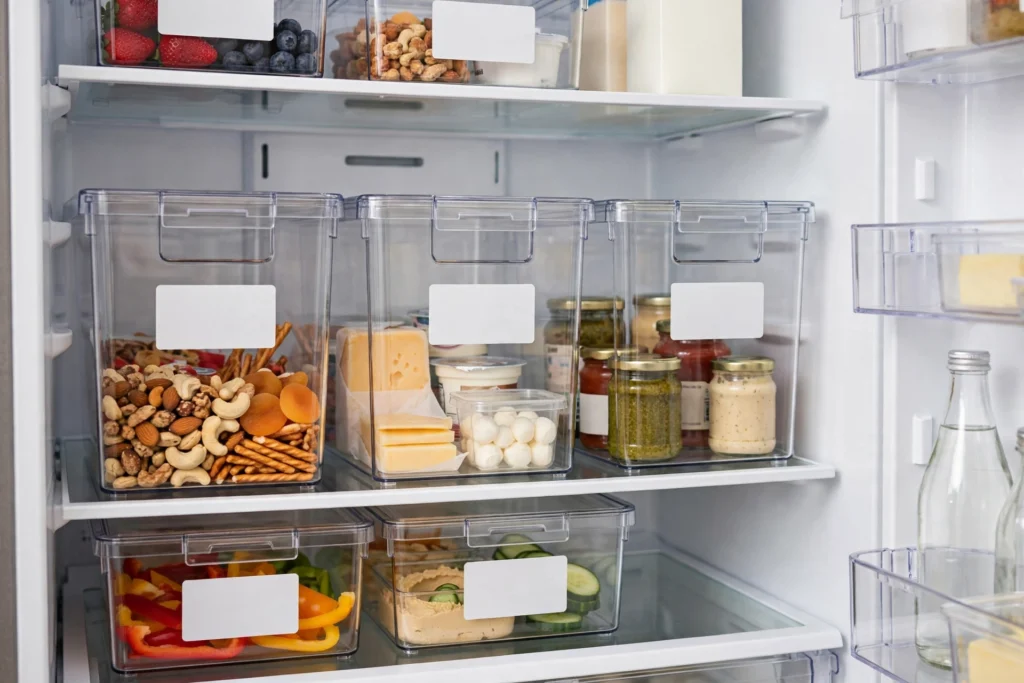
- Decant into clear containers where it counts: berries, snacks, and leftovers in matching clear containers create the uniform look for almost nothing.
- Labels change everything. A label maker — or even masking tape and a marker — makes budget bins look intentional and keeps the household putting things back in the right zone.
- Line the drawers with washable liners. They catch the drips, wipe clean in seconds, and make the whole fridge look finished.
- Keep the front row pretty: face labels forward on the top shelf. The five seconds of styling is what photographs — and what motivates you to keep it up.
The weekly 10-minute reset
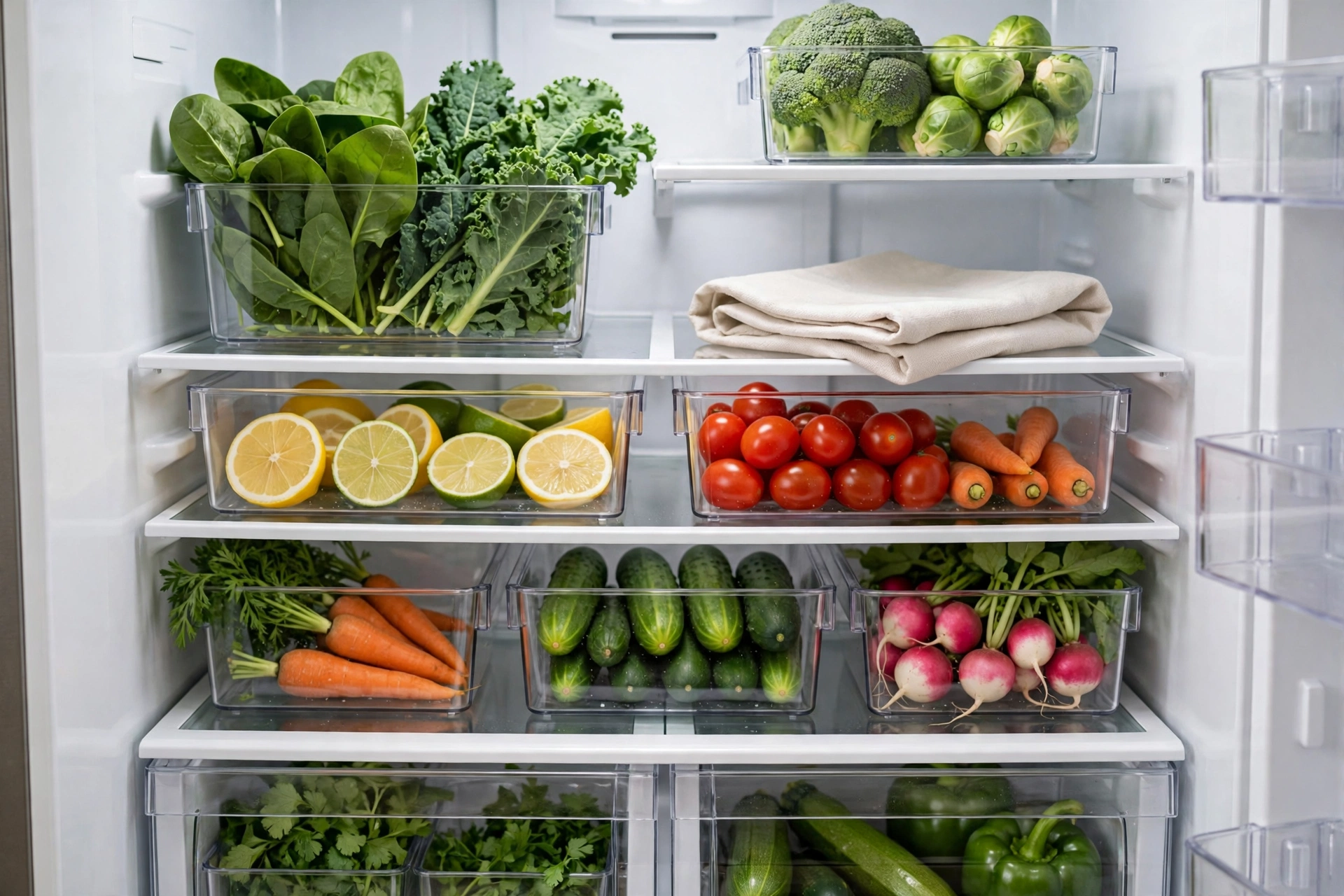
- Pick a day — the day before grocery shopping works best. Toss what’s expired, wipe one shelf, and regroup anything that migrated.
- Check the zones: dairy back in dairy, condiments back on the door. Ten minutes keeps the system from decaying.
- One in, one out for containers: new gadget or bin comes in, an old one leaves. Container creep is how organized fridges slide back.
- Restock mindfully: put new groceries behind existing items so the oldest gets used first. Less waste, less clutter.
Frequently asked questions
How can I organize my fridge on a budget?
Start with the zone system (it’s free), then add a few clear bins, one turntable for condiments, and labels. Discount-store containers work just as well as expensive ones — visibility and zones matter more than brands.
What should not go in the fridge door?
Milk, eggs, and anything perishable — the door is the warmest zone. Keep condiments, sauces, and sealed drinks there instead.
How do I keep my fridge organized long-term?
Do a 10-minute reset the day before grocery shopping: toss expired items, wipe a shelf, and return everything to its zone. The system holds if the reset happens weekly.
Are clear bins really better than opaque ones?
Yes — visibility prevents the number-one fridge problem: food you forgot you had. If you can see it, you’ll use it before it expires.
Final thoughts

The trending fridge look is 20% containers and 80% system: purge first, zone everything, add a few budget bins and labels, and hold it with a weekly 10-minute reset. Organized, photogenic, and cheap.