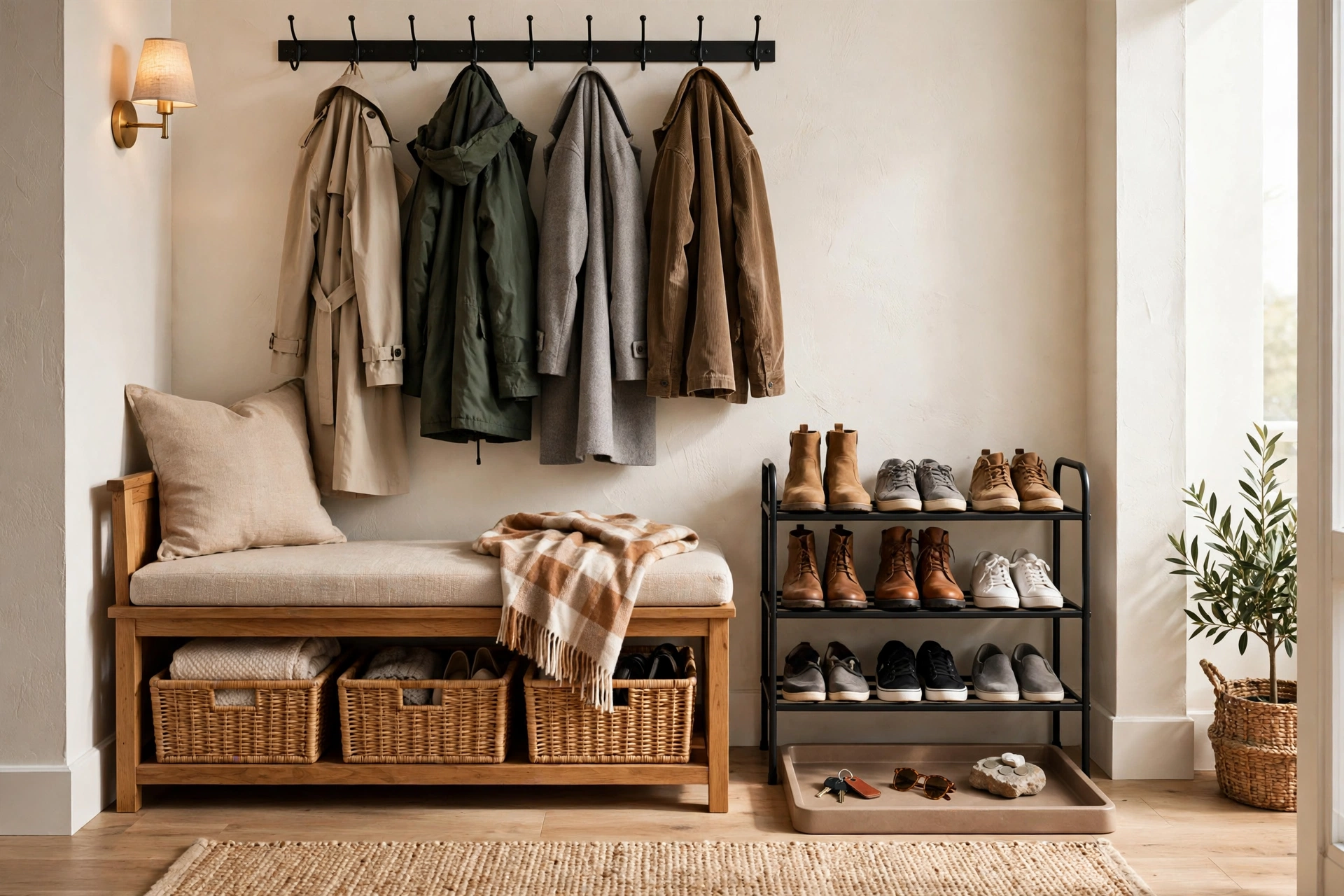
The entryway is the first thing you see when you come home and the last thing guests see when they leave — and in most houses, it’s a pile of shoes, a avalanche of mail, and keys lost in the chaos. It doesn’t need to be big. It needs to be deliberate: every item that enters your home passes through this spot, so it deserves a system.
These are the entryway organization ideas that work in real homes: drop zones for small spaces, shoe and coat systems, mail control, and the five-minute reset that keeps the front door welcoming.
Starting from chaos? Run the room-by-room decluttering checklist on the entry first — it’s the fastest win in the house.
The entryway principles
- Every entrant gets a home. Shoes, coats, bags, keys, mail — if it comes through the door regularly, it has a designated spot within arm’s reach of the door.
- Small space, vertical thinking. Most entryways are tiny. Hooks, wall shelves, and over-door storage beat floor furniture every time.
- Limit the inventory. The entryway holds the current season’s gear, not the archive. Off-season coats and shoes live elsewhere.
The drop zone
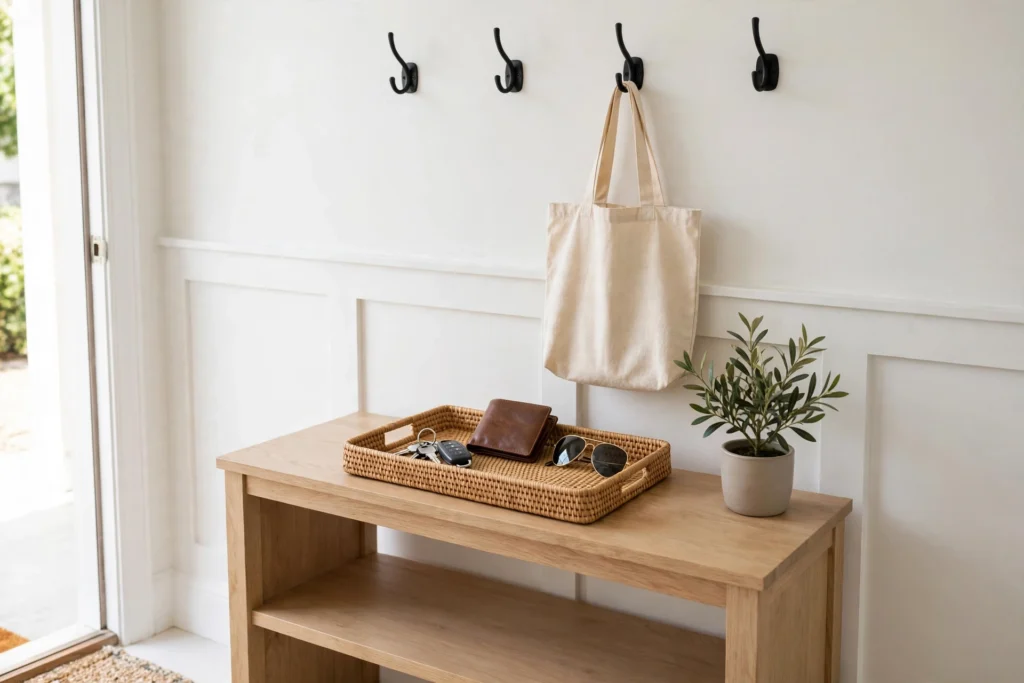
The drop zone is the heart of the entryway — one defined spot where the daily essentials land:
- A tray or bowl for keys, wallet, and sunglasses — small, visible, and impossible to miss on the way out.
- Hooks for bags and tomorrow’s needs — the work bag, the gym bag, the library books going back. If it’s leaving with you tomorrow, it hangs here tonight.
- A charging spot — phone charges by the door, so you grab it on the way out instead of hunting for it.
- One in, one out for the zone — the drop zone holds today’s essentials, not the week’s accumulation. Reset it nightly.
Shoe systems
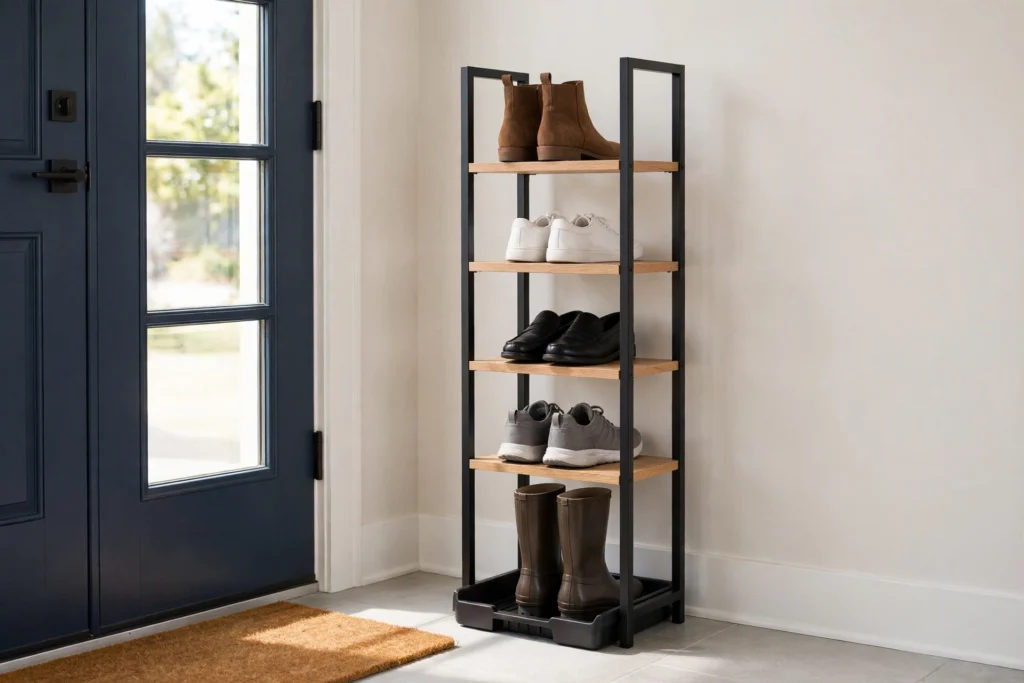
- One pair per person at the door — the daily shoes. Everything else lives in bedrooms or closets.
- A slim shoe rack or tray — contains the sprawl and protects the floor. A boot tray handles wet weather.
- Seasonal rotation — sandals in winter and boots in summer don’t earn door space. Rotate with the closet seasonal system.
- Kids’ shoes low — a low cubby or bin they can actually reach. If they can’t reach it, shoes live on the floor.

Coat and outerwear
- Hooks beat a closet rod for daily coats — faster to hang, easier to see, and they hold bags too.
- One hook per person, plus two guest hooks — the formula that ends the coat pile on the chair.
- The seasonal edit — heavy winter coats in summer (and vice versa) move to a hall closet. The entryway holds this week’s weather.
Mail and paper control
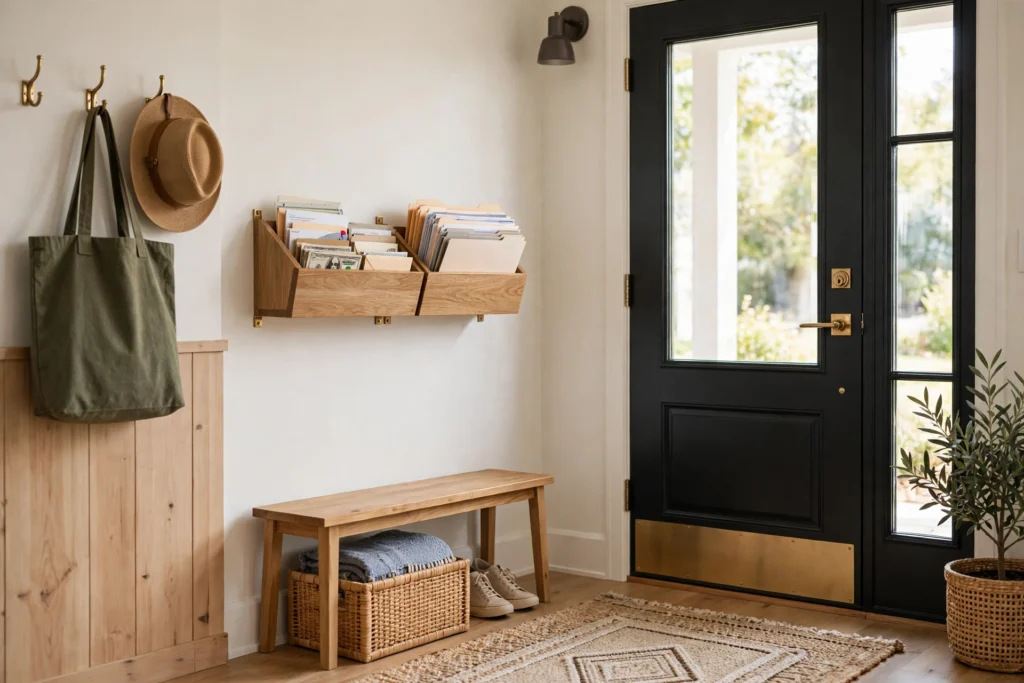
Mail is the #1 entryway clutter source. The system:
- Sort at the door — recycle junk immediately, before it touches a surface.
- Two slots or trays: action (bills, forms, school papers) and file. That’s it.
- Weekly processing — the action tray empties on the same day as the office paper pipeline.
Paper that sits in the entryway is paper without a next step. Give it one within arm’s reach of where it arrives.

Small entryway and no-entryway solutions
- Wall-mounted everything: a floating shelf, a hook rail, and a wall-mounted mail holder create an entryway on a blank wall.
- Behind the door: over-door hooks and organizers turn the door itself into storage.
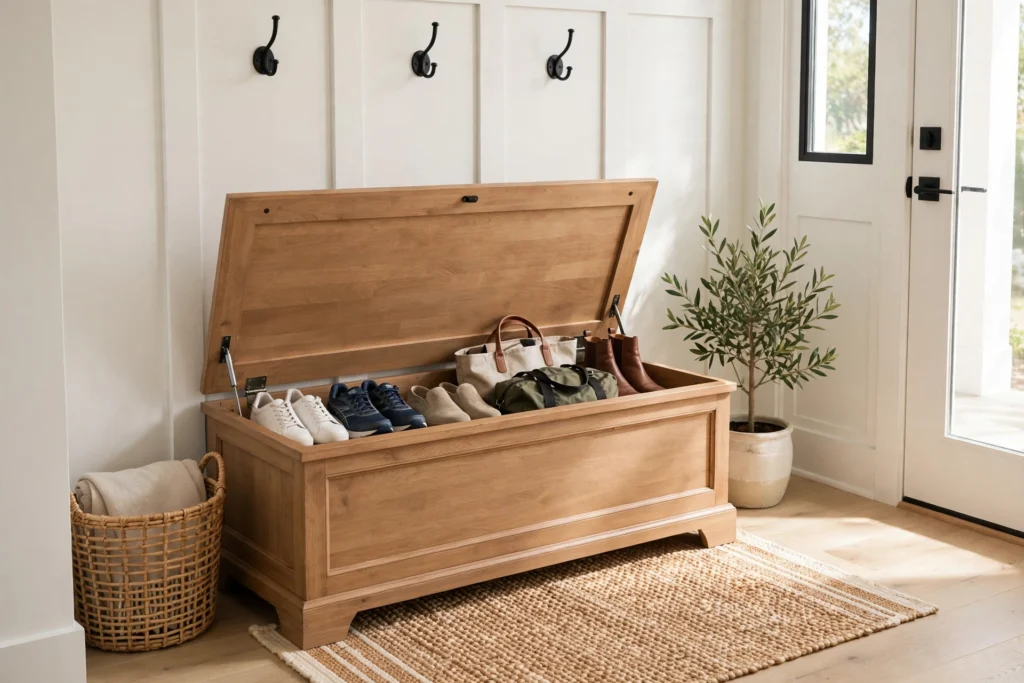
- A slim console or bench: seating for shoe changes with storage inside — the double-duty piece.
- Define it with a rug: even without walls, a rug marks “this is the entryway” and contains the shoe zone.
Our small-space strategies cover the rest of compact living.

The five-minute entry reset
- Shoes back on the rack — beyond one pair per person, they go to bedrooms.
- Coats on hooks, bags hung for tomorrow.
- Mail sorted: recycle, action tray, file.
- Drop zone cleared to essentials.
- Floors quick-swept if needed.
Do it when you get home or before bed. A welcoming entry is a maintained entry — and it sets the tone for the whole house.

Mistakes that clog the entryway
Storing every season at once. The entryway is prime real estate. Off-season gear is paying prime rent — move it out.
No mail system. Without sort-at-the-door, paper piles become permanent furniture.
The chair-drobe. A chair near the door becomes a coat rack, bag holder, and mail pile. Give those items real homes and the chair can be a chair.
Keys without a home. The average person spends days per year looking for keys. A tray by the door ends it today.
Frequently asked questions
How do I organize a small entryway?
Go vertical: hook rails, wall-mounted shelves, and over-door organizers. One slim console or bench for seating-plus-storage, a rug to define the zone, and strict one-pair-per-person shoe limits.
What should be in an entryway?
Daily shoes (one pair per person), current-season coats on hooks, a drop zone tray for keys and wallet, bag hooks, a mail sorting spot, and a mirror if space allows. Everything else lives elsewhere.
How do I keep the entryway from getting cluttered?
Limit inventory to the current season, sort mail at the door, run the five-minute nightly reset, and enforce one-in-one-out on the drop zone. Clutter at the entry is almost always overflow from missing systems.
How do I create an entryway with no foyer?
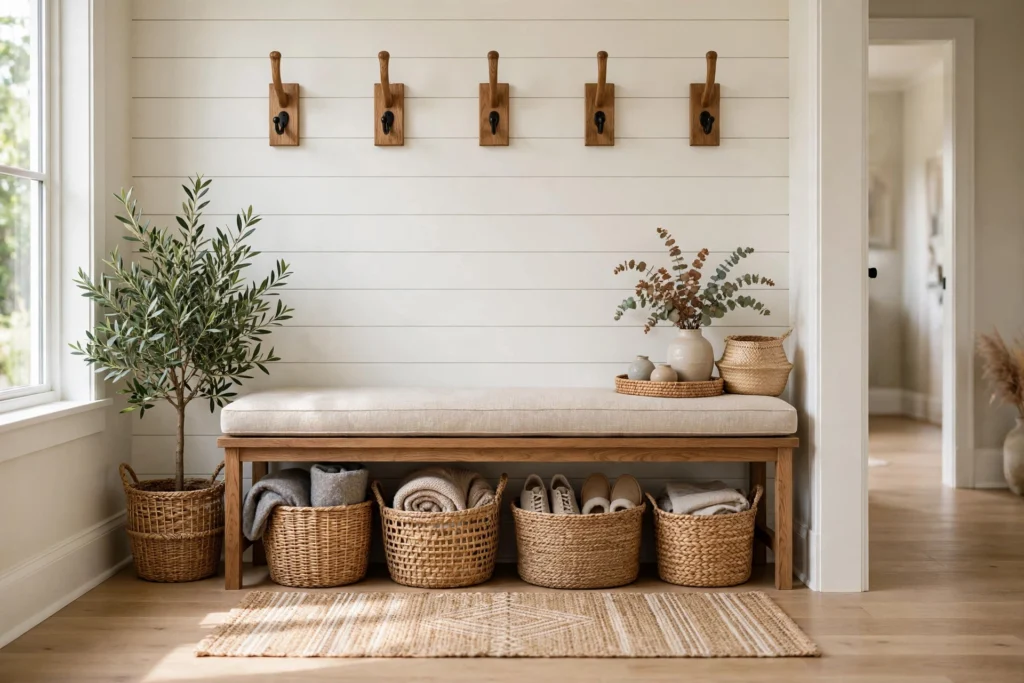
Define it: a rug, a wall-mounted hook rail and shelf, and a slim bench. The entryway is a function, not a room — even a wall by the door works with the right pieces.
Final thoughts
A welcoming entryway isn’t about the furniture — it’s about the system. Every entrant gets a home, the inventory stays seasonal, mail gets sorted at the door, and five minutes a night keeps it clear. Do that, and the first thing you see coming home starts feeling like a deep breath.