
The “decluttering aesthetic” isn’t about owning nothing — it’s the look and feeling of a home where everything has a place: clear surfaces, calm colors, and storage that looks as good as it works. It’s decluttering with a visual payoff, and it’s one of the fastest-growing corners of the organizing world.
Here’s how to get the aesthetic without falling into the trap of buying your way there.
Start with our room-by-room decluttering checklist and the whole-home decluttering guide.
What the decluttering aesthetic actually is
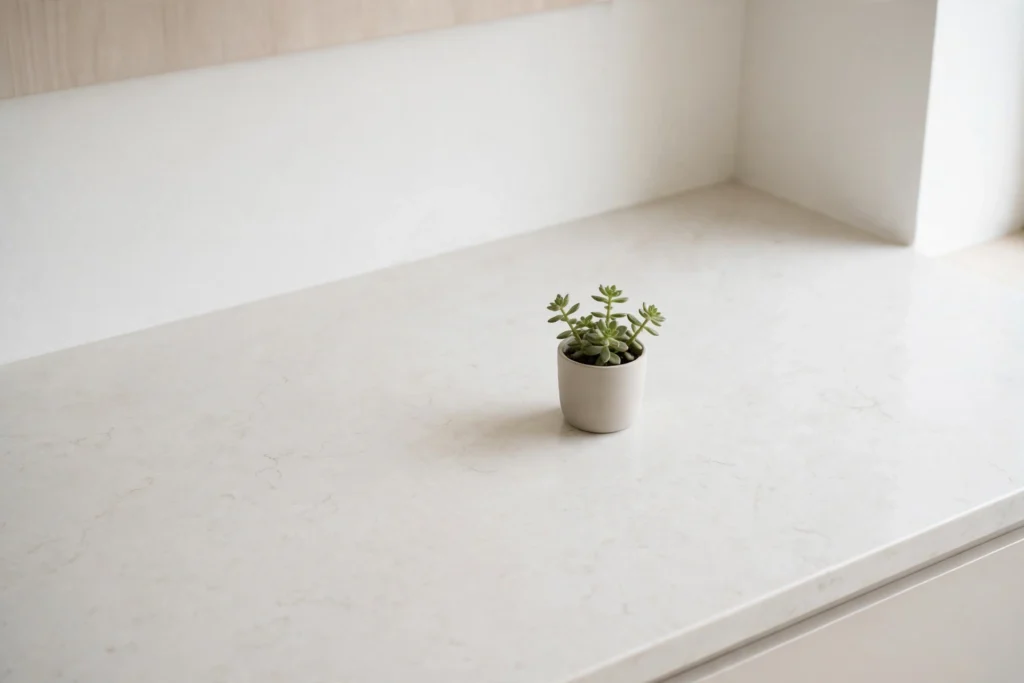
- Visible calm: surfaces mostly clear, what remains is intentional — a plant, a candle, one stack of books.
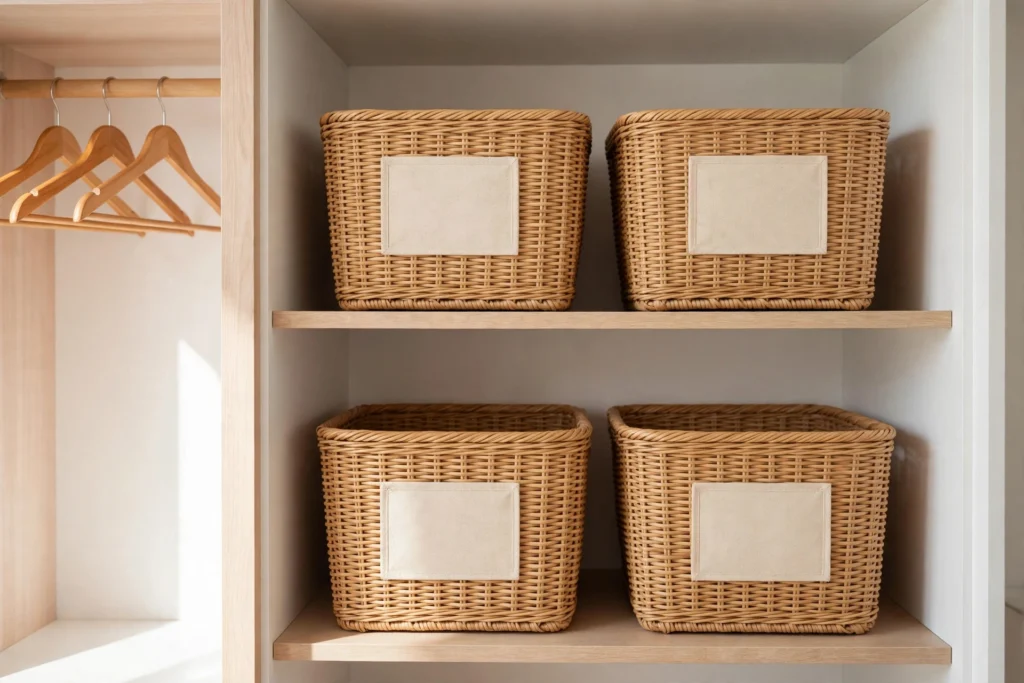
- Cohesive storage: matching or complementary bins, baskets, and containers instead of a rainbow of mismatched plastic.
- Breathing room: shelves and counters styled with negative space, not packed edge to edge.
- It’s a result, not a purchase: the aesthetic comes from owning less and choosing well — not from a shopping haul.
Declutter first, style second
- The aesthetic fails without the purge. Pretty bins full of stuff you don’t need is just decorated clutter.
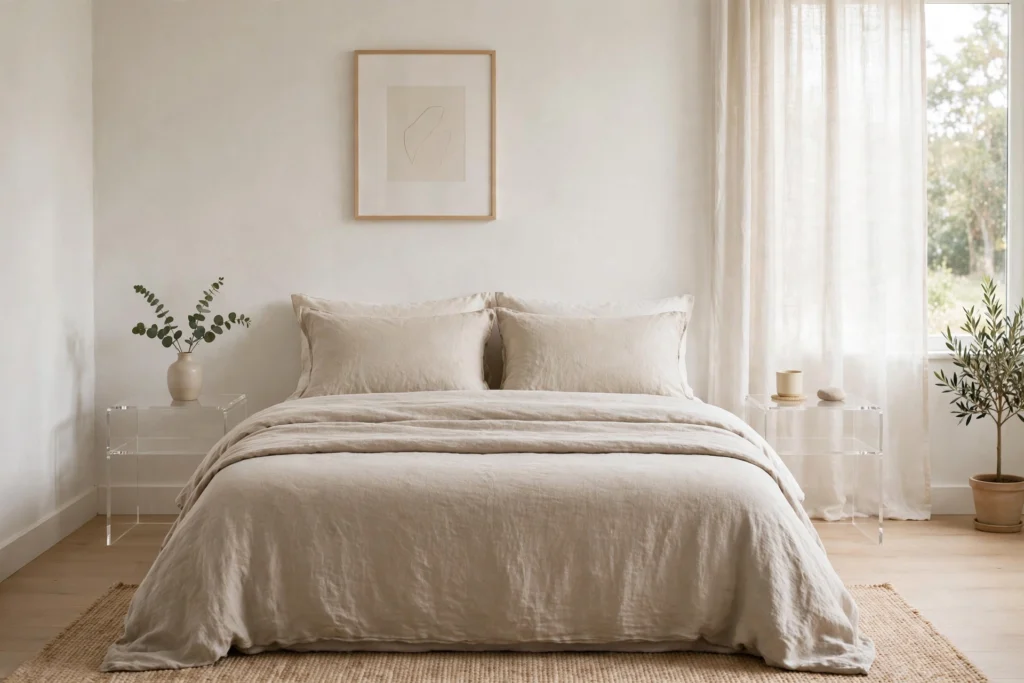
- One room at a time: fully declutter a room before styling it. The before/after is what makes the aesthetic satisfying.
- The 80% rule: remove until the room feels slightly empty, then add back only what earns its place.
- Photograph each room when it looks right — the photo becomes your reset target when things drift.
The visual principles
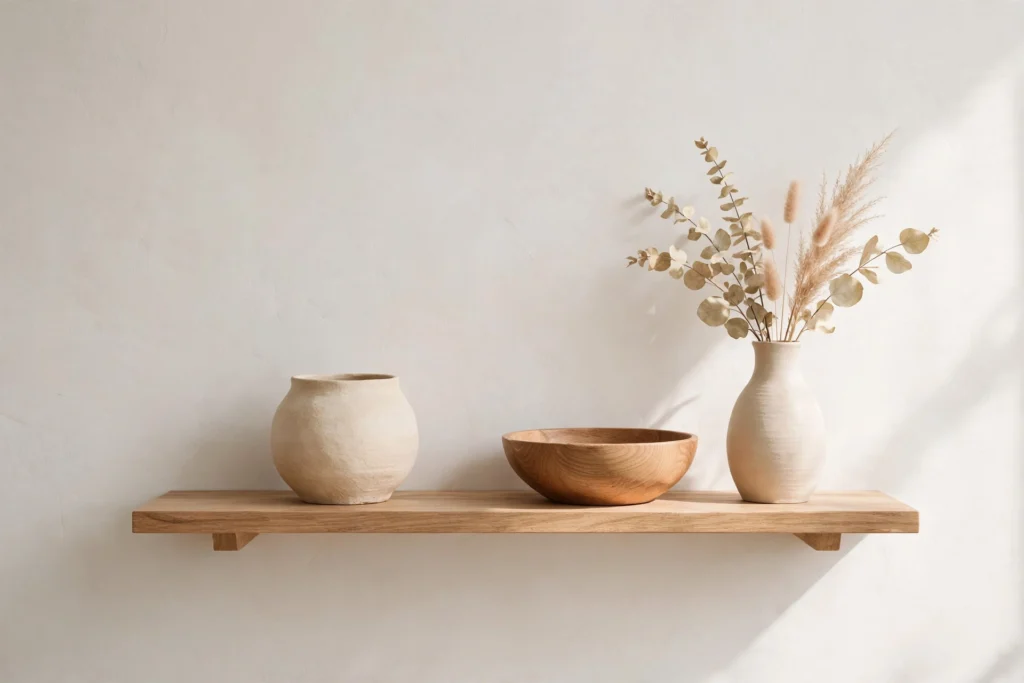
- Stick to 2–3 materials: wood, woven fiber, and white ceramic, for example. Mixed materials read as visual noise.
- Hide the visually busy: open shelving is for the pretty stuff; everything else goes behind closed doors or in opaque bins.
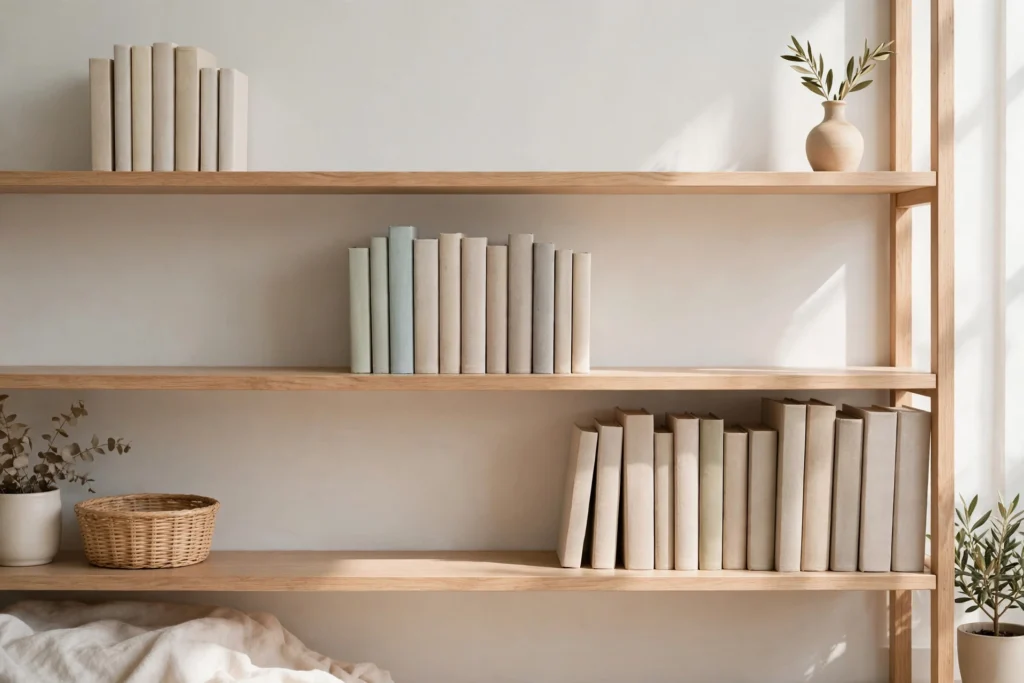
- Group like with like: books by size, containers in matching sets. Grouping reads as intentional even when it’s simple.
- Leave negative space: a half-empty shelf looks styled; a packed shelf looks like storage. Resist filling every gap.

Budget ways to get the look
- Uniform labels on existing containers do more for the aesthetic than new containers do.
- Decant the everyday: pantry staples and bathroom products in matching jars or dispensers — the single biggest visual upgrade.
- One basket per surface to corral the small stuff: remotes, chargers, mail. Corralled beats scattered.
- Edit your color palette as you replace things: choose the calm option (cream, wood, sage) over the loud one.

Keeping the aesthetic (the hard part)
- The evening reset: five minutes returning things to their homes preserves the look with almost no effort.
- One in, one out is non-negotiable for the aesthetic — every new object must displace one.
- Seasonal re-edits: every few months, walk each room with fresh eyes and remove what crept in.
- Don’t chase perfection: a lived-in home with clear systems beats a showroom you can’t relax in.
Frequently asked questions
What is the decluttering aesthetic?
It’s a home style built on visible calm: clear surfaces, cohesive storage, and breathing room. It comes from owning less and choosing intentionally — not from buying matching products.
Can I get the decluttering aesthetic on a budget?
Yes — the biggest wins are free: decluttering first, leaving negative space, and grouping like items. Uniform labels and decanting everyday products are the cheapest high-impact upgrades.
Is the decluttering aesthetic the same as minimalism?
Not quite. Minimalism is a philosophy of owning very little; the decluttering aesthetic is a look — calm, cohesive, intentional — that works in family homes with real stuff, as long as everything has a place.
How do I keep my home looking decluttered with kids?
Closed storage is your friend: bins with lids, baskets on shelves, and a five-minute evening reset where everyone returns things. The aesthetic survives kids as long as every category has an easy home.

Final thoughts
The decluttering aesthetic is decluttering you can see: purge first, then apply a few visual principles — cohesive materials, hidden busyness, negative space. Calm is a system, not a shopping list.