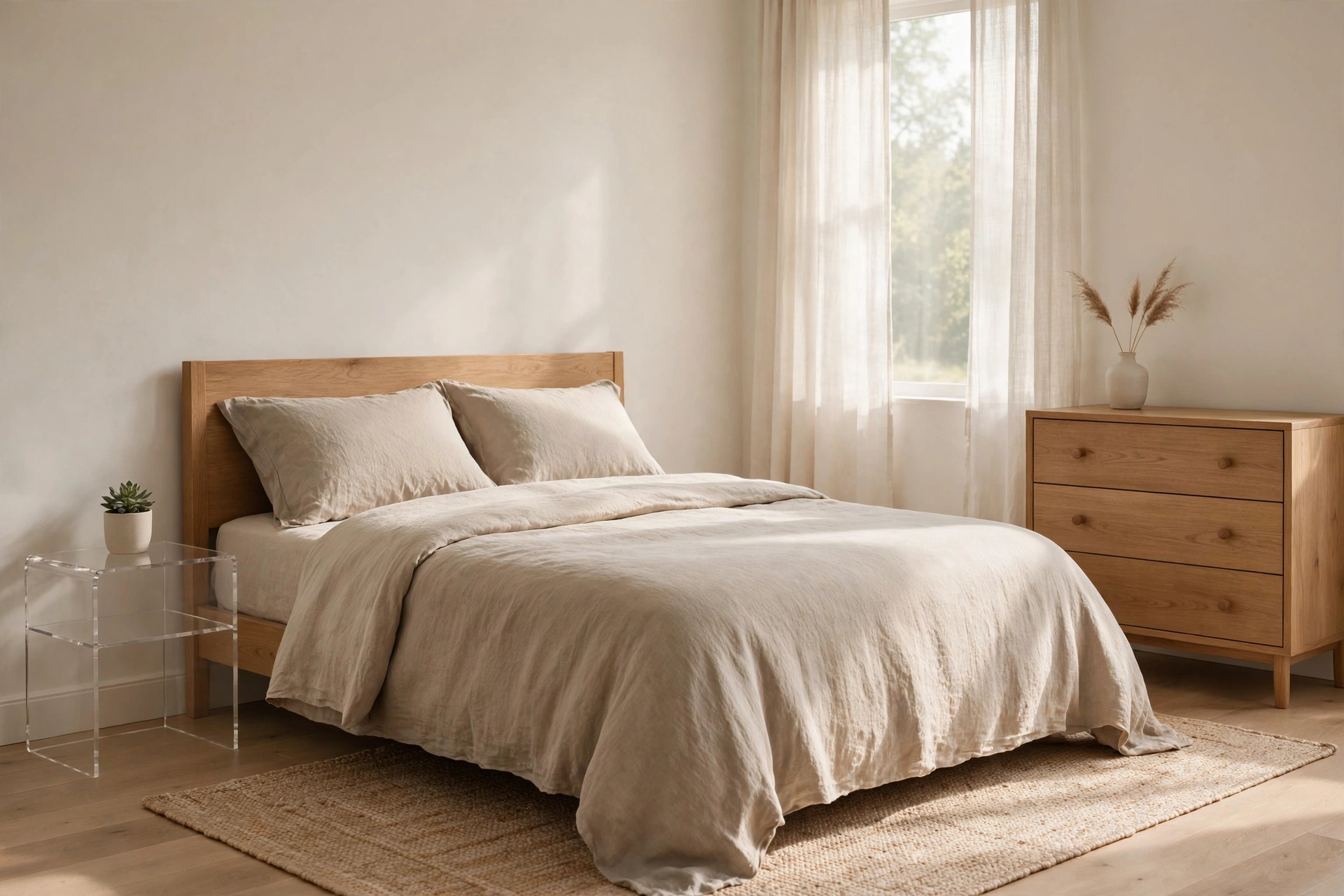
Your bedroom is the first thing you see in the morning and the last thing you see at night — and when it’s cluttered, your brain never quite gets the “day is over” signal. Disorganized bedrooms are linked to restless minds and rough mornings. The fix isn’t a bigger bedroom. It’s a calmer system: less visual noise, everything with a home, and surfaces that stay clear.
These are the bedroom organization ideas that actually change how the room feels: the reset that takes ten minutes, closet and drawer systems, nightstand discipline, and the habits that keep it calm.
If the closet is the main problem, start with our closet decluttering guide — then come back for the rest of the room.
The bedroom purge
- Surfaces first: clear the nightstand, dresser top, and any chair that’s become a wardrobe. Clutter you see from the bed matters most.
- The 10-minute reset: laundry in the hamper, trash out, everything else back to its home. Do it before bed, not in the morning.
- Relocate the non-bedroom items: work papers, gym gear that never gets used, the “to fix” pile. Bedrooms collect other rooms’ clutter — evict it.
- One in, one out for decor: every new candle, frame, or throw means something leaves. Visual calm is the whole point.

Nightstand discipline
The nightstand is the highest-impact surface in the bedroom — it’s what you see when you fall asleep and wake up:
- The rule of three: lamp, book (or reader), and one personal item. Everything else lives in the drawer.
- A drawer beats a pile: chargers, lip balm, reading glasses, medication — drawer organizers keep them findable without the sprawl.
- Charge outside the bedroom if you can — the phone charges in the entryway drop zone, and mornings get quieter overnight.


Closet and drawer systems
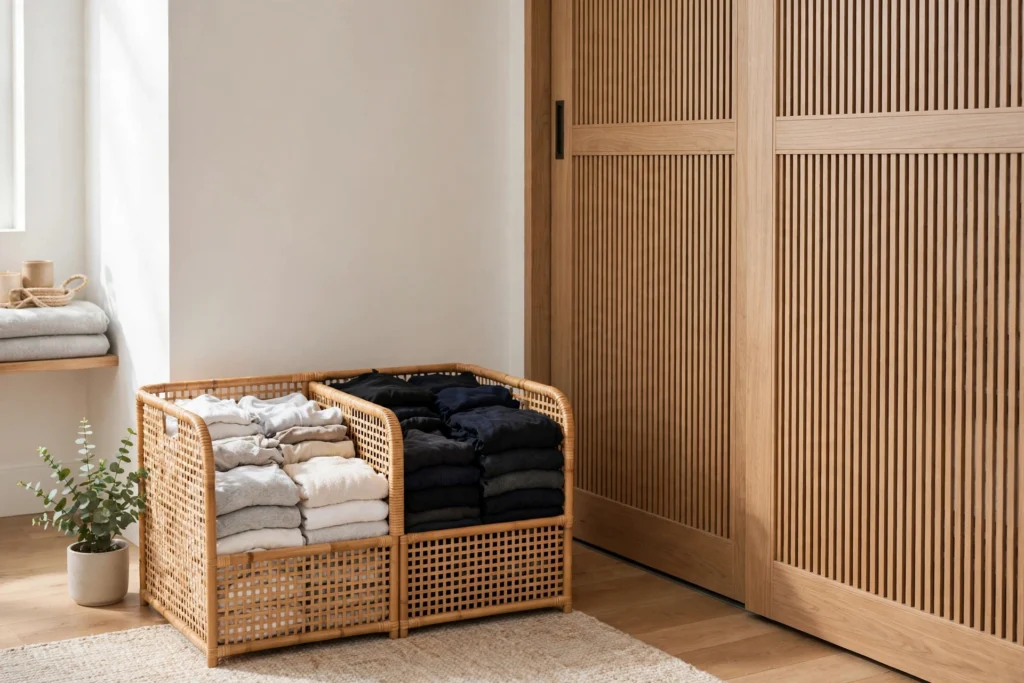
- File-fold drawers: fold clothes into rectangles and file them upright — you see everything at a glance and nothing gets buried. (The same method that fixed our linen closet.)
- Zone the closet: daily wear at eye level, occasion clothes higher, off-season stored away. Mornings get faster when the closet decides for you.
- The hanger trick: turn all hangers backward; after wearing something, hang it correctly. In six months, the backward hangers show you what to donate.
- One laundry system: a divided hamper (lights/darks/delicates) by the closet means wash day starts sorted.
Under-bed storage that works
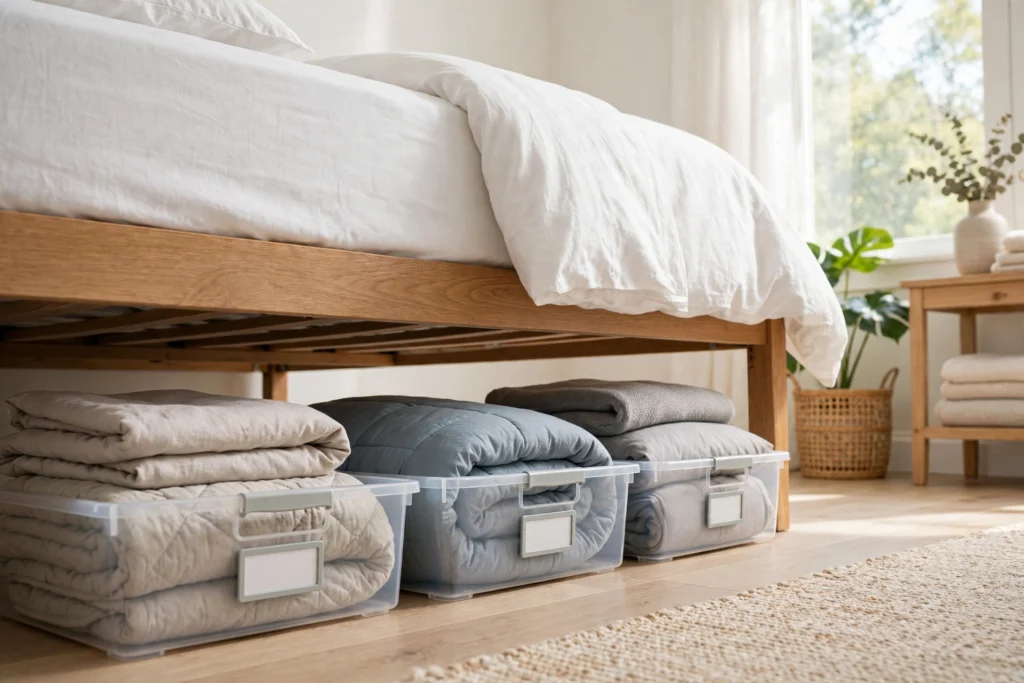
- Shallow bins or drawers only — deep under-bed space becomes a graveyard. If you can’t slide it out and see inside, it doesn’t belong there.
- Off-season and spare bedding are the right residents: vacuum bags for winter coats, the spare duvet, guest sheets.
- Label the bins. Future you won’t remember what’s under there.
- Nothing loose. One stray item under the bed becomes ten. Bins or nothing.
Small bedroom ideas
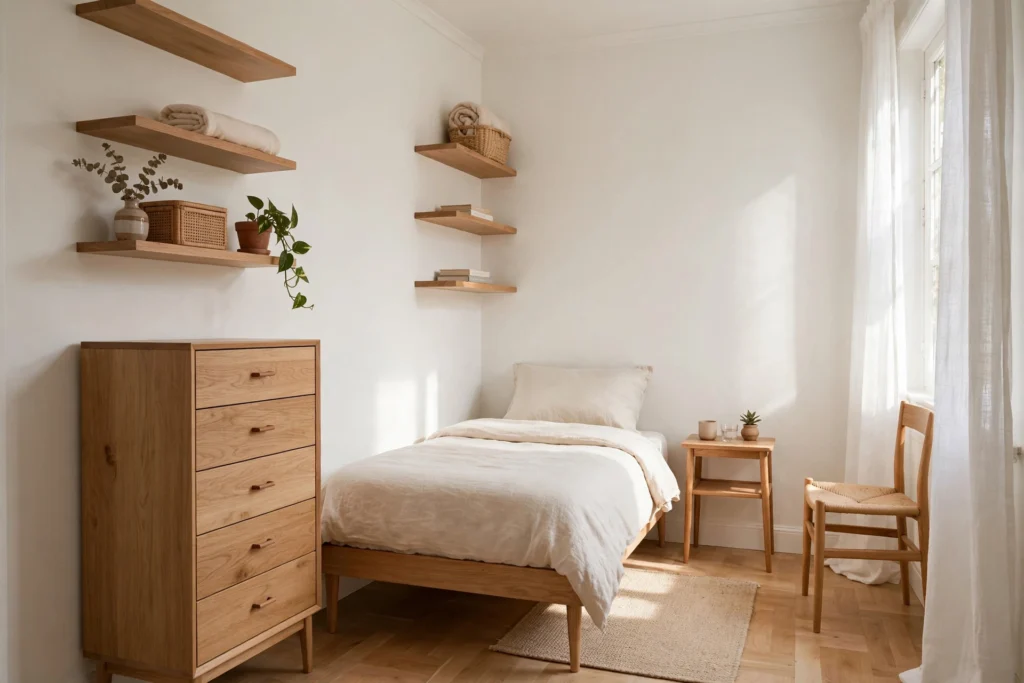
- Vertical beats horizontal: tall dressers, wall shelves, and over-door hooks add storage without eating floor space.
- Float the furniture: pieces on legs (or wall-mounted nightstands) make the room feel bigger and the floor easier to clean.
- One mirror, well placed: opposite a window, it doubles light and the sense of space.
- Limit the palette: fewer colors = less visual noise. Calm bedrooms are usually boring in the best way.
Our small-space strategies cover the rest of compact living.

The evening reset (10 minutes)
- Make the bed — tomorrow morning starts calm because tonight ended calm.
- Clothes: hamper, hanger, or drawer. The chair is not an option.
- Nightstand back to the rule of three.
- Quick floor scan — nothing on the floor that isn’t furniture.
- Set out tomorrow’s clothes (the closet zones make this fast).
Pair it with the daily cleaning rhythm and the bedroom maintains itself.

Mistakes that keep bedrooms chaotic
The chair-drobe. A chair in the bedroom becomes a closet annex. Remove the chair or enforce the clothes rule — there’s no middle ground that works.
Storing other rooms’ clutter. The bedroom is the last stop for homeless items. Give them real homes elsewhere or let them go.
Too much on the walls and surfaces. Every object is visual noise your brain processes while you’re trying to sleep. Edit ruthlessly.
Skipping the reset. Bedrooms don’t stay calm by accident — ten minutes nightly is the entire maintenance plan.
Frequently asked questions
How do I organize a small bedroom?
Go vertical (tall dresser, wall shelves, over-door hooks), use shallow under-bed bins for off-season items, float furniture on legs, and keep the palette limited. Small bedrooms feel calm when surfaces stay clear.
What should be on a nightstand?
The rule of three: a lamp, something to read, and one personal item. Everything else — chargers, glasses, medication — belongs in the drawer with organizers.
How do I keep my bedroom clean and organized?
The 10-minute evening reset: make the bed, put clothes in their homes, restore the nightstand, scan the floor. Done nightly, the bedroom never needs a big decluttering session again.
How do I declutter my bedroom fast?
Start with surfaces (nightstand, dresser, chair), relocate anything that belongs in another room, then run the closet purge. One focused hour handles the visible 80%.
Final thoughts
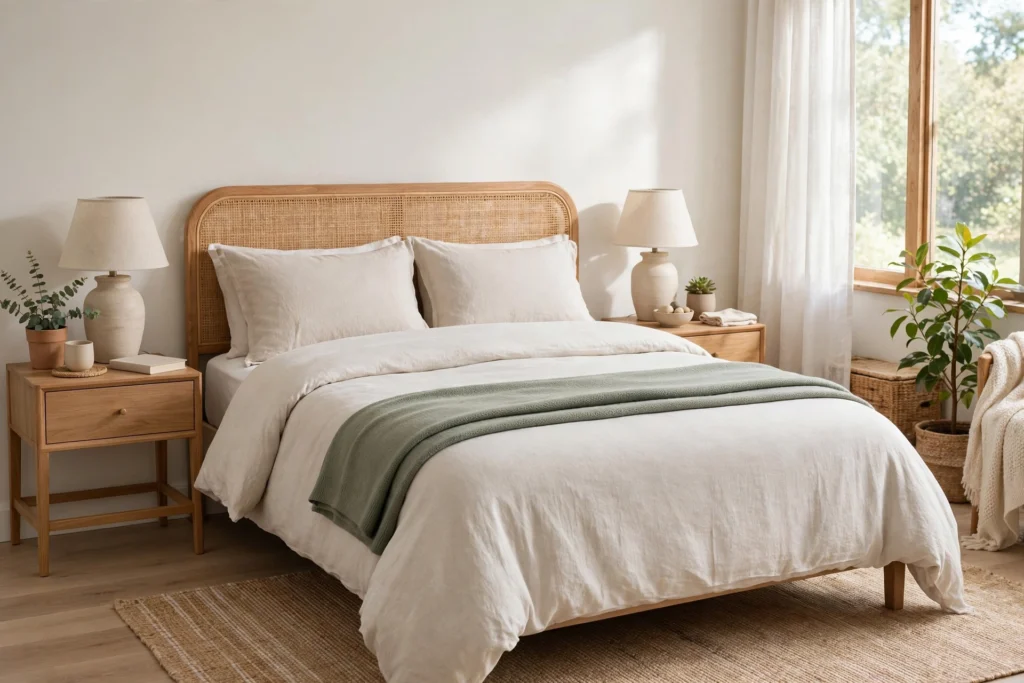
A calm bedroom isn’t about the furniture — it’s about subtraction and the reset. Clear the surfaces, give everything a home, and spend ten minutes each evening putting the day away. You’ll feel the difference the first morning you wake up to order instead of chaos.