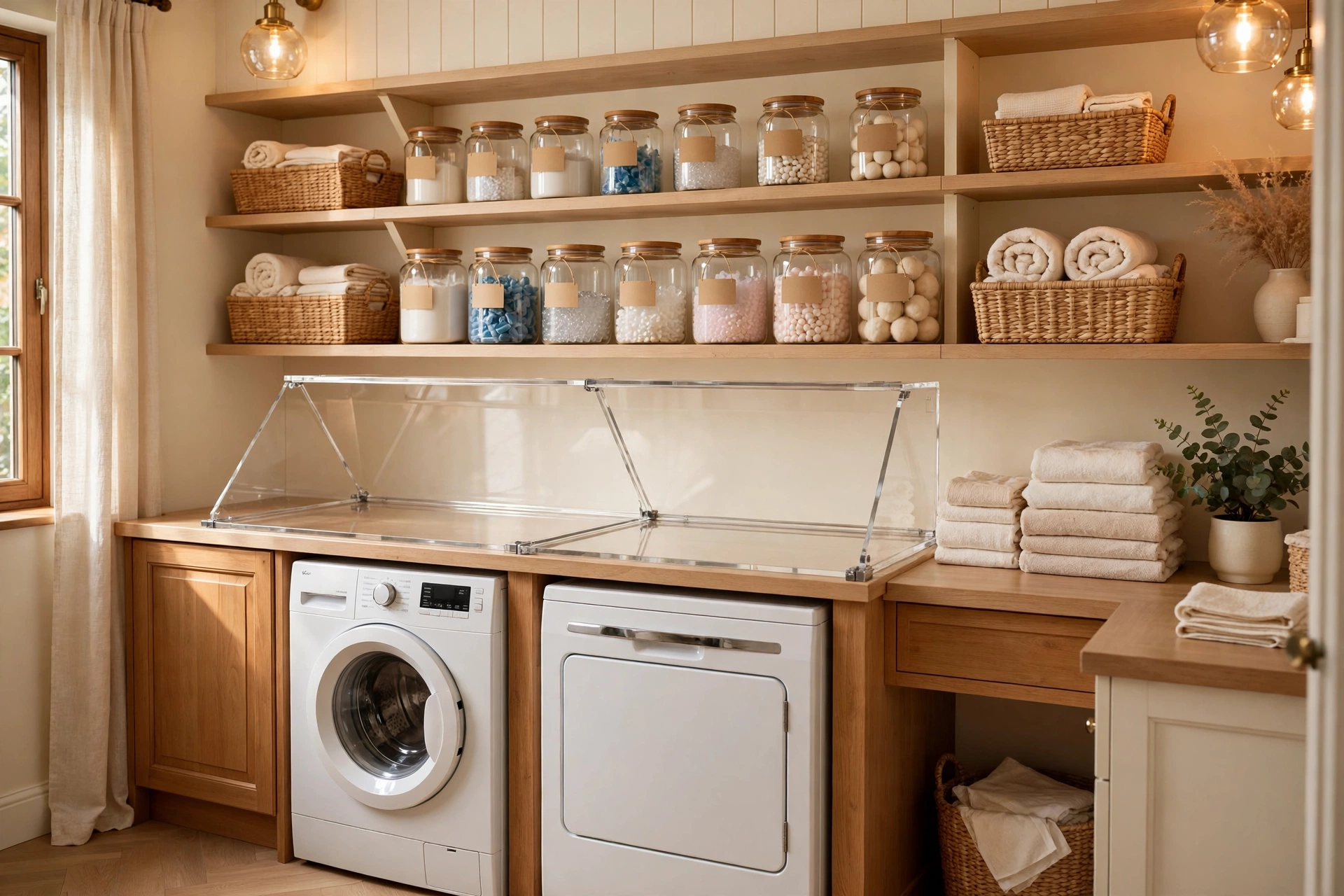
The laundry room is the most neglected room in the house — a cramped space where detergent bottles multiply, single socks go to die, and clean laundry sits in baskets for days. But it’s also one of the easiest rooms to transform: it’s small, its job is simple, and a few systems turn it from dreaded chore zone into a room that practically runs itself.
These are the laundry room organization ideas that work in real homes: sorting systems, supply storage, folding setups, and the workflow tweaks that get laundry from hamper to drawer without the week-long basket stage.
Tackling the whole house? Start with our room-by-room decluttering guide.
First: the laundry room purge
- Toss dried-up detergent, expired stain removers, and the products you bought for one stain in 2019.
- Reunite or release the single socks — set a deadline, then let them go.
- Donate the “mending” pile items you’ll never mend.
- Clear every surface. Laundry rooms collect homeless items from the whole house; evict them.
The sorting system
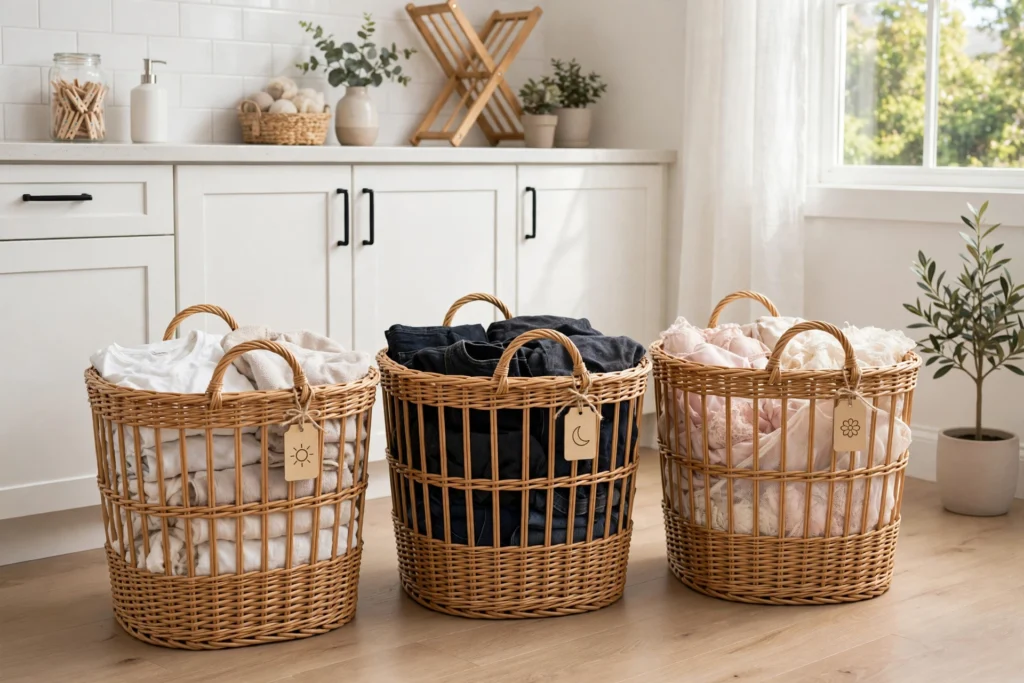
Sorting is where laundry systems live or die. Pick one and commit:
- Three-hamper system: lights, darks, and delicates — sorted at toss-in time, not wash time. Hampers live where clothes come off (bedrooms, bathroom), not in the laundry room.
- Two-bin compromise: everyday + delicates/special-care. Simpler, and enough for most households.
- Mesh bags for the small stuff: socks, delicates, and baby clothes go in mesh bags at toss-in. No more sock hunting, ever.
The rule: sort once, at the hamper. Sorting at the machine is sorting twice.
Supply storage that works
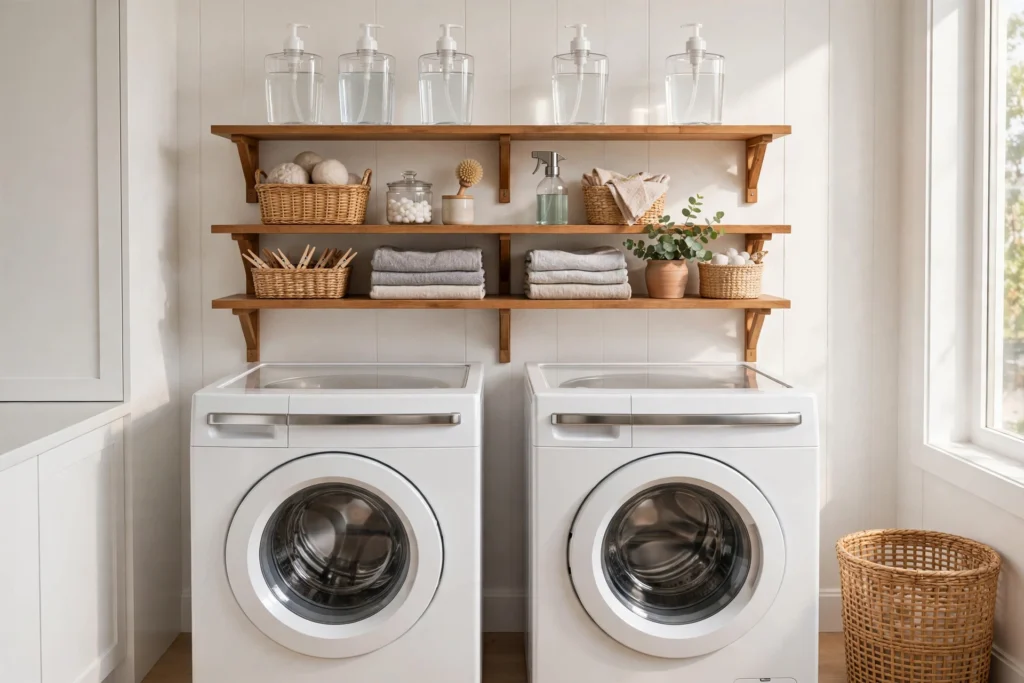

Decant the big three
— detergent, softener, and stain remover into labeled dispensers or jars. Bulk boxes are ugly and hard to pour; decanted supplies look calm and are easier to handle.
- Wall-mounted or over-machine shelving — supplies live above the machines, not on top of them. The machine tops are folding space, not storage.
- One caddy for stain treatment — everything for pre-treating in one portable caddy that travels to the stain instead of the stain traveling to the laundry room.
- Lint, bags, and the extras — a small bin for dryer sheets, a hook for the lint bin, and a bag for the inevitable pocket treasures.
The folding and finishing zone

Laundry dies in the basket stage. The fix is a dedicated finishing zone:
- Clear the machine tops — they’re the folding surface. Nothing lives there permanently.
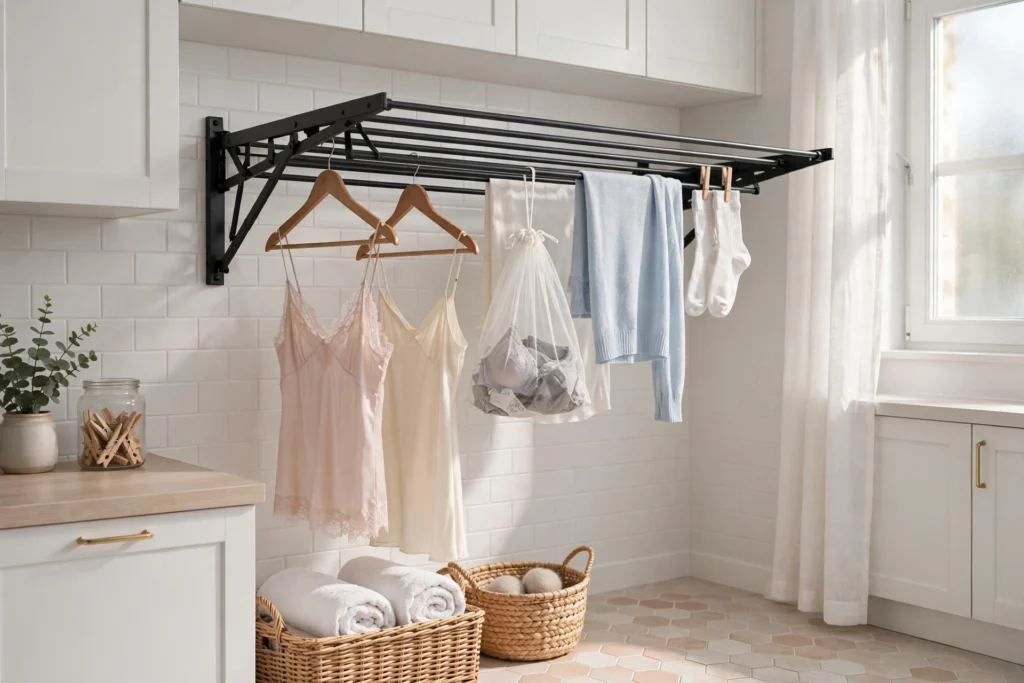
- A wall-mounted drying rack — for delicates and air-dry items. Folds flat when not in use.
- One basket per person — folded laundry sorted by owner at fold time. Each person puts away their own basket the same day. Same-day put-away is the whole game.
- Hanging space — a short rod or a few hooks for hang-dry and “wear again” items.
Small laundry room and closet setups
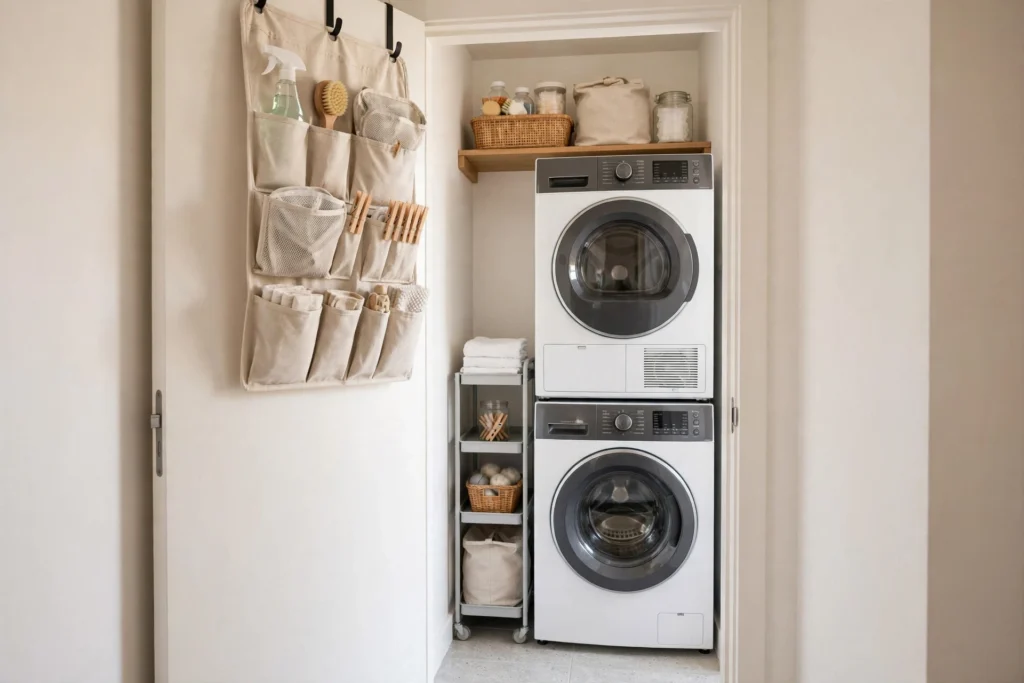
No dedicated room? The same systems fit in a closet or corner:
- Stackable machines double the footprint; a counter over front-loaders creates folding space.
- Over-door organizers hold supplies on the closet door.
- A slim rolling cart between machines and wall swallows detergent and tools.
- Fold-down drying racks and wall-mounted ironing boards disappear when not needed.
Our small-space strategies apply directly to laundry closets.
The laundry workflow
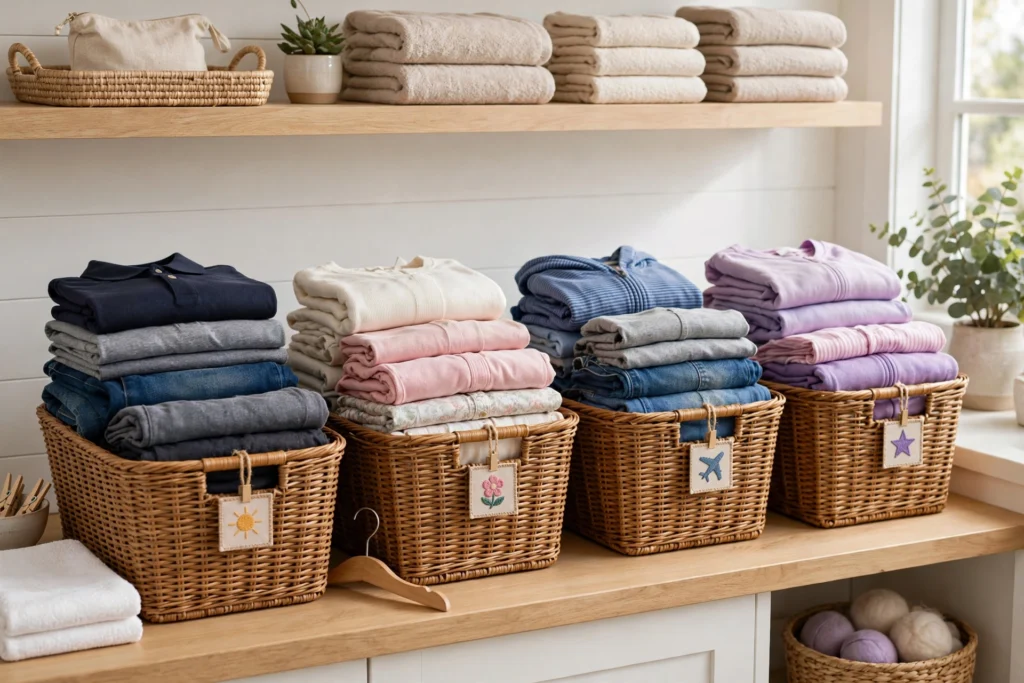
- Daily: one load start-to-finish if the household generates it. A complete cycle (wash, dry, fold, put away) beats three loads sitting in baskets.
- Fold immediately — out of the dryer, onto the folding surface, into owner baskets. The five minutes now saves the hour-long basket mountain later.
- Same-day put-away — owner baskets get emptied the day they’re filled. This is the rule that makes the system work.
- Weekly: sheets and towels on a set day. Add it to the weekly cleaning rhythm.
Mistakes that break the laundry system


Storing supplies on the machines. Machine tops are folding space. Supplies go on shelves or in a caddy.
The basket purgatory. Clean laundry living in baskets for days means the put-away step is broken. One basket per person + same-day rule fixes it.
Too many products. You need detergent, stain remover, and maybe softener. The eight specialty bottles are clutter — see the budget guide’s minimal-kit principle.
Hampers in the wrong place. Hampers live where clothes come off. A hamper in the laundry room just means clothes pile up in bedrooms.
Frequently asked questions
How do I organize a tiny laundry room?
Go vertical: shelves above the machines, over-door organizers, a slim rolling cart, and fold-down racks. Keep machine tops clear as the folding zone — that one rule transforms a closet laundry.
How many laundry hampers should I have?
Three for a full sort (lights, darks, delicates) or two for a simpler system — placed where clothes come off, not in the laundry room. Add mesh bags for socks and small items.
How do I stop laundry from piling up?
Run complete cycles (wash through put-away) instead of starting loads you won’t finish, fold straight out of the dryer, and enforce same-day put-away with one basket per person.
What laundry supplies do I actually need?
Detergent, stain remover, and mesh bags cover 95% of households. Decant into labeled dispensers, keep a stain-treatment caddy portable, and skip the specialty products.
Final thoughts


An organized laundry room isn’t about the room — it’s about the workflow. Sort at the hamper, keep machine tops clear, fold immediately, and put away the same day. Do that, and laundry stops being the chore that never ends.