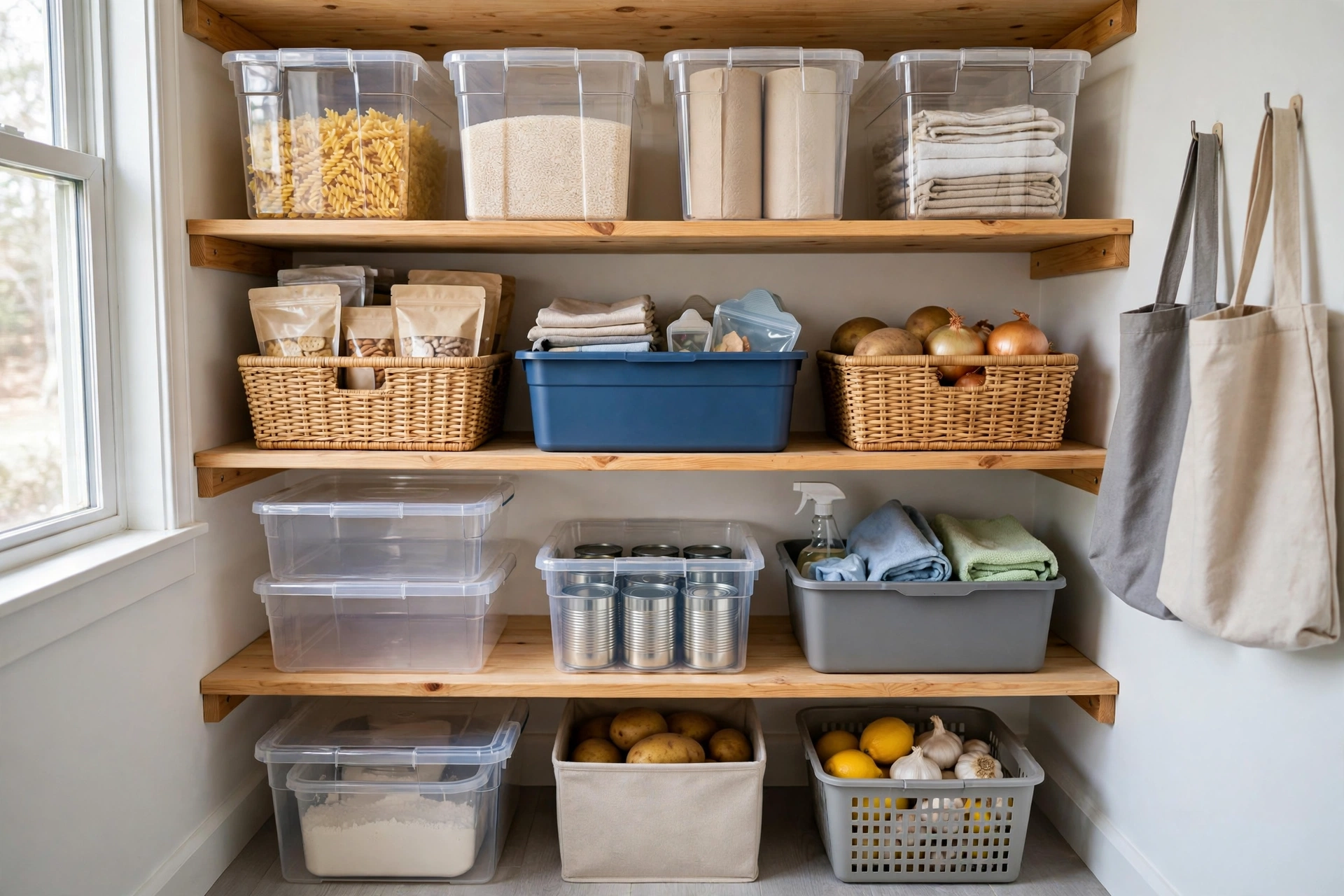
A well-organized pantry doesn’t require a matching container set or a big budget. These budget pantry organization ideas use dollar-store finds, repurposed items, and smart systems to create a pantry that works — for the price of a pizza.
Pair this with our small pantry organization ideas and budget organizing ideas.

Start with a free reset
- Empty and purge first: toss expired items and donate duplicates. Most pantries lose a third of their contents here — for free.
- Group by category: baking together, snacks together, cans together. Grouping is the foundation; containers are just the polish.
- Zone by frequency: daily items at eye level, weekly items up high or down low, rarely-used in the hardest spots.
- Measure your shelves before buying anything — the number-one budget mistake is containers that don’t fit.

Dollar-store heroes
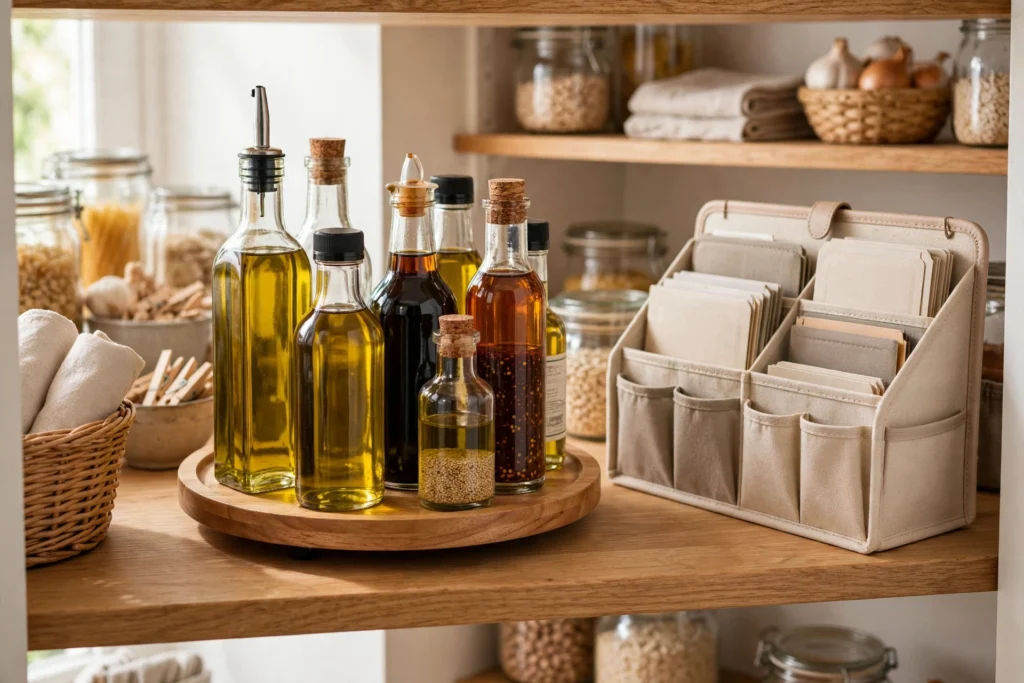
- Plastic bins and baskets: a few dollars each, perfect for corralling snack bags, packets, and pouches by category.
- Turntables (lazy Susans): the best few dollars you’ll spend — no more lost bottles in deep corners.
- Stackable can organizers: simple racks that keep cans in neat rows instead of avalanches.
- Small baskets for packets: seasoning packets, sauce sachets, and drink mixes each get one small basket.
Repurpose what you own
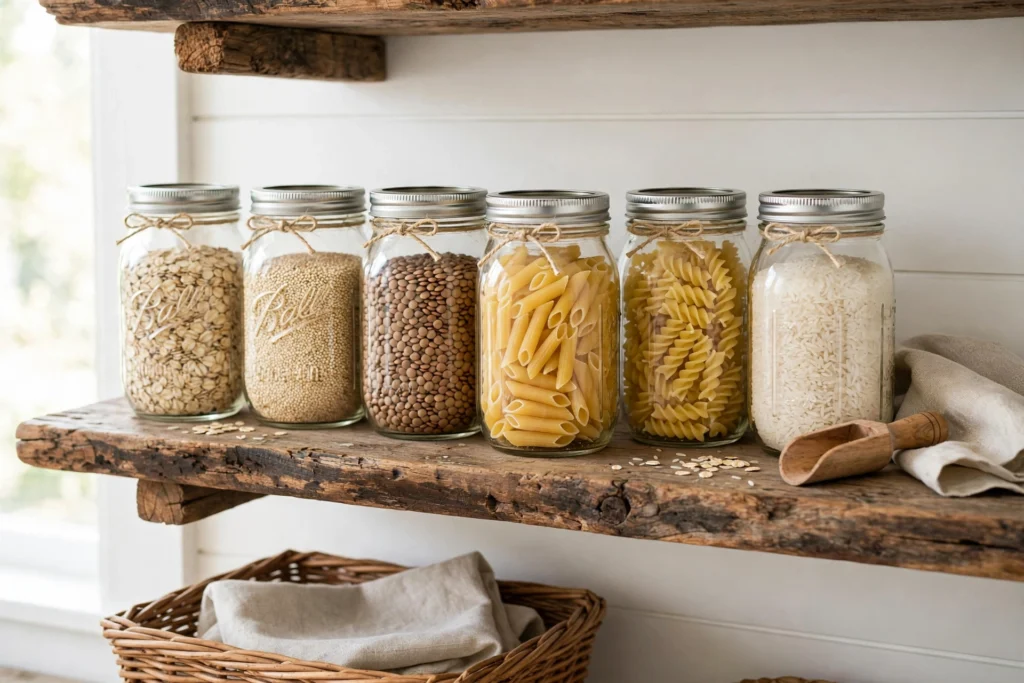
- Mason jars and glass jars for grains, pasta, and baking staples — free if you already have them, and they look great.
- Shoe boxes covered in contact paper become sturdy shelf bins for almost nothing.
- Tension rods create vertical dividers for cutting boards, trays, and baking sheets.
- Office supplies: magazine holders corral wraps and foils; binder clips seal bags better than most chip clips.


The systems that make it stick
- Labels on everything: masking tape and a marker work as well as a label maker for keeping categories honest.
- Decant only the messy: flour, sugar, rice, and snacks that come in floppy bags. Leave the rest in original packaging.
- The “eat me first” bin: one bin for items nearing expiry or opened packages — cuts food waste dramatically.
- Backstock limits: decide how many spares of each staple you keep. Backstock beyond the limit is clutter.

Small pantry, small budget
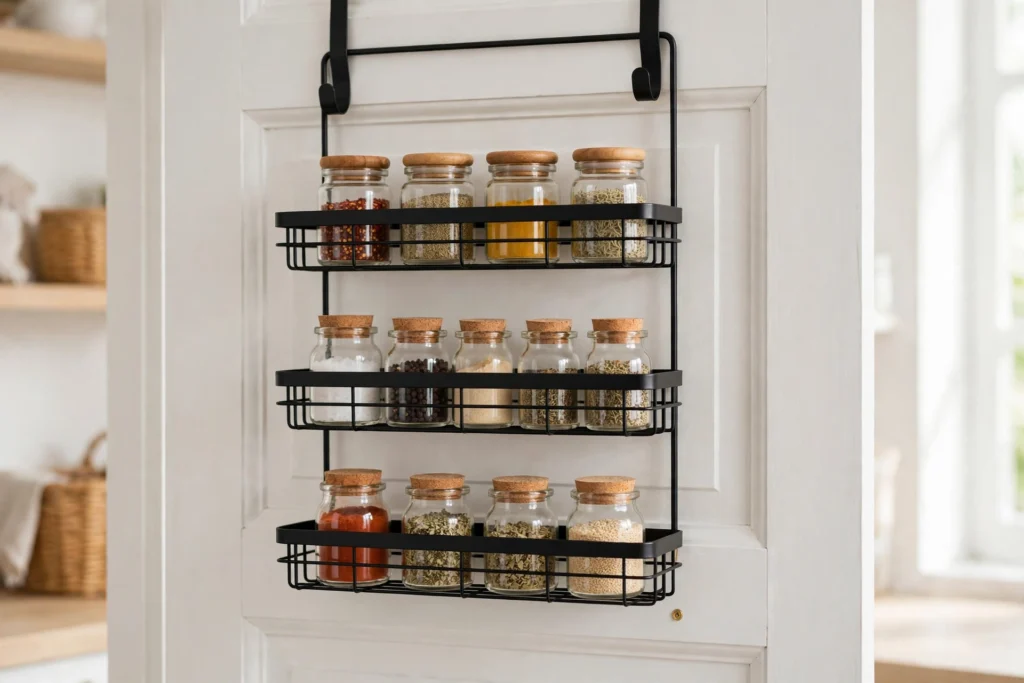
- Door racks add a whole extra shelf of storage for spices and small jars.
- Risers and shelf inserts double usable space on deep shelves — cheap and transformative.
- Clear containers (even cheap ones) beat opaque: visibility prevents buying duplicates.
- One in, one out for gadgets: new kitchen tool arrives, an old one leaves. Pantries creep via gadgets.
Frequently asked questions
How can I organize my pantry on a tight budget?
Purge and group by category first (free), then add a few dollar-store bins, one turntable, and labels. Measure shelves before buying anything — fit matters more than fancy.
What are the cheapest pantry organizers that actually work?
Plastic bins, turntables, stackable can racks, and small baskets — all available for a few dollars each. Repurposed mason jars and shoe boxes cost nothing.
Should I decant everything into matching containers?
No — decant only the messy staples (flour, sugar, rice, bagged snacks). Everything else can stay in its packaging inside labeled bins. Full decanting is expensive and high-maintenance.
How do I keep a small pantry organized?
Use the door (racks), go vertical (risers), keep everything visible (clear containers), and enforce backstock limits so spares don’t take over.

Final thoughts
Budget pantry organization is 80% system, 20% stuff: purge, group, zone, label — then add a handful of cheap bins and a turntable. The organized pantry look costs far less than the internet makes it seem.