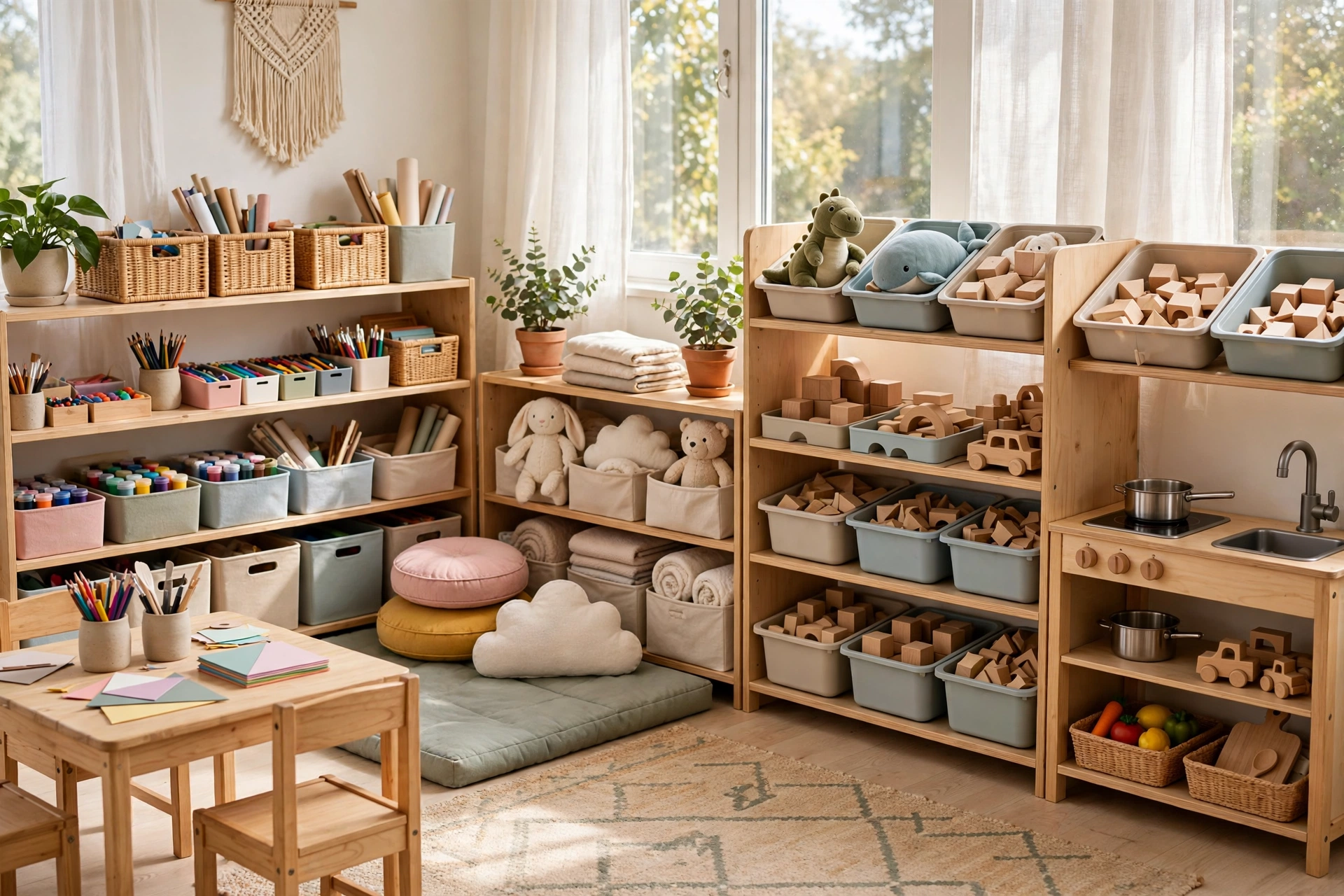
Toys multiply like nothing else in the house. One birthday, one holiday, and the playroom looks like a toy store exploded. But kids don’t need fewer toys to have an organized play space — they need fewer toys out, and a system simple enough that a four-year-old can maintain it.
These are the toy storage ideas that survive real families: the rotation system, bins kids can actually use, zoning by play type, and the purge rhythm that keeps the volume manageable.
For the whole room, see our kids’ room organization guide — this is the toy chapter.
The rotation system
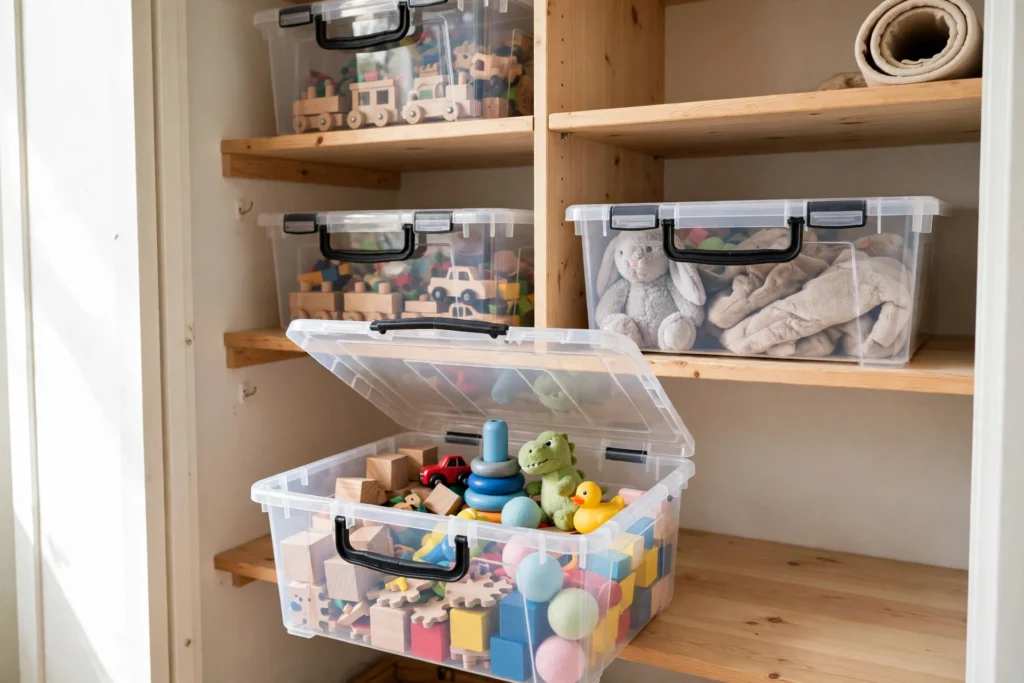
- Kids play with fewer toys better. Keep 1/3 of the toys out, store 2/3 in labeled bins in a closet or the basement.
- Rotate monthly (or when boredom strikes): swap the out-bins for stored bins. Old toys feel new again.
- Rotation doubles as a purge: anything unmissed after a month in storage can leave without drama.
- Holiday and birthday rule: new toys in means the same number rotate out or get donated. Volume stays flat.
Bins kids can actually use
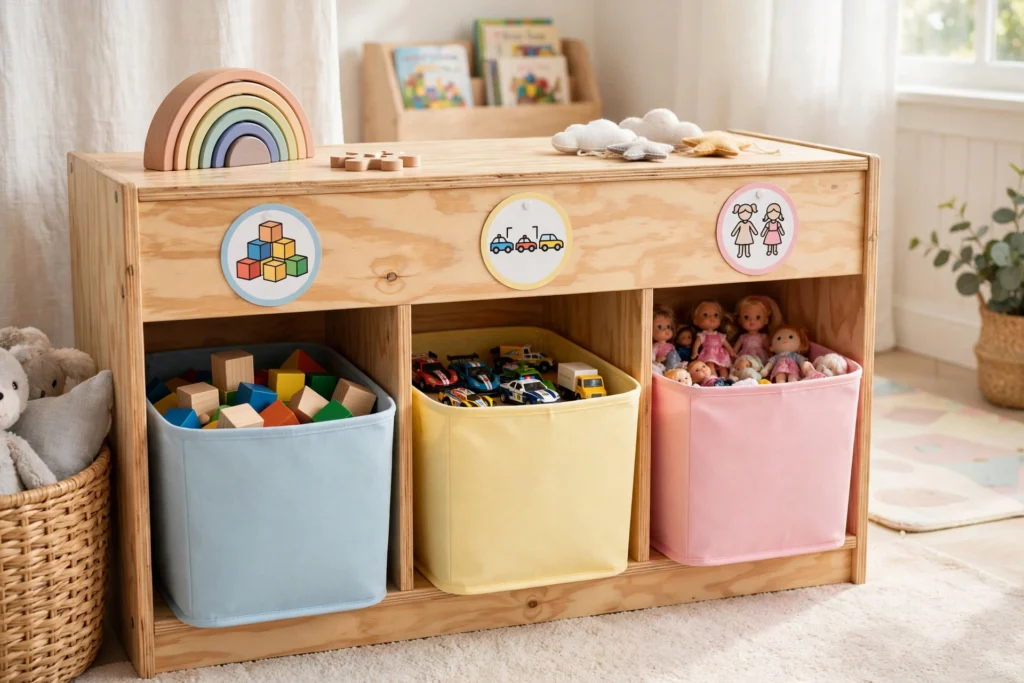
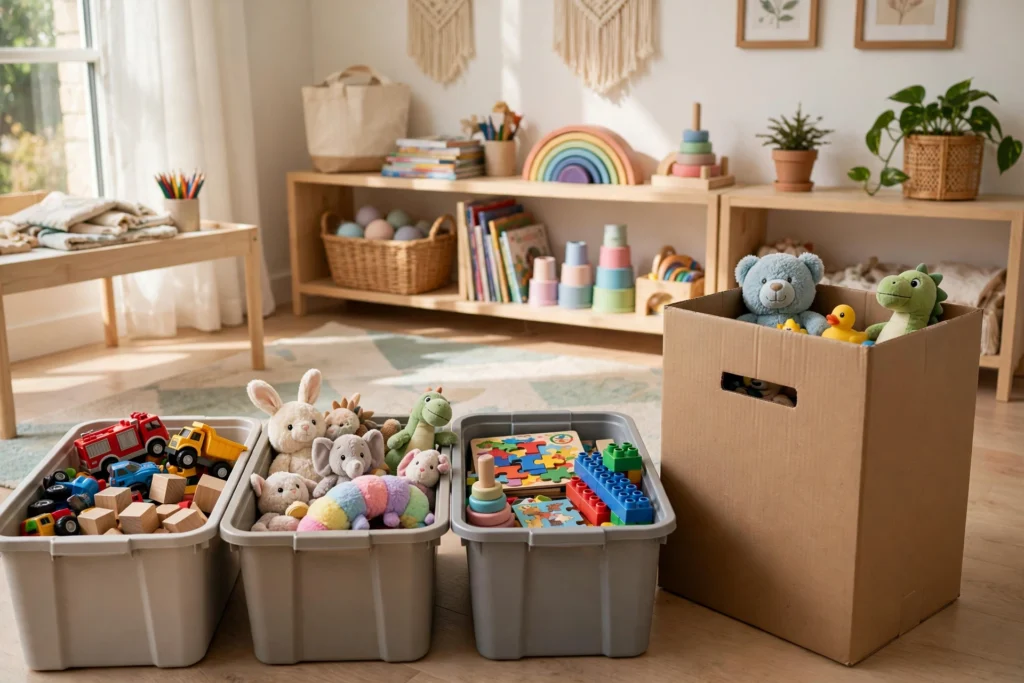
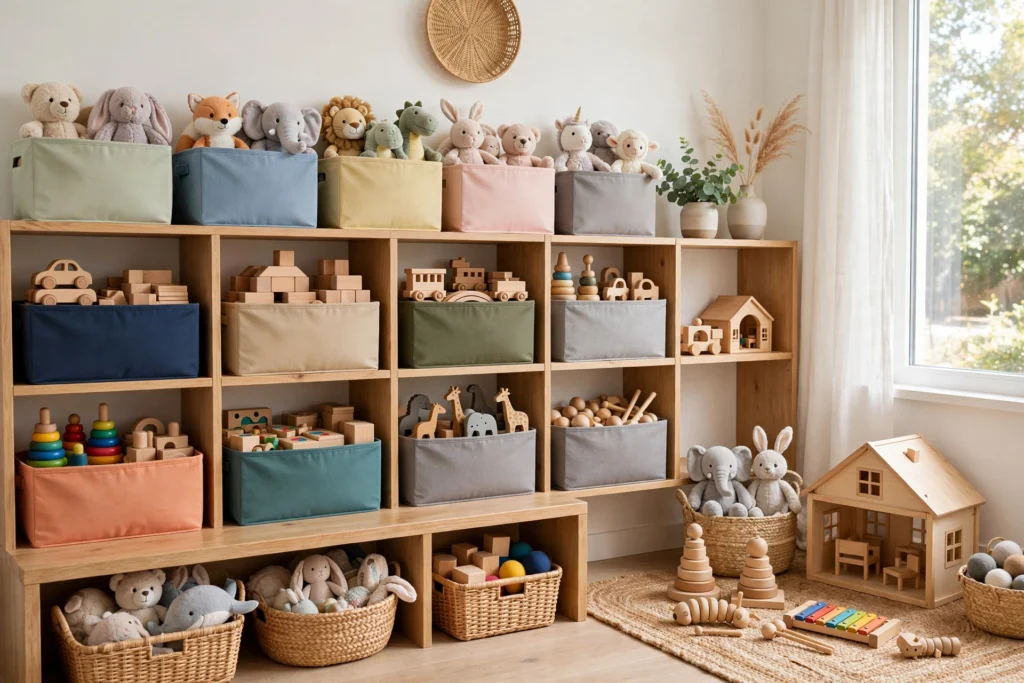
- Open bins at kid height. Lids are a barrier — for kids, open-top bins and baskets win. Cleanup becomes tossing, not sorting.
- Picture labels, not word labels. A photo of blocks on the block bin. Pre-readers can put things away correctly.
- One toy type per bin: blocks, cars, dolls, art supplies. Mixed bins become excavation sites.
- Shallow beats deep. Deep bins swallow small toys; shallow bins keep everything visible and reachable.
Zone by play type
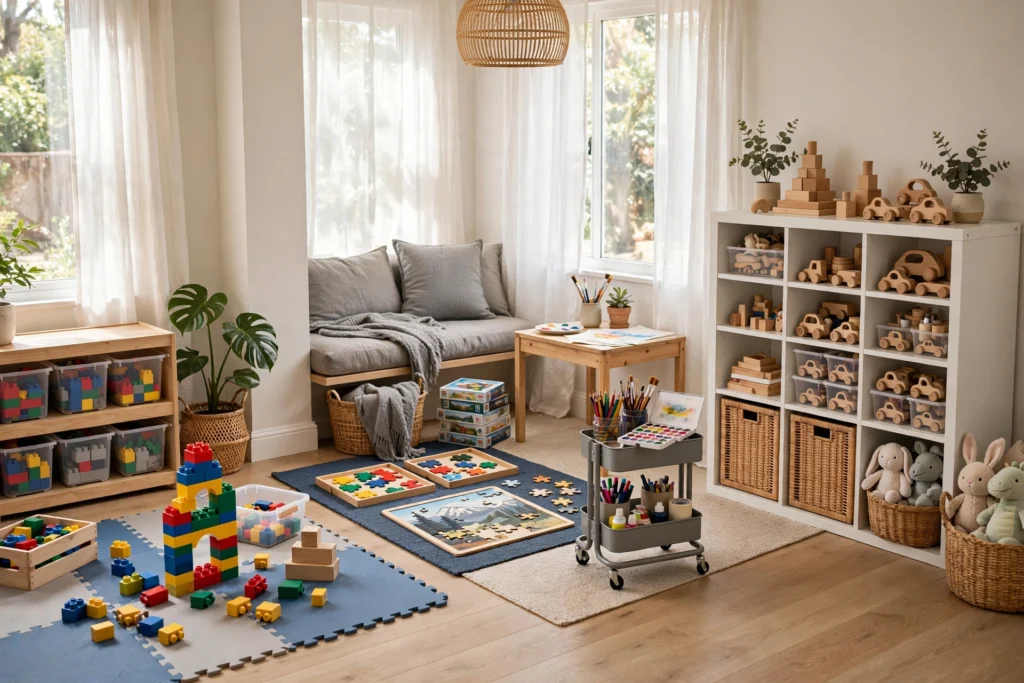
- Active zone: open floor space for building, cars, and imaginative play. Protect this space — it’s the point of the room.
- Quiet zone: a small table or corner for puzzles, coloring, and reading. Calmer toys, calmer spot.
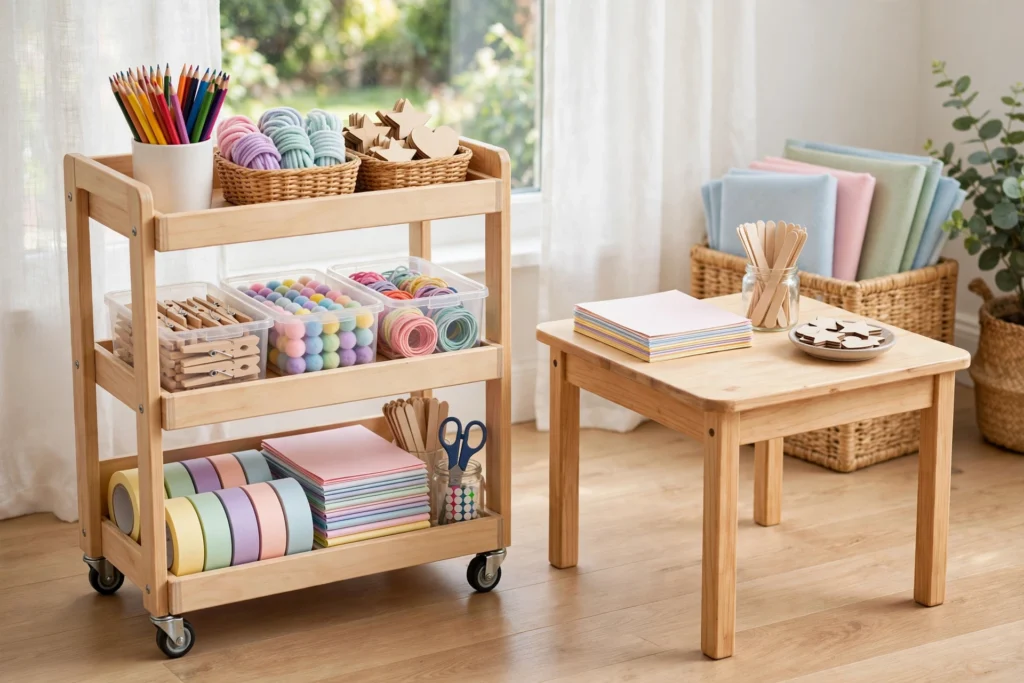
- Art zone: supplies in one caddy or cart that can move to the table and back. Contained creativity.
- Display zone: one shelf for favorites and proud builds. Limited space means curated, not cluttered.
Small-space toy storage
- Vertical shelving with labeled bins uses wall space in tight play corners.
- Under-bed rolling bins hide the rotated-out toys or the bulky sets.
- Over-door organizers hold small figures, craft supplies, and accessories.
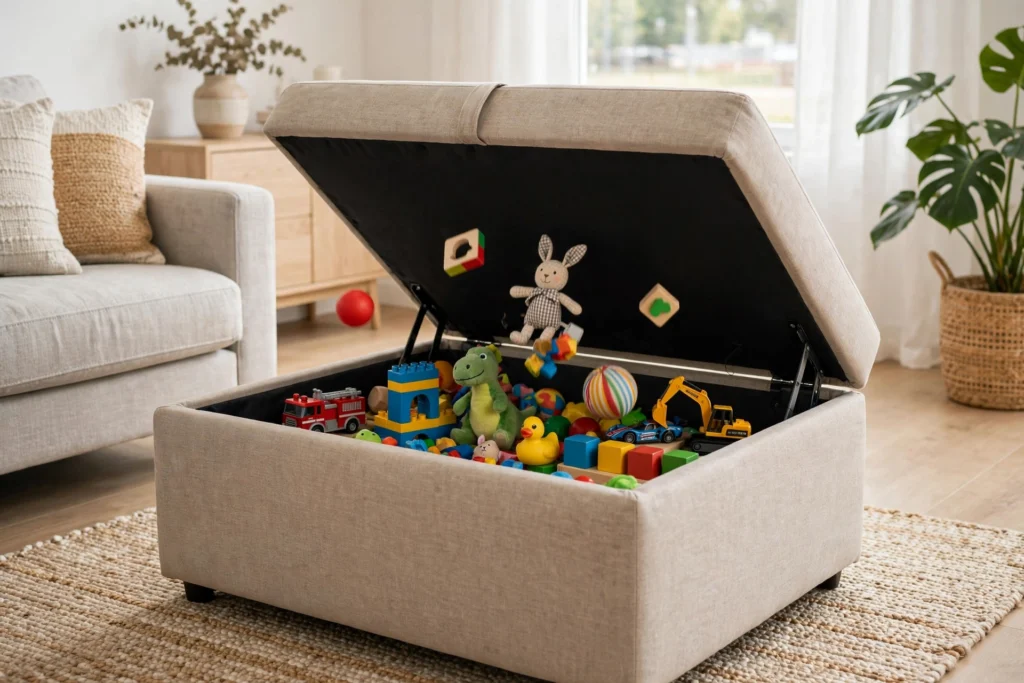
- Multi-use furniture: ottomans and benches with hidden storage swallow toys fast before guests arrive.
The purge rhythm
- Quarterly kid-involved purges: broken goes, outgrown goes, unloved goes. Kids choose the donations — ownership reduces fights.
- The “broken bin”: one small bin for toys awaiting batteries or repair. Full bin = repair day or goodbye.
- Birthday/holiday pre-purge: make space BEFORE new toys arrive, not after.
- Donate the good stuff quickly. Bags sitting in the hallway for a month migrate back. Same-week drop-off.
Mistakes that bury the playroom
Too many toys out at once. Overwhelm kills play and guarantees mess. Rotation is the fix.
Storage kids can’t operate. Lidded boxes on high shelves mean parents do all the cleanup. Kid-height, open, labeled with pictures.
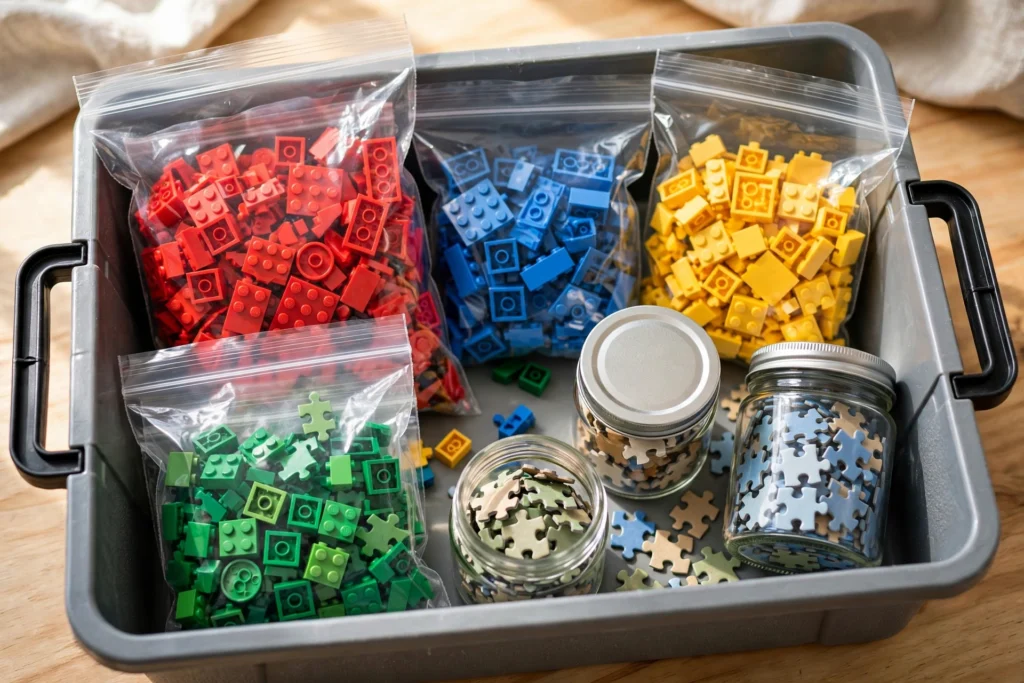
No home for the small pieces. LEGO, puzzle pieces, game parts need tiny containers (zip bags, small jars) or they become floor confetti.
Keeping everything “for the next kid.” Store a reasonable keepsake box; the rest is clutter with a justification. Be honest about what the next kid will actually want.
Frequently asked questions
How do I organize too many toys?
Start with the rotation system: keep 1/3 out and store 2/3, use open bins at kid height with picture labels (one toy type per bin), and purge quarterly with the kids involved.
What is the best toy storage for small spaces?
Vertical shelving with labeled bins, under-bed rolling bins for overflow, over-door organizers for small items, and multi-use furniture with hidden storage.
How often should I rotate toys?
Monthly, or whenever boredom strikes. Rotation makes old toys feel new and doubles as a low-drama purge — anything unmissed after a month in storage can go.
How do I get kids to clean up toys?
Make it easy: open bins at their height, picture labels, one toy type per bin, and a cleanup song or 5-minute timer routine. Systems kids can operate get used.
Final thoughts
Toy chaos isn’t a kid problem — it’s a systems problem. Fewer toys out, bins they can use, zones for play types, and a purge rhythm: that’s the whole formula. The playroom stays playable, and cleanup stops being a second job.