Spices are small, numerous, and nearly identical at a glance — the perfect recipe for cabinet chaos. Duplicate paprikas, expired oregano from 2019, and a jumble where you can’t find the cumin while the onions burn. A good spice system isn’t about pretty jars (though those help); it’s about finding the right spice in three seconds.
These are the spice organization ideas that end the rummage: the purge and decant, the storage method that fits your kitchen, labeling that works at speed, and the restock system.
Part of the bigger kitchen picture — see our small kitchen and pantry guides.
Purge and decant first
- Smell-test everything. No aroma = no flavor = gone. Ground spices fade in 1–2 years; whole spices last longer.
- Check for duplicates. Almost every chaotic spice collection has two cumin tins and three oreganos. Merge and toss the stale one.
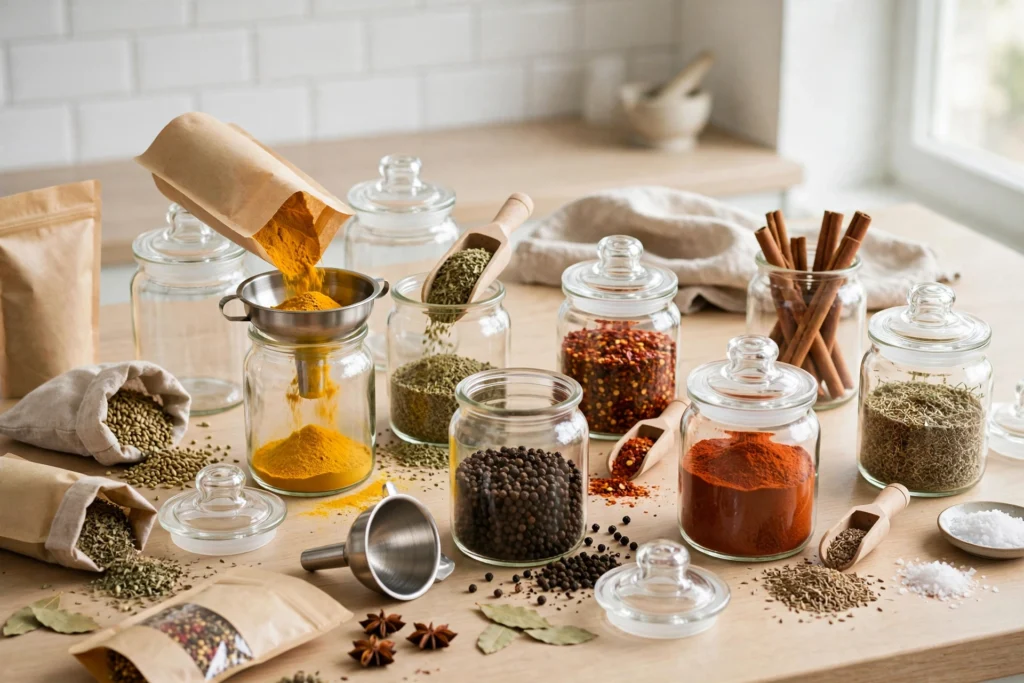
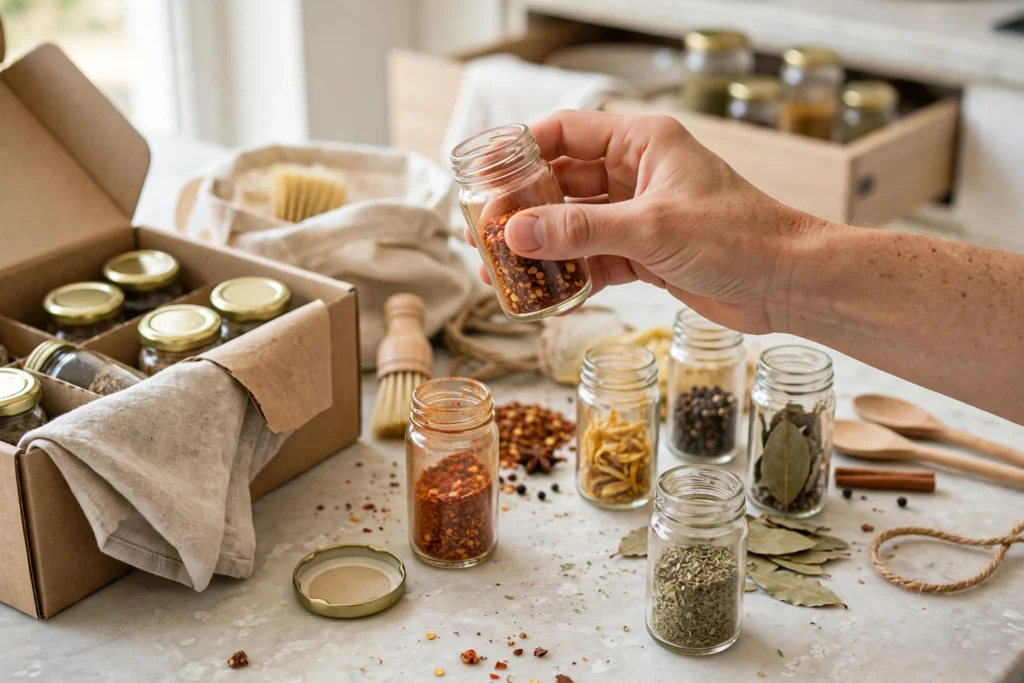
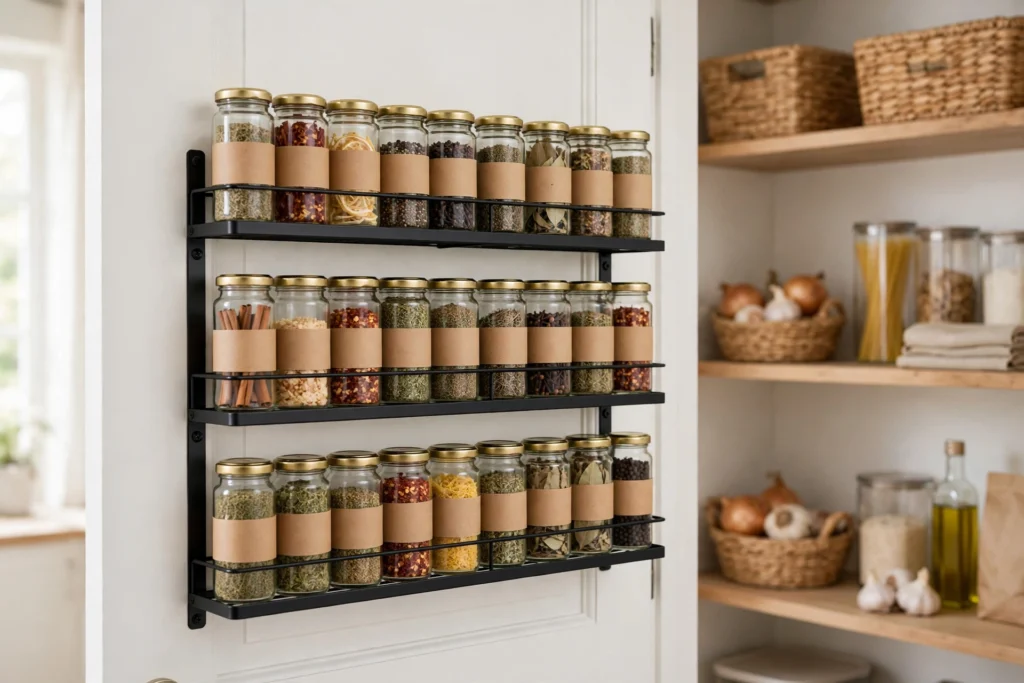
- Decant into uniform jars. Same-size jars with matching lids turn chaos into a system — and uniform jars fit organizers that mixed tins never will.
- Keep the exotic separate. The 20 daily spices live in prime position; the specialty ones (sumac, anyone?) get a second-tier spot.
Pick your storage method
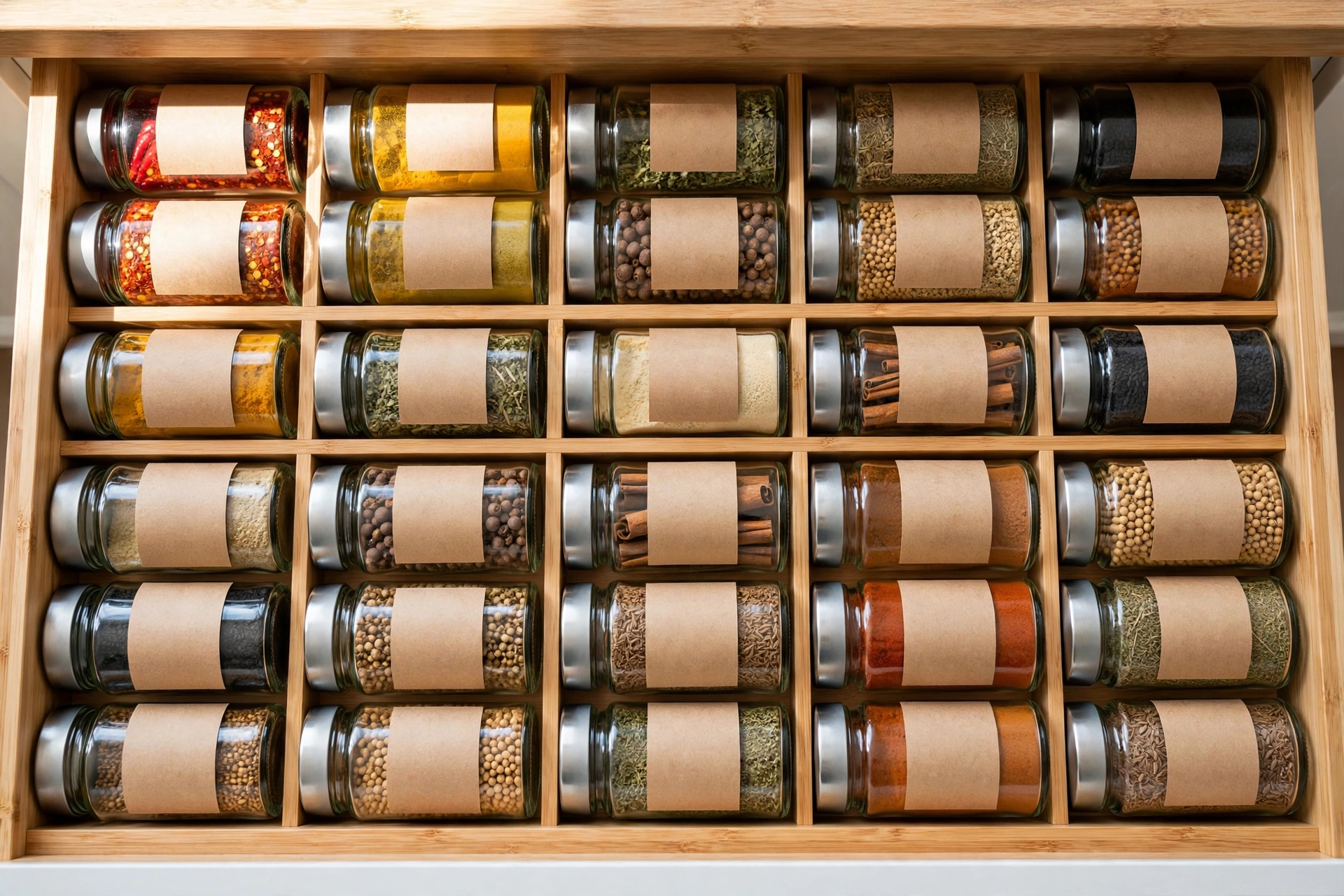
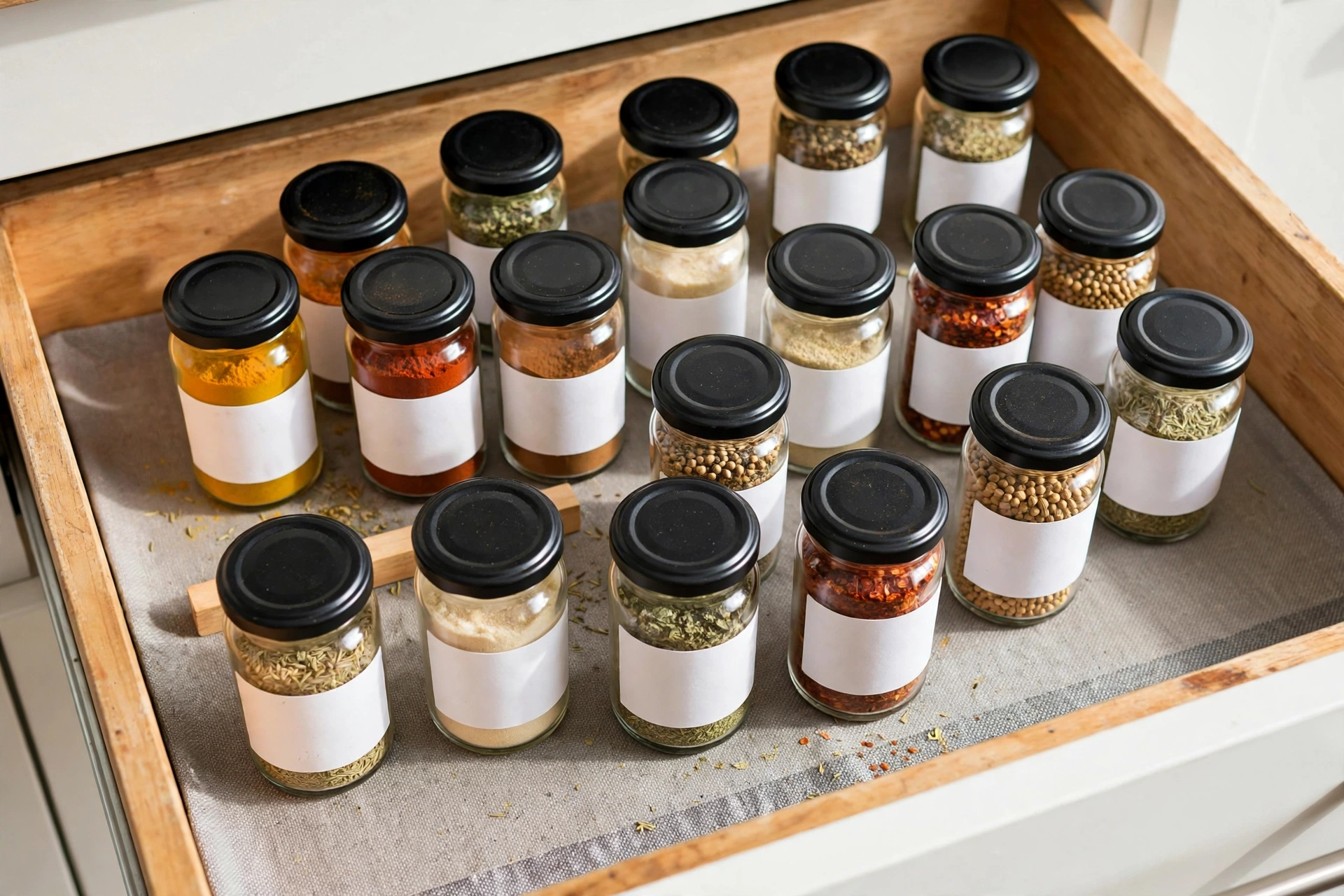
- Drawer inserts: the gold standard — jars lie flat, labels face up, everything visible at a glance. If you have a spare drawer, this wins.
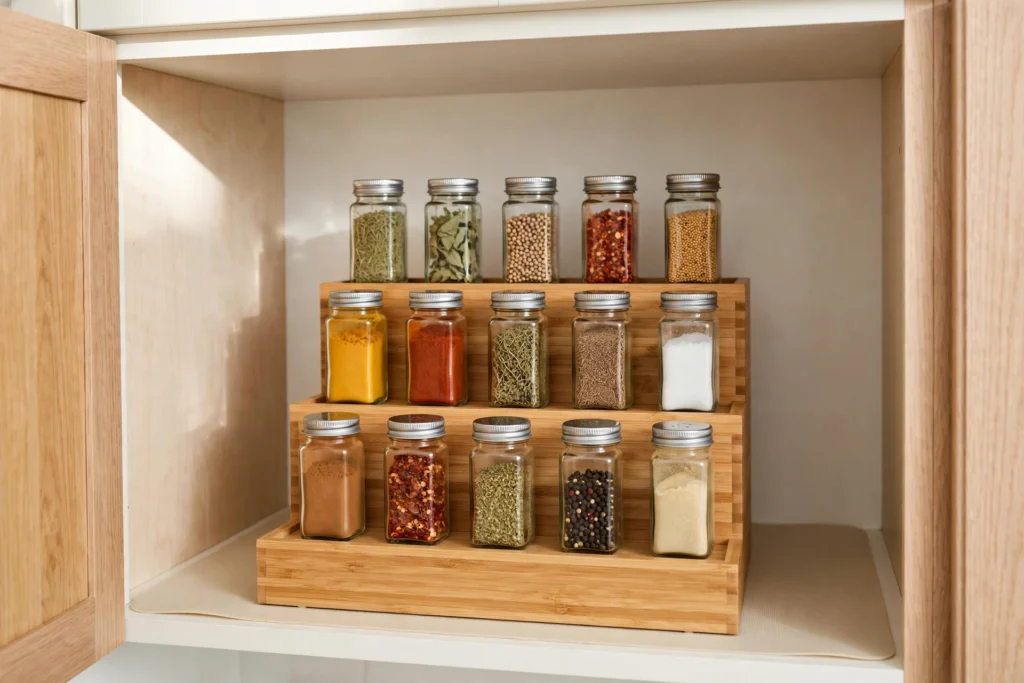
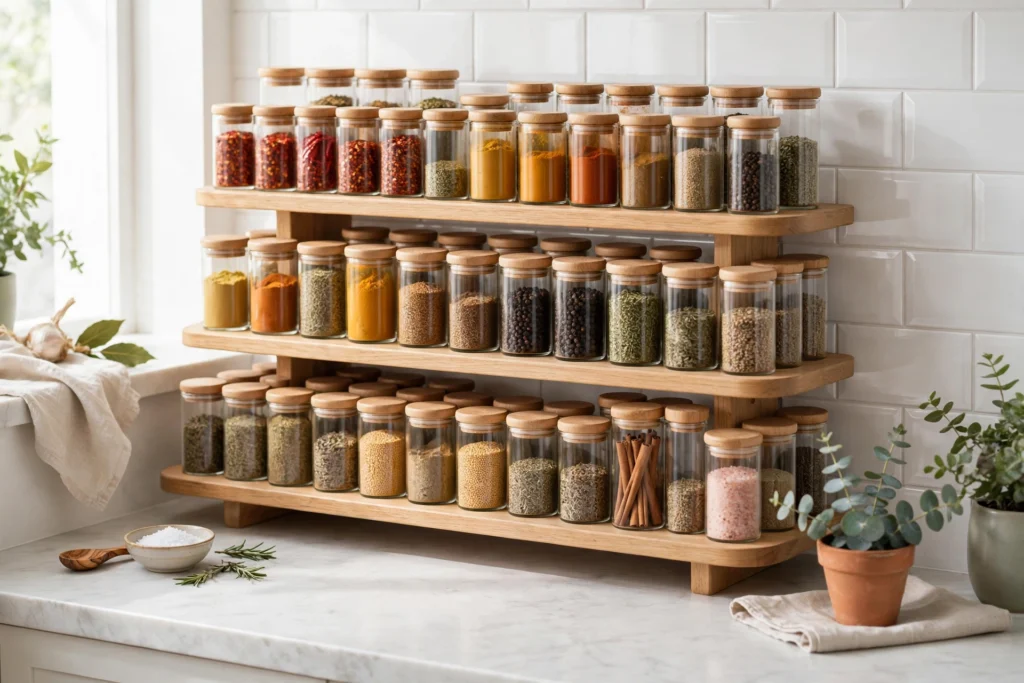
- Tiered cabinet risers: stepped shelves inside a cabinet so back rows rise above front rows. No more hidden jars.
- Door-mounted racks: the inside of a pantry or cabinet door holds 20+ jars in dead space.
- Wall-mounted magnetic strips or rails: frees the cabinet entirely; great for renters with command-strip versions.
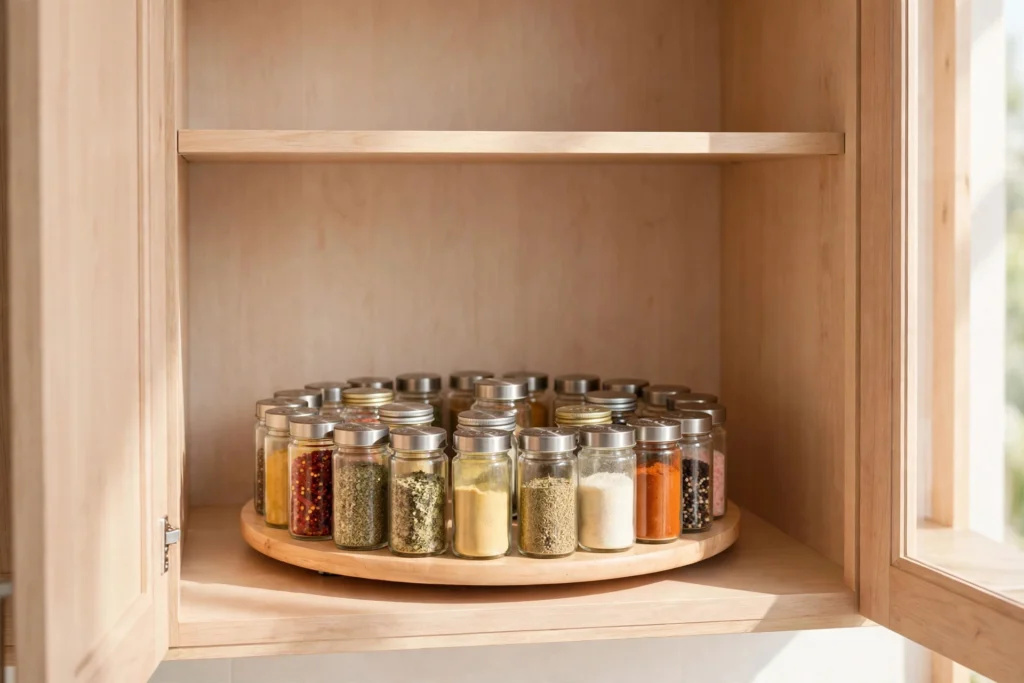
- Lazy Susans: one spin reveals everything. Best for deep cabinets where jars go to disappear.
Label for speed
- Labels on top for drawer storage, on the front for shelves and racks. Label where your eyes land.
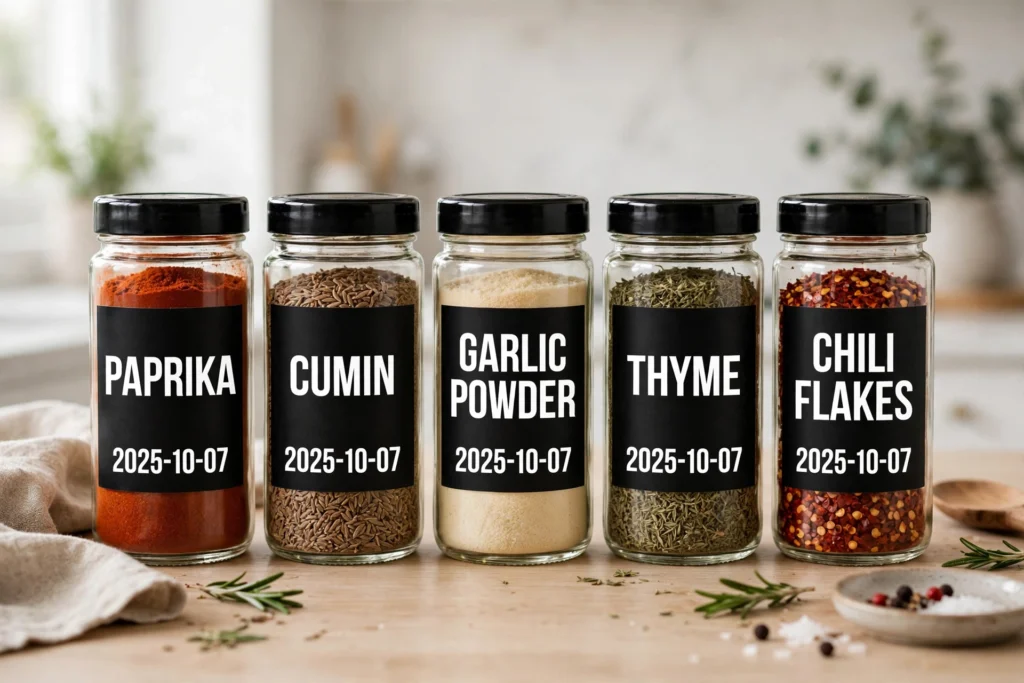
- Name + date: “Paprika — 2025” tells you what it is and when it expires. Ground spices get tossed after 2 years.
- Big, high-contrast text. You’re reading these mid-cooking with steamy hands — tiny script labels fail.
- Color dots for cuisine: red for Indian, green for Italian, yellow for baking. Grab by color when you’re in the zone.
Arrange by use, not alphabet
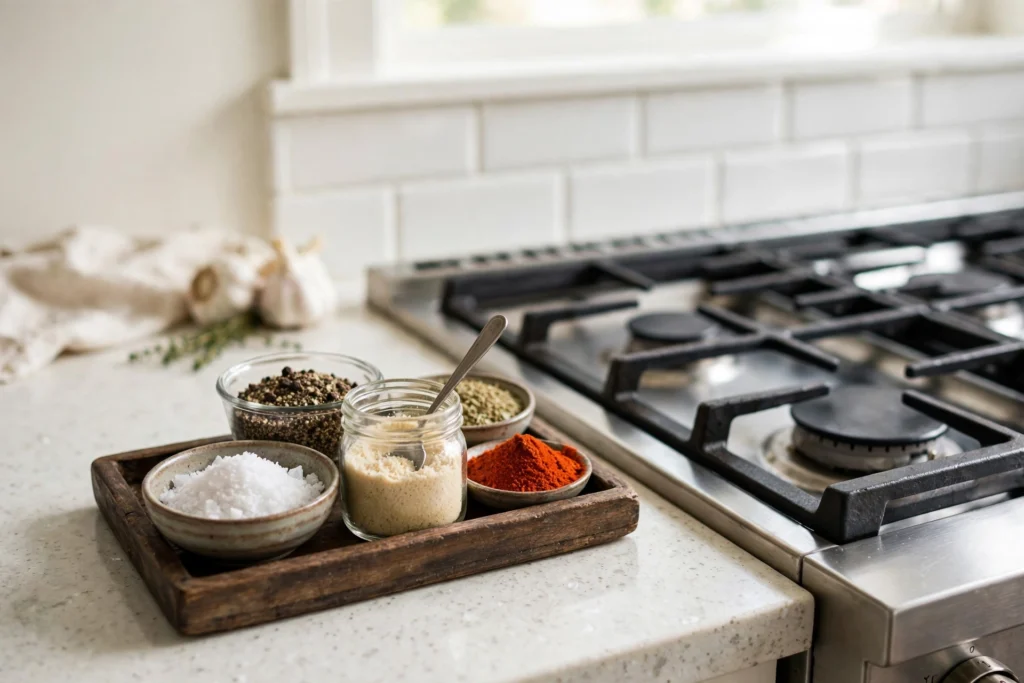
- The daily cluster: salt, pepper, garlic powder, and your top 5 live closest to the stove.
- Baking spices together: cinnamon, nutmeg, vanilla, baking powder — one zone for the bakers.
- Cuisine clusters: keep the taco spices, curry spices, and Italian herbs in their own groups.
- Alphabetical is fine too — but only after the daily cluster is pulled out. Speed beats systems.
The restock system
- The “low” list: a small notepad or phone note by the spices. When a jar hits 1/4, it goes on the list.
- Buy small. Bulk bags go stale before you finish them. Small jars, replaced fresh, beat warehouse sizes.
- Annual spice audit: once a year, smell-test everything and toss the faded. Fresh spices = better food.
- One in, one out: a new spice means the stale or unused one leaves. Collections creep otherwise.
Mistakes that keep spices chaotic
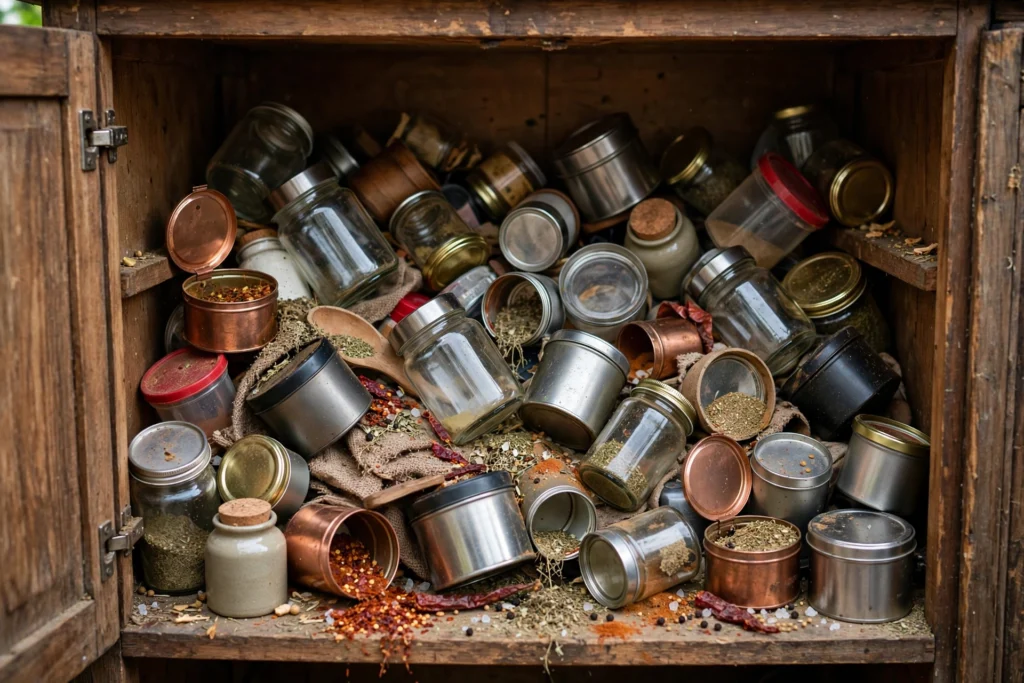
Skipping the purge. Organizing 40 spices including 12 dead ones is just tidy clutter. Purge first.
Mixed jar sizes. Every organizer assumes uniformity. Decant before you buy the insert.
Storing above the stove. Heat and steam kill spices fastest. The cabinet near the stove, not above it.
No labels. Paprika and chili powder look identical. Unlabeled jars guarantee mid-recipe mistakes.
Frequently asked questions
What is the best way to organize spices?
Purge the stale and duplicates, decant into uniform jars, pick one storage method (drawer inserts are best; tiered risers, door racks, or lazy Susans work too), label name + date, and arrange dailies closest to the stove.
Should spices be stored in a drawer or cabinet?
Drawers with inserts are ideal — jars lie flat with labels up, everything visible. In cabinets, use tiered risers or a lazy Susan so back rows stay reachable.
How long do ground spices last?
About 1–2 years before flavor fades significantly; whole spices last 3–4 years. Smell-test annually and date every jar when you decant.
How do I organize spices in a small kitchen?
Use dead space: inside cabinet doors, a wall-mounted magnetic rail, or a single drawer insert. Keep only the 20 dailies in prime position; specialty spices get second-tier storage.
Final thoughts
Spice chaos ends with uniformity: same jars, real labels, one storage method, dailies by the stove. Three seconds to the cumin, every time — and the onions never burn waiting.