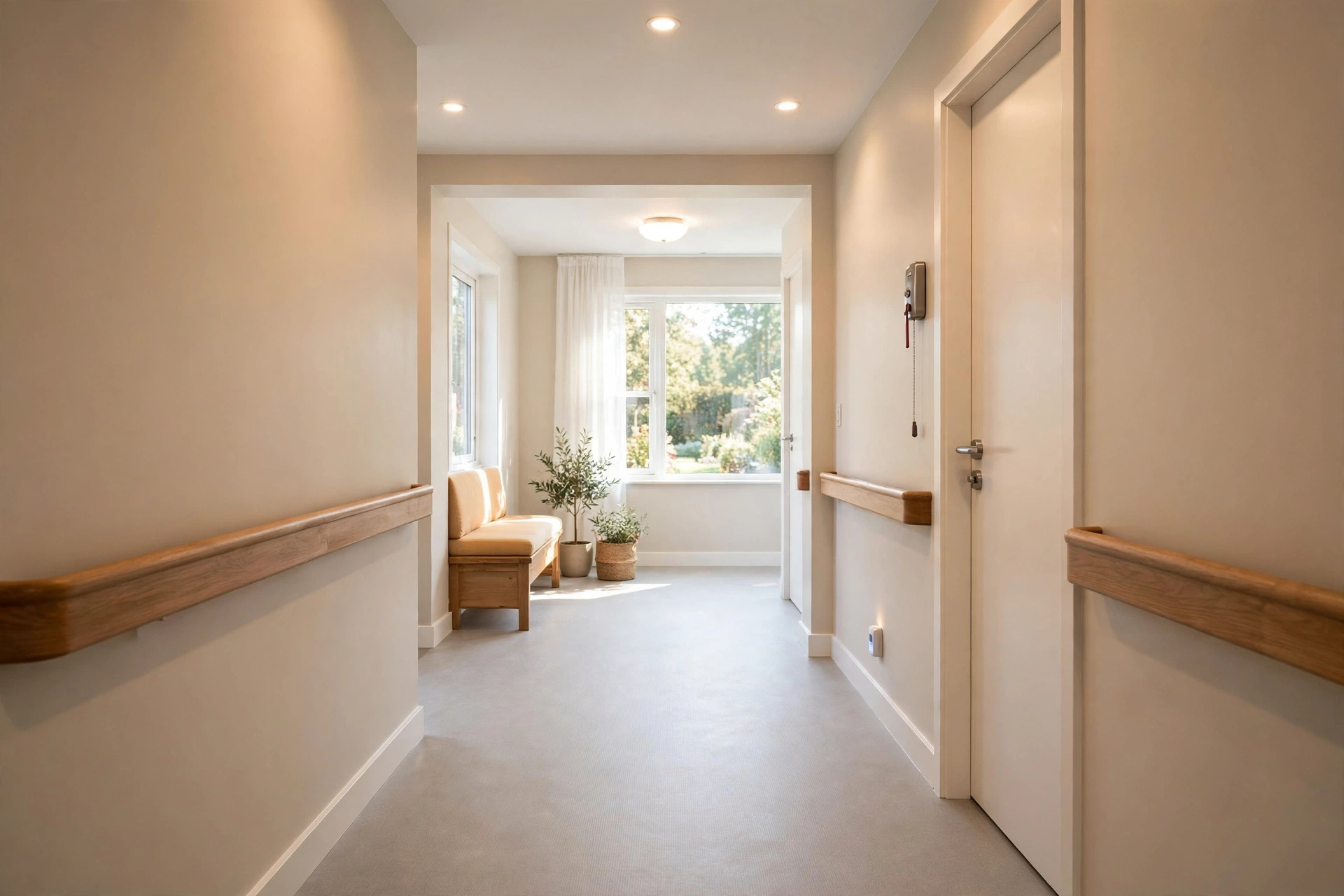
Decluttering later in life comes with its own considerations: decades of belongings, sentimental weight, physical limitations, and often the practical goal of making a home safer and simpler. These decluttering tips for seniors focus on comfort, safety, and dignity — at whatever pace feels right.
Pair this with our whole-home decluttering guide and decluttering checklist.


Start with safety, not sentiment
- Clear the pathways first: hallways, stairs, and routes to the bathroom should be completely clear — fall prevention is the highest-value decluttering there is.
- Secure the cords and rugs: loose rugs and trailing cords cause more falls than anything else. Tape down or remove them.
- Lower the everyday: daily items move to waist-height shelves. No step stools, no deep bending for things used every day.
- Brighten as you go: decluttered rooms let light in — and good lighting prevents accidents.

Pace it gently
- One drawer or shelf per session. Small wins compound; marathon sessions lead to exhaustion and abandoned piles.
- Rest days are part of the plan. Schedule decluttering every other day, not daily.
- Morning sessions when energy is highest — even 20 minutes counts.
- Ask for help with the heavy stuff: lifting, hauling, and donation drop-offs are perfect tasks for family or friends.


Handling the sentimental items
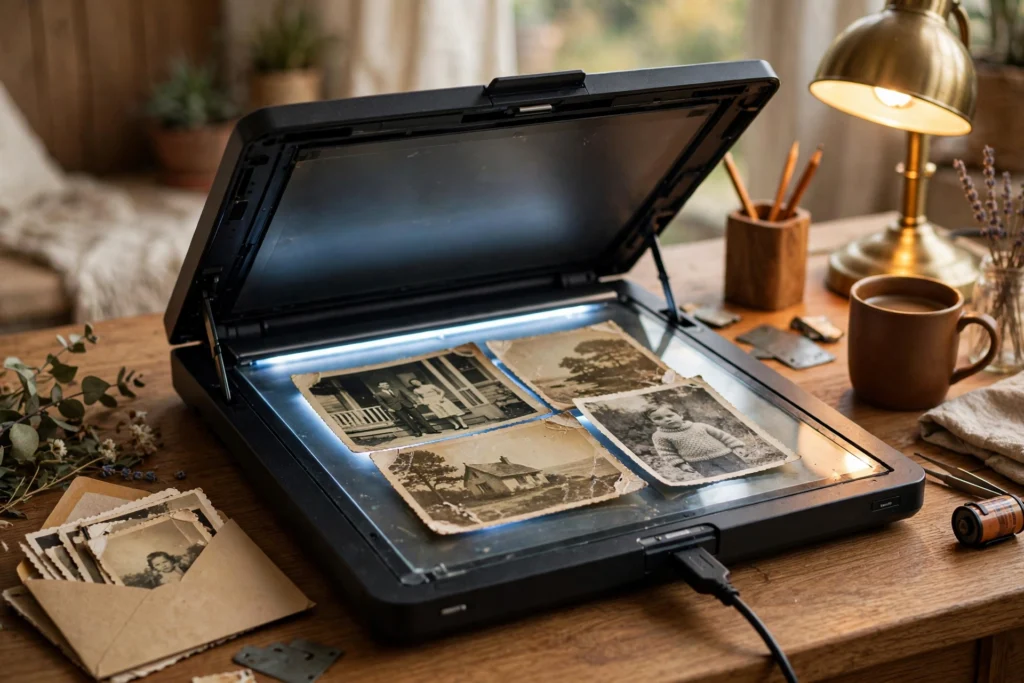
- Photograph before letting go: a photo preserves the memory without the object. Many families create a shared album.
- Keep the best, release the rest: one box of truly precious keepsakes beats three closets of “maybe someday.”
- Gift while you’re here: giving heirlooms to family now — with the story attached — beats leaving boxes of mystery later.
- It’s okay to keep things. Decluttering isn’t about empty rooms; it’s about a home that serves your life now.

Downsizing wisdom
- Measure the new space first if moving: only what fits makes the trip. Floor plans prevent heartbreak.
- Duplicate household goods go first: decades accumulate three spatulas, two irons, and a drawer of mystery keys.
- The “would I buy this today?” test cuts through decades of inertia better than “might I need it?”
- Digitize the paper: scan important documents and old photos; shred what you don’t legally need to keep.
Making the home age-friendly
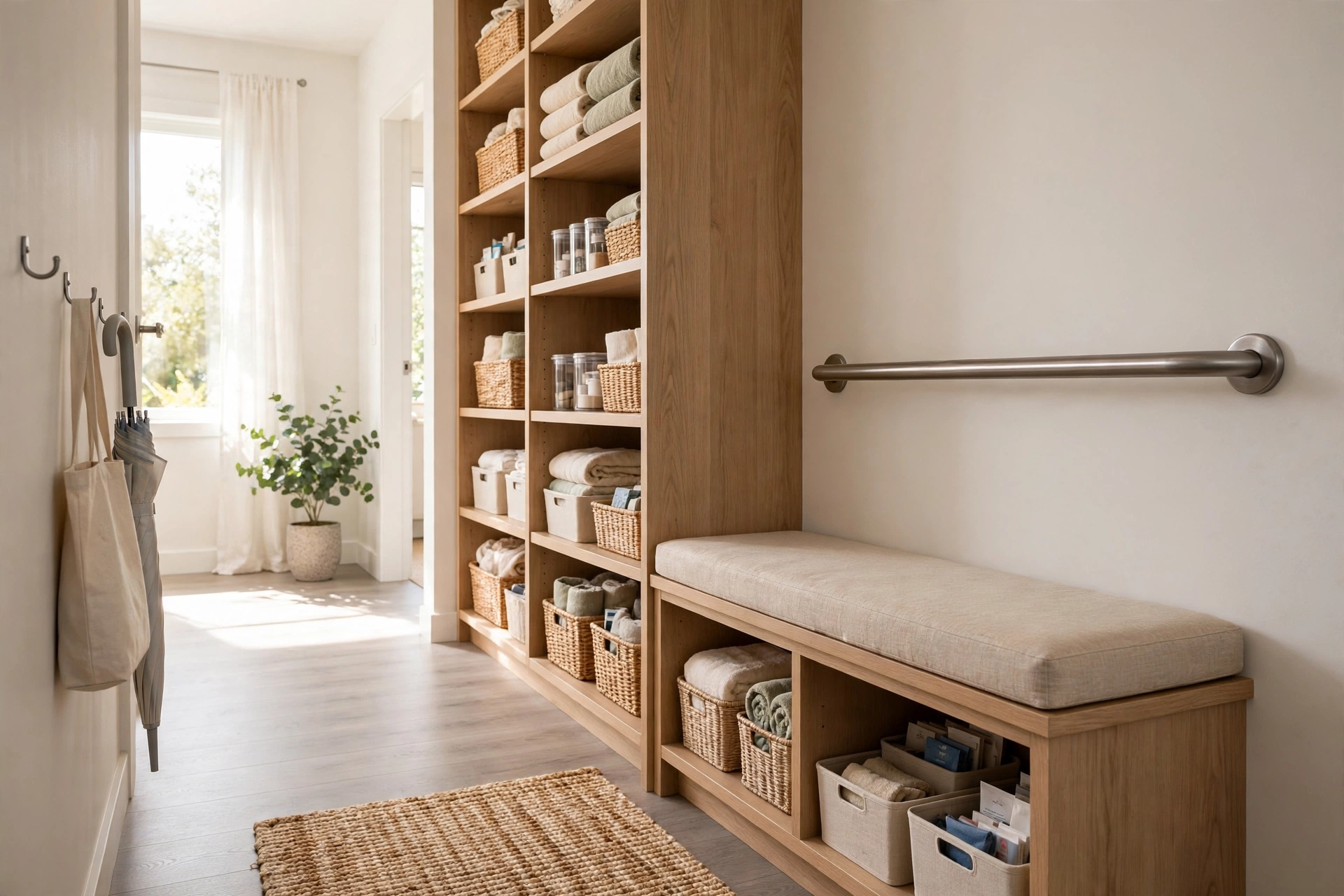
- One-level living: if stairs are hard, shift daily life to one floor — bedroom, bathroom, kitchen, laundry.
- Bathroom first: grab bars, non-slip mats, and a shower chair matter more than any decor.
- Simplify the kitchen: keep daily dishes, food, and tools within easy reach; store the rest or let it go.
- Clear surfaces, clear mind: fewer objects means less dusting, less visual stress, and easier cleaning.
Frequently asked questions
How should seniors start decluttering?
Start with safety: clear pathways, secure rugs and cords, and move daily items to waist height. Then work one drawer or shelf per session, resting between days.
What do seniors do with sentimental items?
Photograph items before letting go, keep one box of truly precious keepsakes, and consider gifting heirlooms to family now with their stories attached.
How can I help my elderly parent declutter?
Offer help with heavy lifting and hauling, work at their pace (short sessions), photograph sentimental items together, and never discard anything without their clear permission.
Is it better for seniors to declutter or downsize?
Decluttering first makes any later move dramatically easier. Even without moving, a decluttered single-level setup is safer and simpler to maintain.

Final thoughts
Decluttering as a senior is about making home serve the life you’re living now: safer pathways, reachable everyday items, and space for what truly matters. Gentle pace, safety first, dignity always.